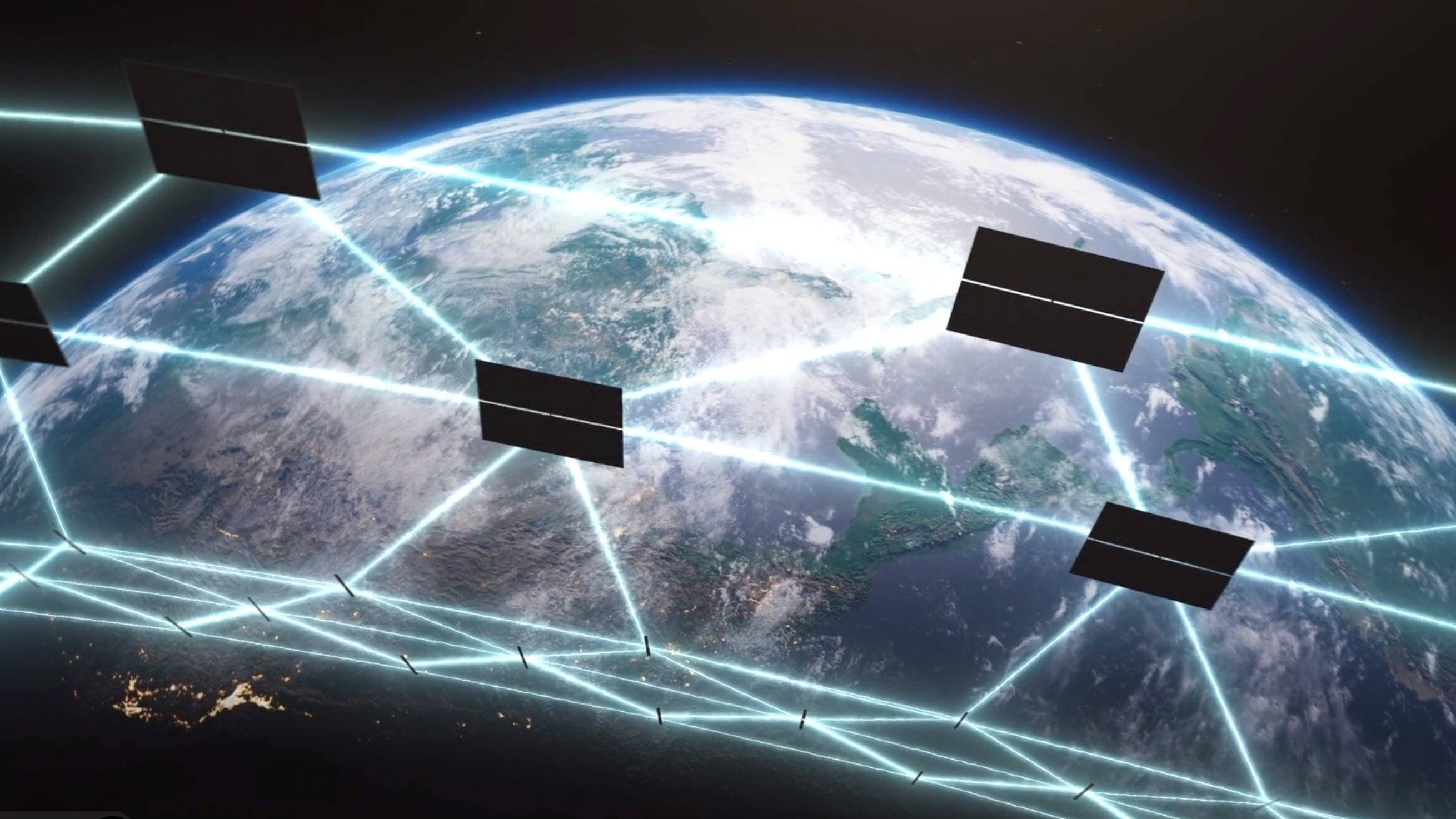
Wedoany.com Report on Feb 6th, The competition for regulatory approval in the space data center sector is heating up. American startup Starcloud has submitted an application to the U.S. Federal Communications Commission (FCC) to build a constellation of up to 88,000 satellites for space data center operations. This move closely follows SpaceX, which recently proposed a similar concept involving the launch of up to 1 million satellites.
To validate technical feasibility, Starcloud has already launched a test satellite equipped with an NVIDIA H100 enterprise-grade GPU, roughly the size of a household refrigerator. This satellite successfully trained a lightweight open-source AI model in orbit and stably operated a chatbot service.
In its application documents, Starcloud outlined the potential advantages of space data centers. The company stated that these satellites could leverage the unique conditions of the space environment, including near-continuous solar power supply, efficient radiative cooling capabilities, and the ability to achieve scale and power levels surpassing ground-based facilities. The application noted that this promises significant efficiency gains and cost optimization, while alleviating the environmental pressure and energy grid load associated with traditional terrestrial data centers.
Currently, there are approximately 14,500 satellites orbiting Earth, with SpaceX operating about 9,600 of them. In comparison, Starcloud's planned constellation of 88,000 satellites is noteworthy. Industry analysis suggests that if more companies follow with similar plans, the number of satellite deployment applications could see significant growth in the future.
The concept of space data centers has also attracted interest from other tech companies. Blue Origin founder Jeff Bezos and Google have both explored related possibilities. However, Amazon Web Services CEO Matt Garman recently expressed a different view. At the Cisco AI Summit, he stated, "There currently isn't sufficient rocket launch capacity to support the deployment of a million satellites; achieving this goal still requires time." Some industry analysts have also raised questions about the technical feasibility and space safety management of large-scale constellation plans.
Nevertheless, the regulatory process appears to be advancing. The FCC has recently officially accepted SpaceX's application for a million satellites and opened a public comment period within a few business days. For Starcloud, its plan involves deploying satellites in sun-synchronous orbits at altitudes between 600 and 850 kilometers. The company revealed in its application that the deployment of its constellation may rely on SpaceX's heavy-lift rockets (such as Starship). Simultaneously, Starcloud envisions using laser links for inter-satellite data transmission and potentially connecting to third-party satellite networks like Starlink, Amazon's Leo, and Blue Origin's recently announced TeraWave.
The application documents further explain that these external networks may handle the primary communication tasks between the Starcloud constellation and end-users. Information indicates that this Redmond, Washington-based startup has secured at least $21 million in funding to date.