Parcus and Orient International Group Announce Innovative Strategic Cooperation on Antibacterial Textiles
Wedoany.com Report on Feb 11th, Parcus Materials Co., Ltd., a pioneer in physical antibacterial technology, announced today a landmark five-year strategic cooperation with Shanghai Textile Raw Materials Co., Ltd., a subsidiary of Orient International (Group) Co., Ltd. This collaboration positions Parcus's revolutionary zinc-based antibacterial technology at the core of China's largest textile manufacturing group.
Orient International Group is one of China's largest textile and apparel conglomerates, with 2024 revenue reaching 71 billion RMB (approximately 9 billion EUR). The group employs 58,000 people globally and operates 73 international offices across 29 countries. Its Shanghai factory alone boasts a daily textile production capacity of 120 metric tons. Orient International Group holds significant influence across the global textile supply chain, from advanced manufacturing to fashion retail.
As the entity for this cooperation, Shanghai Textile Raw Materials Co., Ltd. is a key production base within the group, focusing on functional textile materials and advanced fiber applications.
A Partnership Built on Proven Performance
"This agreement is the culmination of an extensive 18-month collaboration between our two companies," said Michael van der Jagt, CEO of Parcus Materials. "Our antibacterial technology has undergone comprehensive testing and validation across multiple textile applications and at mass production scale. The results are outstanding. The technology achieves over 99.9% antibacterial efficiency against common pathogens while maintaining the natural properties of advanced fibers like lyocell."
Independent laboratory testing by SGS, in accordance with the ISO 20743:2021 standard for antibacterial activity of textiles, confirms the technology's exceptional performance:
• >99.9% antibacterial rate against Staphylococcus aureus (common skin bacteria);
• >99.9% antibacterial rate against Escherichia coli (intestinal bacteria);
• Durable performance, maintained after multiple industrial washing cycles.
These results validate that Parcus's physical antibacterial approach can provide the lasting, reliable protection required for high-quality textile applications.
This cooperation builds upon Parcus Materials' recent breakthrough in achieving mass production of antibacterial lyocell yarn; this technology is a world-first, integrating physical antibacterial properties directly into the fiber spinning process rather than through post-finishing applications. This innovation has generated significant interest from major textile manufacturers seeking sustainable, safe, and durable antibacterial solutions.
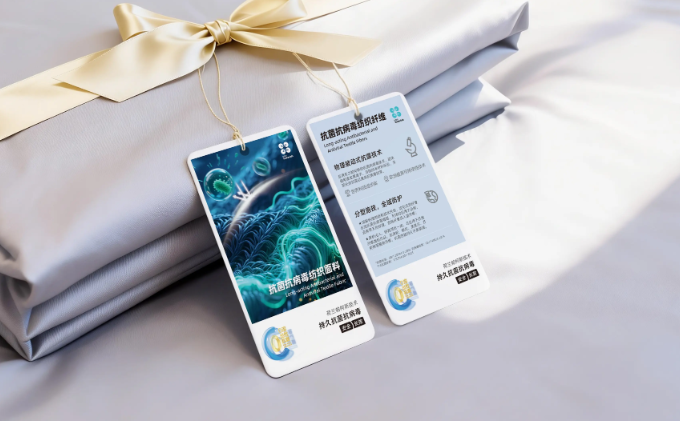
Physical Antibacterial Technology Meets Industrial Scale
Parcus Materials' patented technology operates at the molecular level by activating and amplifying the inherent intermolecular forces within textile fibers. Unlike chemical antibacterial treatments that can wash out or pose biocompatibility concerns, Parcus's physical approach creates a permanent antibacterial barrier characterized by:
• No heavy metals, nanoparticles, or biocidal chemicals required;
• Effectiveness maintained throughout the product's lifecycle;
• Preservation of all natural textile properties (softness, breathability, appearance);
• Non-toxic oral safety certification for sensitive applications.
This makes the technology particularly suitable for areas produced by Orient International Group, such as medical textiles, high-end home textiles, mother & baby products, and intimate apparel, where both safety and lasting antibacterial protection are paramount.
Five-Year Strategic Collaboration
The cooperation agreement, extending until 2030, enables Shanghai Textile Raw Materials Co., Ltd. to integrate Parcus's antibacterial technology across its full product portfolio for the Chinese market. This includes the right to fully use the Parcus brand identity in product marketing and packaging, reflecting a shared commitment to bringing high-quality antibacterial textiles to consumers.
Market Timing and Growth Potential
This collaboration comes at a critical time as consumer awareness of hygiene and material safety continues to grow. The global antibacterial textile market is projected to exceed $12 billion by 2030, with the Asia-Pacific region being the fastest-growing area.