Anthropic Releases Claude Code Security: An AI-Powered Code Vulnerability Detection Tool
Recently, the artificial intelligence company Anthropic announced the launch of a new cybersecurity feature module for its AI coding tool, Claude Code — Claude Code Security. It is designed to help development teams more efficiently identify and fix security vulnerabilities in the early stages of code development. The release of this feature comes at a time when the cybersecurity field is facing new challenges. Multiple reports over the past year have pointed out that cybercriminals are attempting to use generative AI technology to exploit potential weaknesses in code and even infiltrate the core systems of large enterprises, putting pressure on traditional security defense methods to upgrade.
Unlike traditional security scanning tools that rely on preset rules and signature databases for pattern matching, Claude Code Security adopts an analysis logic similar to that of security researchers. It can perform deeper reasoning and contextual understanding of codebases to identify potential security issues. The tool not only flags vulnerabilities but also assigns a severity rating and confidence ranking to each issue. This helps security teams rationally allocate remediation resources based on risk levels while effectively reducing interference from false positives. It is important to emphasize that Claude Code Security does not automatically modify code. Instead, it aggregates all discovered issues into a unified dashboard, where they are ultimately evaluated and decided upon by a human security team, ensuring rigor and control over the code change process.
Currently, Claude Code Security has opened a limited research preview version to enterprise customers and some team users. Meanwhile, developers of open-source code repositories can also apply for free access to the tool to apply AI-driven security detection capabilities in open-source projects. Anthropic is not the only company operating in this space. OpenAI also began testing its GPT-5-powered autonomous security researcher tool, "Aardvark," in October 2025, attempting to use AI agents to simulate the behavior of security experts to autonomously discover and validate software vulnerabilities. This indicates that the application of AI technology in cybersecurity defense is becoming a new industry trend.
The advent of Claude Code Security poses a certain degree of impact on traditional cybersecurity companies. According to a report by SiliconANGLE, following the announcement of the feature's release, the stock prices of well-known security vendors CrowdStrike Holdings and Cloudflare experienced varying degrees of decline. This reflects capital market expectations that AI coding tools may reshape the security software market landscape. In fact, Boris Cherny, Head of Claude Code, stated in an interview with PCMag in November 2025 that future AI models will be able to run continuously with less human intervention and will further enhance their ability to integrate and collaborate with other AI models, indicating that the level of autonomy for AI in development and security fields will continue to increase.
Related Products


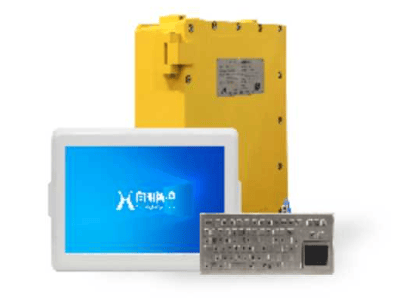
KJD127(A) Mining Explosion-Proof and Intrinsically Safe Computer
Taiyuan Xiangming Intelligent Control Technology Co., Ltd.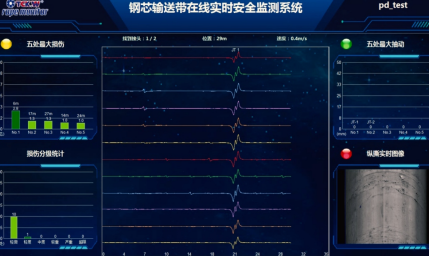
Conveyor Belt Intelligent Monitoring System
LUO YANG WIRE ROPE INSPECTION TECHNOLOGY CO., LTD.


GYTA Type Non-Self-Supporting Aerial/Duct Optical Cable
TONGDING INTERCONNECTION INFORMATION CO., LTD.