Japan's AMD Graphics Card Prices Drop, Limited Consumer Willingness to Pay Impacts Market
Recently, the Japanese graphics card market has seen a significant round of price adjustments, with AMD series graphics card prices generally falling, with some models dropping by as much as 20%. Behind this change is a clear consumer resistance to the continuously rising graphics card prices, with purchase willingness remaining low. This has forced retailers to reassess their pricing strategies and proactively lower prices to stimulate market demand.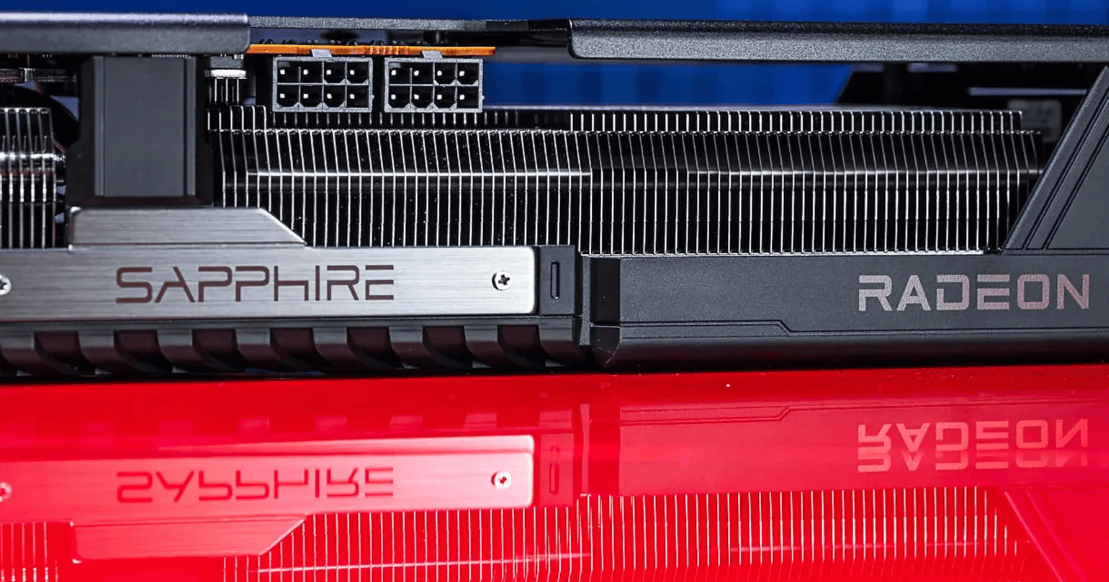
According to data cited by tech media TechPowerUp from Gaz:Log, as early as December 2025, graphics card prices once surged by 40%, sparking widespread dissatisfaction and even boycott actions among the gaming community. The significant decline in sales and weak market demand ultimately forced retailers to decide on price rollbacks under inventory pressure. This trend indicates that even in a technology-driven, demand-inelastic hardware market, consumers have a clear sensitivity threshold for prices. Once this threshold is crossed, market demand will cool rapidly.
Although the current price decline is primarily observed in the single market of Japan, it sends a signal: buyers have limited tolerance for the high prices of electronic products like graphics cards, and the risk for retailers to continue hoarding older models in a high-price environment is increasing. In contrast, AMD's high-end graphics card prices in the US market remain relatively stable. For example, the RX 9070 XT and RX 9060 XT 16GB are priced around $700 to $800 and $450, respectively. Meanwhile, prices for Nvidia's RTX 5070 Ti, RTX 5070 12GB, and RTX 5060 Ti 16GB remain high, exceeding $1000, $700, and $550 respectively, demonstrating their stronger pricing power in the high-end market.
Industry rumors suggest that Nvidia and AMD may raise their Manufacturer's Suggested Retail Price (MSRP) by about 10% overall in 2026. However, it is still uncertain whether this adjustment will cover the entire product line or only target high-VRAM models. Analysts believe this price increase might be to mask the current situation where actual selling prices consistently exceed the official MSRP, or it could signal a general price hike for the new generation of graphics cards at retail. Given the volatility of the GPU market and the uncertainty of supply-demand relationships in recent years, the likelihood of the latter scenario is increasing.
Related Products


MUX Series Communication Interface Device for Security and Stability Control System
Nanjing NR Electric Co., Ltd.



Hot Selling 10 Inch Intel N5100 I5 I7 FHD 8 +128GB 16+256GB Win10 Pro Win11 Pro 4G 5G Rugged Tablet PC Pad with NFC Barcode
Highton Electronics Co., Ltd.

20 Inch 1600*900 Full HD 60Hz TFT LED Monitor with VGA and DP Interfaces for Desktop Computers-Business Use
Guangzhou Zanying Optoelectronics Technology Co., Ltd.
Mine Explosion-proof and Intrinsically Safe Industrial Ethernet Ring Network (10 Gigabit/Gigabit)
Chongqing Mas Sci&Tech Co., Ltd.
Comprehensive Mining Automation Control System
Beijing Tianma Intelligent Control Technology Co., Ltd.