Taara Unveils Photonic Chip, Breaking Data Transmission Bottlenecks with Optical Connections
Wedoany.com Report on Feb 25th, Taara has recently launched a photonic chip capable of transmitting data at speeds up to 25 Gb/s. As a spin-off from Alphabet focused on free-space optics, Taara has integrated the core components of traditional free-space optical systems into hardware the size of a fingernail, achieving a significant enhancement in optical connection technology.
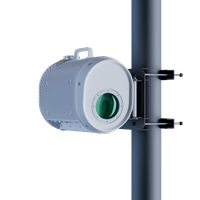
Taara CEO Mahesh Krishnaswamy explained to SDxCentral: "This essentially combines silicon photonics with phased array technology. Phased arrays are used in RF systems but are more difficult to implement at higher frequencies. We use light to achieve phased arrays, meaning it's solid-state steering with minimal mechanical moving parts, allowing dynamic beam guidance and tracking to expand the dynamic range." This optical connection technology is integrated into a module called Taara Beam, whose improved form factor enables installation on simple structures like single poles and rooftops.
Each chip in the Beam module contains hundreds of tiny optical emitters. Software controls the timing of each emitter's light output to manipulate the wavefront and precisely direct the light to the desired location. Initial tests show that using just two chips, the Taara team achieved 10 Gb/s data transmission over a 1-kilometer outdoor distance. The company plans to further enhance the range and capacity of its optical connections, with future versions potentially housing thousands of emitters. Krishnaswamy stated: "As we integrate more components, including lasers and other solutions, performance will continue to be optimized. We will also work to make it smaller, faster, and more energy-efficient." He added that this technology holds promise for applications in mobile platforms, space data centers, and drone communications.
The design of the Taara chip originated from Alphabet's Project Loon, which aimed to provide internet connectivity to remote areas via high-altitude balloons. Krishnaswamy recalled: "We realized that keeping balloons afloat and ensuring communication was economically challenging. But free-space optics for inter-balloon communication was a bright spot, so we decided to bring this technology to the ground and start connecting people." This technology later evolved into Lightbridge, already deployed in over 20 countries with operators including Airtel, T-Mobile, and SoftBank, and further upgraded in a Pro version.
The Beam product equipped with this chip is expected to be available by the end of this year. Krishnaswamy is optimistic about the potential of optical connections: "It's similar to moving from room-sized hard drives to solid-state cards, achieving orders of magnitude improvements in capacity." Furthermore, this technology can help address bottlenecks in data center construction. Krishnaswamy noted: "Building data centers requires quick access to land and fiber optics, and we can provide optical connections as backup or primary solutions. When transmitting through the air, latency is often lower than the internal reflection in fiber optic cables because light travels at the speed of light in free space, making it a low-latency solution advantageous for AI applications." Through its photonic chip, Taara aims to advance the application of optical connections across multiple fields, breaking through current limitations in data transmission.
Related Products



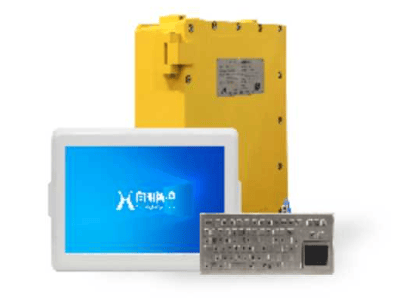
KJD127(A) Mining Explosion-Proof and Intrinsically Safe Computer
Taiyuan Xiangming Intelligent Control Technology Co., Ltd.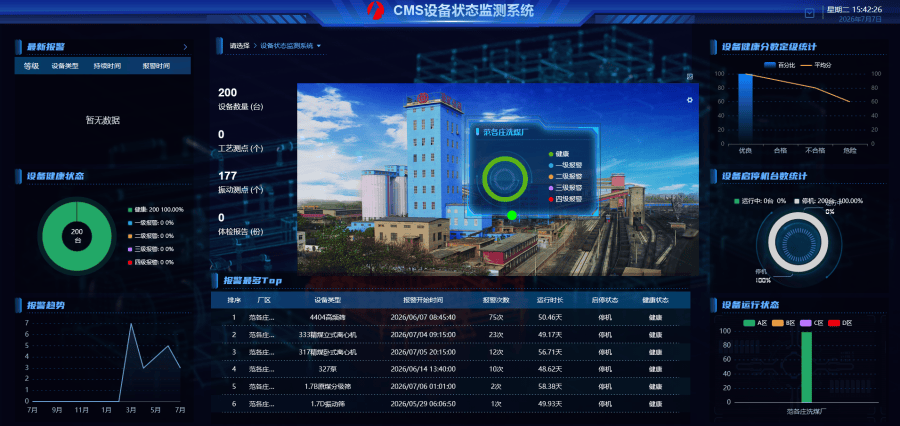

One-Stop Steward Service for the Entire Logistics System Integration Chain
Zhongding Intelligent (Wuxi) Technology Co., Ltd.

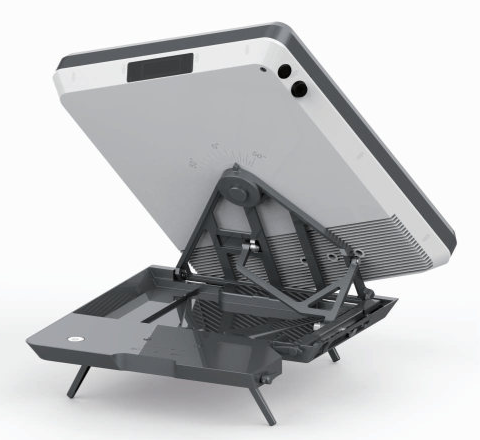
Flat Portable Satellite Terminal 0.35m Aperture Manual Portable Terminal
China Starwin Science & Technology Co., Ltd.

Multi-function Marine Monitoring Low-altitude Detection Radar Sea-air Boundary Ocean Dynamic Environment Measurement
Chengdu Dixin Technology Co., Ltd.