
To advance India's private space sector, Hyderabad-based Dhruva Space, a company specializing in the design and manufacture of space-grade solar panels and small satellite systems, has announced that it will supply its indigenously developed Solis+ space-grade solar panels to power Pixxel's upcoming hyperspectral satellite constellation.
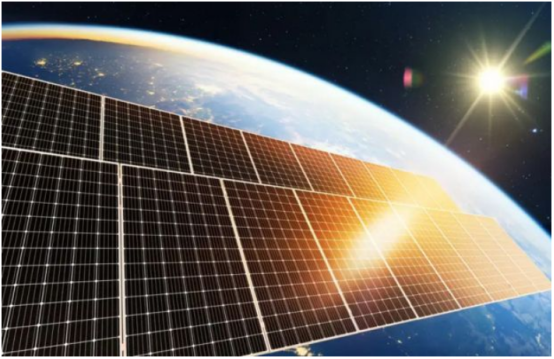
In its statement, Dhruva Space highlighted that the Solis+ solar panels are engineered for high-performance in-orbit power generation and utilize triple-junction gallium arsenide (GaAs) cells with an efficiency of up to 30%. Fully manufactured in-house at Dhruva's facilities, these panels can deliver multi-kilowatt power levels and are optimized for low Earth orbit (LEO) missions. Previously, in November 2024, Dhruva Space supplied Solis+ panels to the Indian government and is currently fulfilling export orders to the UAE, Austria, Australia, and France.
Kshitij Khandelwal, Founder and CTO of Pixxel, stated: "Power systems are critical in space, and Dhruva Space embodies the technical expertise and mission readiness we need. This collaboration will help deliver high-quality, accessible satellite data to tackle global challenges." Abhay Egoor, CTO and Co-founder of Dhruva Space, added: "This partnership represents a convergence of the very best capabilities in India's NewSpace ecosystem. Globally, very few companies can design, manufacture, certify, and export space-grade solar panels — Dhruva is proud to be one of them."
To support future growth, Dhruva Space is establishing South Asia's first dedicated spacecraft manufacturing facility on a 6.5-acre site with a built-up area of 280,000sq ft. The facility includes 30,000sq ft dedicated to the design and development of space-grade solar arrays and 40,000sq ft for assembly, integration, and testing (AIT) of spacecraft weighing up to 500kg, aiming for fully indigenous vertical integration and scalable spacecraft production.
Bengaluru-based Pixxel is building a constellation of 18–24 hyperspectral satellites to provide daily global revisit capability. The constellation builds on the success of Pixxel's Fireflies satellites launched in 2025, which delivered the world's first commercial hyperspectral imagery at 5m resolution. Pixxel claims its hyperspectral imaging provides 50 times more detail than traditional optical satellites and is designed to serve agriculture, oil & gas, mining, and environmental management sectors. To date, Pixxel has raised $95 million from global investors including Google, Aditya Birla Ventures, Glade Brook Capital Partners, Lightspeed, Radical Ventures, and M&G Catalyst. The constellation aims to deliver the world's highest-resolution hyperspectral imagery, helping industries monitor resources, improve efficiency, and address environmental challenges.
According to a Markets and Markets report, the global satellite solar cell market was valued at $44 billion in 2024 and is projected to reach $96 billion by 2030, growing at a CAGR of 13.7%. Space agencies worldwide, including NASA, ESA, and ISRO, are actively exploring this still-nascent field.