
Scientists at the Vanderbilt Brain Institute have published a breakthrough study in Neuron revealing that electrical pulse activity between the anterior cingulate cortex and the striatum is directly linked to cognitive learning ability. This discovery provides a theoretical foundation for developing next-generation brain-computer interface (BCI) technologies to treat memory and cognitive impairments.
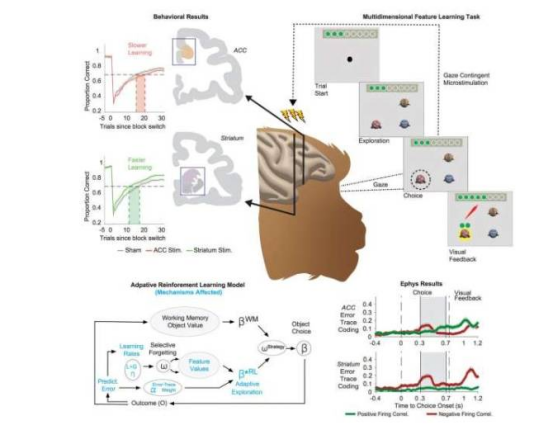
Led by Professor Thilo Womelsdorf from the Departments of Psychology and Biomedical Engineering, the team used real-time monitoring of brain network electrical signals to demonstrate for the first time that brief electrical pulses in specific brain regions can predict periods of enhanced learning ability. When BCI technology was used to amplify these characteristic signals, subjects showed significant improvements in both visual learning ability and attention.
"These electrical pulses in brain networks act like intrinsic triggers for cognitive functions," explained Professor Womelsdorf. "By precisely enhancing these physiological signals, we achieved accelerated learning processes and improved cognitive flexibility." Funded by the U.S. National Institute of Mental Health, the research offers new hope for treating cognitive disorders such as Alzheimer's disease.
Unlike traditional BCIs that primarily target motor functions, this breakthrough focuses on regulating higher-order cognitive functions. The findings suggest potential therapeutic value for rigid thinking in obsessive-compulsive disorder and memory retrieval deficits in Alzheimer's disease. Professor Womelsdorf emphasized: "This type of BCI targeting cognitive networks has the potential to evolve into the next generation of electronic medicine."