
Randomness plays a pivotal role in numerous fields—from computer science and engineering to cryptography and weather forecasting. Understanding and harnessing randomness is essential for simulating the real world, designing algorithms, and predicting outcomes under uncertainty. In quantum computing, randomness is equally indispensable, but traditionally generating it has required substantial computational effort. However, recent research by Thomas Schuster and his team at Caltech shows that producing randomness on quantum computers is far less demanding than previously thought.
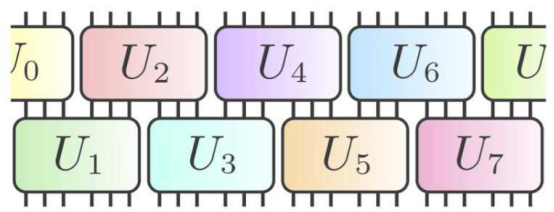
In quantum computing, information is stored in qubits rather than classical bits (0 or 1). It has been proven that quantum computers can demonstrate quantum advantage—surpassing classical computers—by randomly shuffling or scrambling qubits. However, randomly rearranging qubits is complex and easily disrupts their fragile quantum states, leading to the long-held belief that only small-scale quantum computers could handle randomness-dependent applications. The Caltech team has now proposed an innovative approach: dividing a group of qubits into smaller segments and mathematically proving that each segment can independently generate randomness. In a paper published in Science, the team details this method and shows how these segments can be "stitched together" to create a well-scrambled version of the original qubit sequence.
This breakthrough means that randomly shuffled qubit sequences can be used on much larger quantum systems, paving the way for more powerful quantum computers capable of more efficiently handling real-world applications such as cryptography and simulation. Moreover, the research raises profound questions about the nature of physical observation, suggesting that the extreme speed at which quantum systems hide information may impose fundamental limits on what we can observe in nature. Thomas Schuster stated: "Our results indicate that some basic physical properties may be difficult to learn through traditional quantum experiments."