
A research team at Rutgers University has recently developed a novel luminescent material based on copper iodide hybrids, providing an innovative solution for efficient and environmentally friendly deep-blue LEDs. The findings were published in Nature.
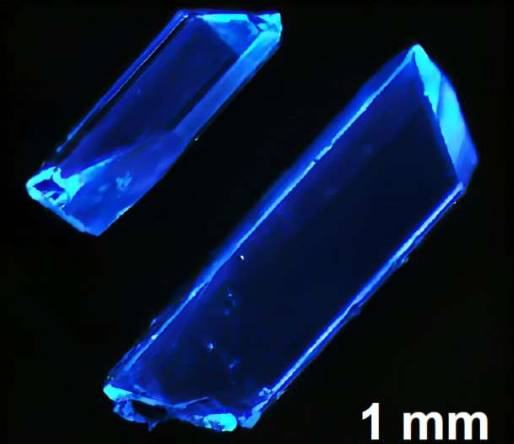
The material was developed by a team led by Professor Jing Li from the Department of Chemistry and Chemical Biology, achieving an outstanding photoluminescence quantum yield of 99.6%. "Deep-blue LEDs are the cornerstone of energy-saving lighting technology," Professor Li said. "Our new material addresses the toxicity, stability, and cost issues of existing solutions."
The team employed a dual-interface hydrogen-bonding passivation technique that dramatically enhances material performance. First author Kun Zhu noted: "This treatment effectively reduces interface defects, boosting LED performance by a factor of four." Testing showed that blue LEDs made from the new material achieved an external quantum efficiency of 12.6% and a half-life of approximately 204 hours.
Compared to traditional LED materials, this copper iodide hybrid offers advantages of non-toxicity, stability, and low cost. Professor Li emphasized: "This environmentally friendly material paves the way for brighter, longer-lasting LEDs." The study also confirmed that the material maintains high performance even in large-scale applications.