
NIBIO is committed to developing a method to convert greenhouse gases such as carbon dioxide into biomethane, a renewable energy source. Using thin layers of microorganisms — known as biofilms — greenhouse gases can be transformed into clean fuel.
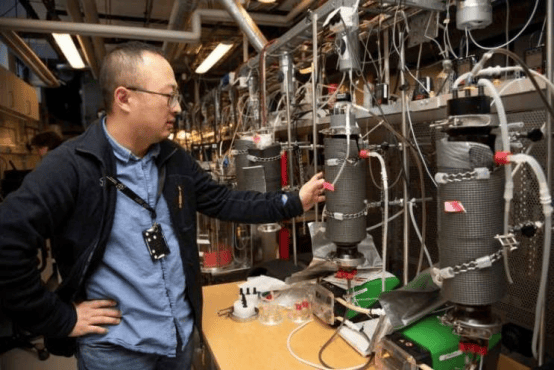
NIBIO has successfully developed an innovative method that utilizes microbial thin layers — biofilms — to convert greenhouse gases such as carbon dioxide into biomethane, a renewable energy source, offering a sustainable alternative to natural gas. The related research results were published in five scientific papers in the journals Biomass and Bioenergy, Journal of Environmental Chemical Engineering, Bioresource Technology Reports, Bioresource Technology, and Biotechnology for Biofuels and Bioproducts.
Dr. Lu Feng and other researchers documented a method for producing biomethane with a purity exceeding 96% using a biofilm-based process. Biofilms are microbial communities that grow on the surface of objects. Unlike traditional biogas production, which decomposes organic waste, the biofilm method uses self-selected microorganisms within a thin biofilm to capture and process gas streams under anaerobic conditions.
The researchers also experimented with bioaugmentation by introducing specific methanogenic microorganisms into the reactor to guide the process toward more efficient conversion of carbon dioxide and increase methane yield. Biofilm carriers (small plastic pieces produced by Biowater Technology) provide surfaces for the growth of beneficial bacteria and are widely used in water and wastewater treatment systems.
Biofilms provide a stable and efficient process for gas conversion. They retain microorganisms, improve gas-liquid contact, increase the reaction surface area, and can tolerate harmful substances. Facing challenges such as high concentrations of ammonia and hydrogen sulfide (H₂S) commonly found in industrial gas streams, biofilms show significant advantages. In one study, biofilm reactors were tested for their ability to handle H₂S (a toxic gas that can significantly reduce methane production). The results showed that systems without biofilms experienced methane losses of up to 30%, while biofilm reactors maintained high methane quality even at extremely high H₂S levels.
In research on the effect of ammonia on methane production, an AnMBBR reactor was used. It was found that even under high ammonia concentrations, biofilms could still produce methane. The biofilms contain ammonia-tolerant microorganisms, such as Methanobacterium thermautotrophicum, which can utilize H₂ and CO₂ to produce methane.
In addition, the researchers tested the biofilm method on syngas (a mixture of hydrogen and carbon monoxide) and found that adding extra hydrogen could increase methane yield, but excessive hydrogen would lead to process imbalance.