
Ice cubes are popular for making cool drinks in summer, while materials science research at Texas A&M University is driving greater progress in thermal energy storage systems ("ice batteries"). Associate Professor Patrick Shamberger from the Department of Materials Science and Engineering focuses on studying materials that store and release thermal energy. In a paper published in The Journal of Physical Chemistry C, he and his co-authors explore ways to improve material performance.
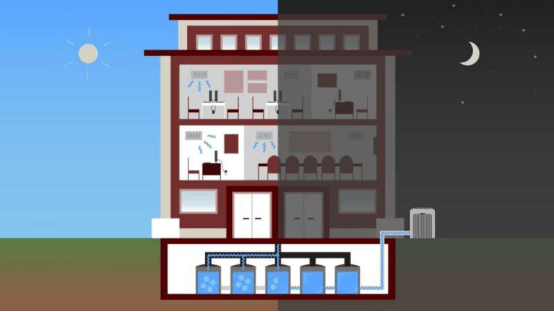
Ice battery systems work by freezing water or other materials during nighttime hours when electricity prices are low and demand is minimal. The stored cooling capacity is then used during the day to cool buildings, thereby reducing peak energy consumption and lowering costs. Although the concept is not new, Shamberger's research aims to address key challenges: making the materials inside the system more efficient, stable, and durable.
Shamberger said: "Ice battery technology has been around for some time, but in terms of materials, I focus on what materials work at the right temperatures, whether they can be reversible, and whether they can last for 30 years."
While these systems reduce reliance on the power grid during the day to save energy, they still consume electricity at night to freeze water. Larger systems freeze approximately 500,000 pounds of ice each night.
Shamberger's team is developing salt hydrates (salts with crystal structures containing water molecules) and other compounds that can store and release thermal energy at suitable ambient temperatures. By adjusting the temperature range of the materials, the team aims to improve energy efficiency and make the systems more compatible with both cooling and heating applications, particularly in buildings that use heat pumps. Shamberger noted: "We set them at specific temperatures so they are compatible with particular HVAC system integration methods."
One of the biggest technical challenges is "phase separation." In many salt hydrate systems, the material separates into solid and liquid phases with different compositions and densities, which reduces performance over time. The study aims to prevent this performance degradation by better understanding the thermodynamics of the materials, with the goal of finding more stable compositions that can reliably cycle for many years.
Shamberger's broader research goal is to support a more flexible and resilient energy grid. As renewable energy sources such as solar and wind become increasingly prevalent, the grid faces more severe supply-demand fluctuations, making technologies that shift energy use away from peak periods increasingly important.
Shamberger said: "We don't want to solve grid problems by building more power plants — that's a very expensive solution and would raise overall electricity rates."
By storing cooling capacity when electricity prices are low and using it during peak demand periods, buildings can lower energy costs and help stabilize the grid. Shamberger noted that the ideal system should integrate seamlessly into existing HVAC systems and operate automatically. Ice battery systems are already in use; the 30-story Eleven Madison building in New York City employs such a system.