
With the assistance of the supercomputer at Oak Ridge National Laboratory (ORNL) of the U.S. Department of Energy, nuclear reactions that power the Sun may soon be harnessed for electricity generation on Earth. The Knoxville-based startup Type One Energy Group plans to build the world's most advanced stellarator fusion device by 2030, followed by a pilot power plant, with the goal of achieving commercial fusion energy production in the mid-2030s. The team has published a series of six papers in the Journal of Plasma Physics outlining the concept for the pilot power plant.
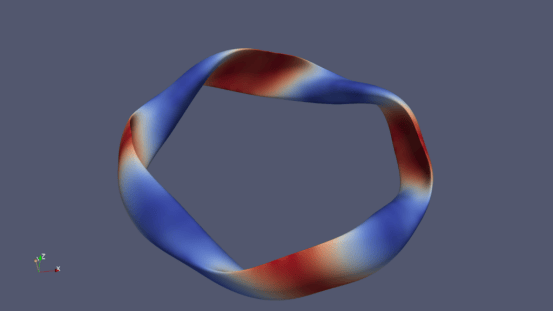
Walter Guttenfelder, Chief Scientist at Type One Energy, said the goal is to build a pilot plant within ten years, and they hope to create a functional prototype even faster. Current scientific understanding is mature, with no significant obstacles, and this progress would not be possible without ORNL's leading computer technology.
The company's prototype, "Infinity One," will not generate electricity but will demonstrate the design and pave the way for the pilot plant "Infinity Two," which is expected to deliver 350 megawatts of net electrical output to the grid. The company estimates that detailed modeling provided by ORNL's now-retired Summit supercomputer has shortened the project timeline from drawing board to realization by at least one year. Computational scientist Noah Mandell noted that such high-fidelity performance predictions had never before been used in the design of fusion power plants, and the scale of the "Summit" power plant made the calculations essential.
Fusion is the process in which two atomic nuclei combine to form a single nucleus, with the mass difference converted into raw energy. It powers the Sun and stars and offers humanity the hope of unlimited energy. However, scientists and engineers must first achieve nuclear fusion that is safe, reliable, and sustained on a large scale.
Stellarators use superconducting electromagnetic coils to confine plasma composed of the hydrogen isotopes deuterium and tritium at temperatures ten times hotter than the core of the Sun, with an average temperature of 150 million degrees Celsius. Guttenfelder noted that because the Sun has enormous mass, Earth requires much higher temperatures for the core to be suitable for fusion. Current models are not large enough to achieve commercial-scale energy production.
The world's largest stellarator is the Wendelstein 7-X at the Max Planck Institute for Plasma Physics in Germany, with a radius of 5.5 meters. Engineers at Type One Energy estimate that a device with approximately twice that radius will be needed to achieve commercial fusion.
The main risk to be addressed is plasma turbulence. Excessive turbulence causes energy to leak from the stellarator core, preventing it from reaching fusion temperatures. Traditional solutions involve building larger machines or generating stronger magnetic fields, but the unique flexibility of stellarators offers a third option: optimizing the shape to control turbulence.
The computational power required to simulate turbulence and predict stellarator performance exceeds the capabilities of Type One Energy's internal computers, so the team turned to the Oak Ridge Leadership Computing Facility (the home of ORNL's Summit supercomputer). Summit’s high-resolution modeling capabilities helped the team develop the knowledge and tools to confirm that an optimized stellarator is an economically viable concept for a fusion power plant.
Summit's speed of 200 petaflops matches the GX code developed by computational physicists including Guillaume Le Bars, which is tailored specifically for GPUs and can solve nonlinear five-dimensional equations. Mandell said the study performed two sets of calculations that had never before been used at this scale of turbulence simulation to design a fusion device. "Summit" made it possible.
The team conducted 250,000 node-hours of simulations on Summit to identify the most promising designs, with details published in the research papers. Guttenfelder stated that the team is now focused on building the prototype and pilot plant, while hoping to conduct further research in certain areas. Summit enabled them to perform thousands of evaluations, make design choices, and discover new areas to explore, giving them confidence to advance the selected design.
The team hopes to use Summit's faster and more powerful successor, Frontier (with a speed of approximately 2 exaflops), to further refine the design. The research was supported by the Advanced Scientific Computing Research program of the U.S. Department of Energy's Office of Science. OLCF is a user facility of the U.S. Department of Energy's Office of Science.