
A new review paper published on the arXiv preprint server systematically explores the application prospects of propellantless propulsion technologies in space exploration. These technologies utilize natural forces and external energy sources to replace traditional chemical fuels, with the potential to break through the mission capability limitations of existing spacecraft.
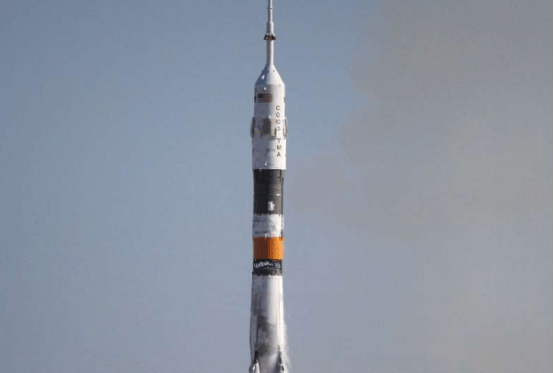
Since Konstantin Tsiolkovsky proposed the rocket equation in 1903, spacecraft have always relied on carrying propellant to generate thrust. The cycle formed by the self-weight of fuel and launch requirements has long restricted the development of interstellar travel. Propellantless propulsion technologies aim to achieve spacecraft maneuvering through physical principles such as gravity and light pressure, providing new solutions for deep space exploration.
Propellantless propulsion technologies that have already been put into practice include gravity assists and solar sails. Gravity assist technology accelerates spacecraft by precisely calculating close orbital approaches with planets and utilizing the planets' orbital momentum. The Voyager probes used this technique to visit the outer planets, but the approach has strict requirements on planetary positions and limited mission windows. Japan's IKAROS probe verified solar sail technology in 2010 by reflecting photons to generate continuous thrust and reaching Venus, proving the feasibility of propellantless propulsion.
Magnetic sails and electric sails represent more cutting-edge directions in propellantless propulsion. Magnetic sails rely on magnetic fields generated by superconducting coils to deflect charged particles in the solar wind, while electric sails achieve similar functions through charged tethers. Both approaches can avoid material aging and may provide higher acceleration, but they face engineering and technical challenges. Magnetic sails require the deployment of superconducting coils with radii of tens of kilometers and the maintenance of extremely low-temperature environments, while electric sails need to solve the problems of deploying long, lightweight tethers and maintaining electric charge.
The review points out that various propellantless propulsion methods each have their own applicable scenarios and technical bottlenecks. Gravity assists are mature but subject to many constraints, solar sails are stable but rely on large and precise structures, and magnetic sails and electric sails show significant potential but are still in the research and development stage. By combining the advantages of different technologies, propellantless propulsion systems are expected to build more flexible space exploration models and lay the foundation for interstellar missions that surpass the boundaries of existing technologies.