Wedoany.com Report-Nov 30, Serbia’s parliament said it has adopted amendments to the country’s energy law, lifting a ban on the construction of nuclear power plants in the country.
The amendments were approved in a 145-2 vote with one abstention in the 250-seat parliament on 27 November, according to a broadcast of the session uploaded on the parliament's YouTube channel.
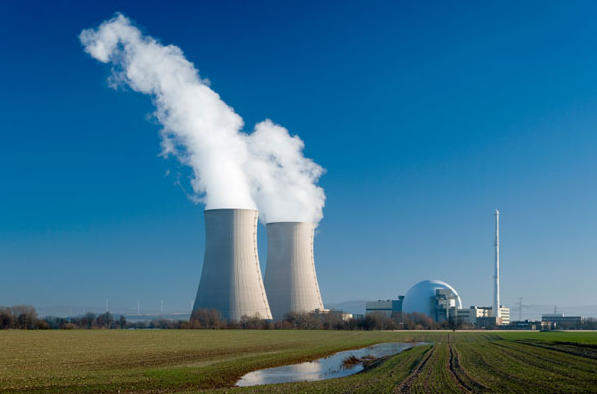
The amendments repeal a law prohibiting the construction of nuclear power plants, which was adopted in 1989 in former Yugoslavia in the aftermath of the 1986 Chernobyl nuclear accident.
In September Serbia’s ministry of mining and energy awarded a contract to French state-owned EDF and French engineering firm Egis Industries to conduct a preliminary technical study on the potential introduction of nuclear energy in the Balkan country.
Earlier this year, five Serbian ministries signed agreements with 20 faculties, scientific institutions and state energy companies as the country examines the possibility of establishing a programme to deploy its first commercial nuclear power plants.
The move was intended to kick-off a societal, academic, economic, and political debate about nuclear power in Serbia.
President Aleksandar Vucic announced at the International Atomic Energy Agency’s first nuclear energy summit in Brussels in March that Belgrade was interested in building “at least four small modular reactors (SMRs) that can replace 1,200 megawatts of capacity”.
Vucic said Serbia will need a partner in developing nuclear energy as the country lacks technological know-how, a nuclear skill base, and sufficient funds.
In August, Serbia and France signed a number of deals during a visit of French president Emmanuel Macron to Belgrade, including an agreement to cooperate on the peaceful use of nuclear energy.
Belgrade Expects Support From France
Belgrade expects to receive support from EDF primarily in the exchange of knowledge and experience with the aim of strengthening domestic skills, and technical assistance in establishing a legislative framework for nuclear energy, according to energy minister Dubravka Dedovic Handanovic.
She told local media recently that “a lot of interest has arrived from large developed companies, both from the East and from the West” for the preliminary technical study tender which was announced in June.
“The study actually aims to analyse all available technologies, to show what are the advantages and disadvantages of those technologies and which could be best potentially applicable in our country when the conditions are created for it,” Dedovic Handanovic said.
The single-unit Krsko nuclear power station, which was built using US technology between 1975 and 1981, was Yugoslavia’s only nuclear energy facility.
Krsko is near today’s border between Slovenia and Croatia and is co-owned by the two countries. Plans are being made for its expansion over the next decade.
In the Balkan region, Bulgaria, Romania, Hungary, and Slovenia – together with Croatia – all operate commercial nuclear plants.