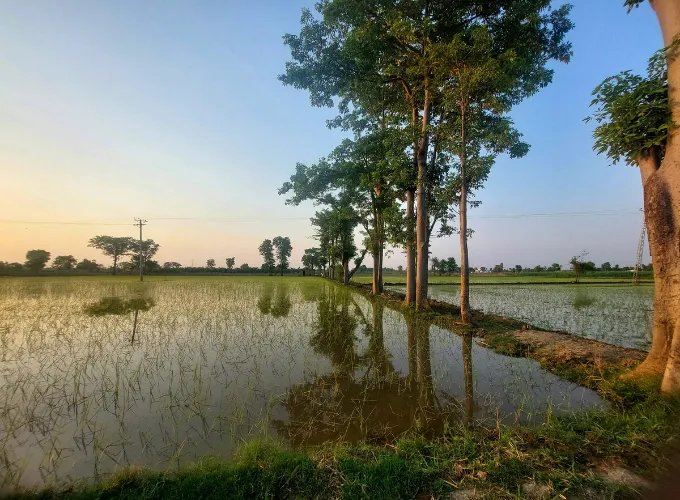
Iowa State University STRIPS Project: Native Prairie Strips Aid in Improving Soil and Water Quality in U.S. Agricultural Landscapes
Judd McCallum, a prairie restoration expert, states that promoting the planting of native plants within agricultural landscapes helps enhance soil health and improve water quality. Representing Ho'kee Native Seeds in Iowa, McCallum shared these insights in a recent podcast.
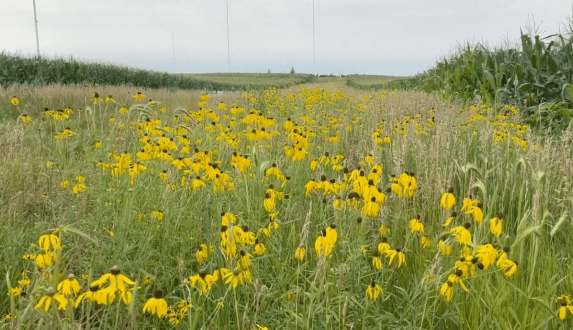
McCallum pointed out, "You're just putting organic matter back. You can see its effect on the soil year after year." Native prairie strips are seen as an effective tool for improving water quality, as their stems slow down runoff, promoting water infiltration rather than surface flow.
The STRIPS project at Iowa State University aims to assist farmers in implementing small-scale conservation measures without compromising yield. The project significantly reduces sediment and nutrient loss by converting 10% of cropland into diverse native perennial vegetation. Research shows this can reduce sediment loss by 95%, and total phosphorus and total nitrogen loss by 90% and 85%, respectively.
McCallum emphasized, "That prairie strip program is really important. It's just one way to connect larger habitats, allowing organisms to move more freely and healthily. If conditions allow, it should be considered for inclusion in land management." The promotion of native prairie strips helps build sustainable agricultural landscapes, creating a more resilient environment for future generations.
Related Products


Industrial and Commercial Point-Type Gas Detector
Jinan Benan Technology Development Co., Ltd.

MH220E Two-Row Hybrid Packaged Cotton Picker
CHINA RAILWAY CONSTRUCTION HEAVY NDUSTRY XINJIANG CO., LTD.
714CD Series C-Band Weather Radar
Chengdu Zhongdian Jinjiang Information Industry Co., Ltd.
4HS-8 High-efficiency Peanut Inverted-laying Harvester
Hebei Yongfa Hongtian Agricultural Machinery Manufacturing Co., Ltd.