Canadian telecommunications operator Telus has announced an investment in AST SpaceMobile to expand its direct-to-device (D2D) satellite service coverage in Canada. According to a commercial agreement announced on March 3, the two parties plan to provide messaging, voice, and data services to remote areas of Canada starting from late 2026, without the need for phone modifications.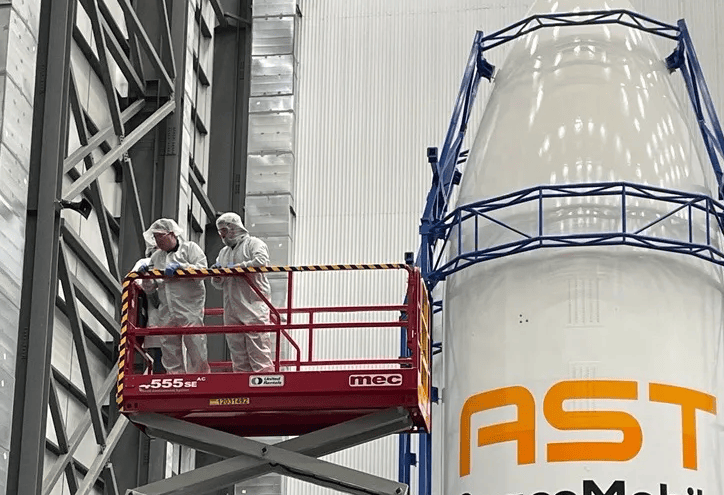
Chris Ivory, Chief Commercial Officer of AST SpaceMobile, stated: "Canada's vast geography, remote industries, and dispersed communities make universal connectivity both a challenge and a necessity." Financial details were not disclosed.
This collaboration follows a similar agreement by Telus's competitor, Bell, which first partnered with AST SpaceMobile in 2021 and owns related ground station facilities. Another major Canadian operator, Rogers, uses SpaceX's Starlink Mobile network.
AST SpaceMobile has established partnerships with multiple telecommunications companies worldwide, including AT&T and Verizon in the United States, Vodafone in the United Kingdom, and the stc group in Saudi Arabia. At the recent Mobile World Congress in Barcelona, Spain, the company also announced exploratory agreements with European operators such as Spain's Telefónica and France's Orange.
Regarding technology deployment, AST SpaceMobile launched its BlueBird-6 satellite late last year, featuring an antenna area of 223 square meters—the largest commercial communications array currently in low Earth orbit (LEO)—with peak data speeds exceeding 120 megabits per second. The company plans to deploy at least 45 BlueBird Block 2 satellites by the end of 2026, with BlueBird 7 scheduled for launch later this month.
Although voice calls, broadband data, and video streaming from space to standard smartphones have been demonstrated, these services are not yet commercially available. Intermittent services are expected to be offered in certain markets after the deployment of the first 25 satellites.
Financially, AST SpaceMobile reported revenue of approximately $54 million for the three months ending December 31 and expects sales of at least $140 million in 2026. Chief Strategy Officer Scott Wisniewski noted that the revenue opportunity for 2027 is close to $1 billion.
The company is also seeking regulatory approval to acquire additional satellite spectrum in North America through a proposed arrangement to improve services. However, this proposal has faced opposition from industry groups, including Iridium, which are concerned about potential interference with existing L-band services.