Wedoany.com Report on Mar 6th, Driven by the explosive growth of artificial intelligence technology, the global storage chip market is experiencing an unprecedented price storm, whose ripple effects have spread from upstream supply chains to end-consumer electronics and even the automotive manufacturing sector. Lei Jun, a deputy to the National People's Congress and founder of Xiaomi Group, has publicly spoken out multiple times recently, frankly stating that the irrational surge in storage chip prices has placed immense pressure on the company's mobile phone business. The company is making every effort to absorb costs to reduce the difficulty for consumers in purchasing phones.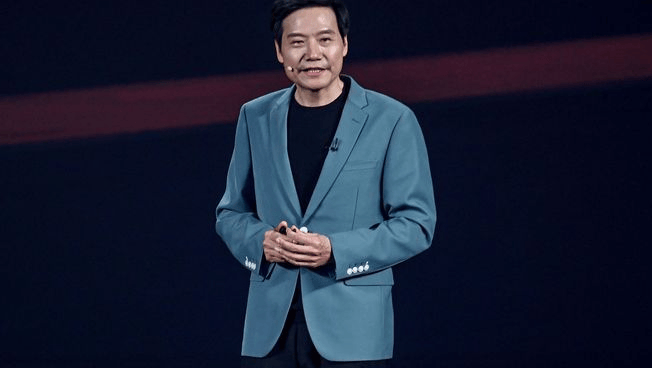
This marks the third time Lei Jun has signaled the market about chip price increases in a short period. Looking back to October 2025, when responding to the pricing strategy of the Redmi K90 series phones, Lei Jun bluntly stated, "Memory prices have risen far too much recently," pointing out that the root cause of product price adjustments lies in the continuous climb of upstream storage chip costs, which is difficult for terminal manufacturers to fully absorb internally. At that time, the entire Redmi K90 series saw price increases ranging from 300 to 600 yuan compared to the previous generation, sparking heated discussions among users. Facing market feedback, Xiaomi quickly adjusted its marketing strategy, directly reducing the price of the K90 standard edition's 12GB+512GB model by 300 yuan to 2899 yuan during the first month of sales, attempting to find a balance between cost pressure and user experience.
Entering 2026, the pressure from price increases has not eased; instead, it has intensified. During a live stream in January, Lei Jun once again focused on rising costs and, for the first time, extended his attention to the automotive manufacturing field. He revealed that storage chip prices have been rising quarter by quarter, with a staggering increase of 40% to 50% in the fourth quarter of 2025, and the upward trend continued into the first quarter of 2026. If this trend continues, automotive memory alone could add thousands of yuan to the cost per vehicle annually, introducing new uncertainties to the nascent automotive business.
Official data corroborates Lei Jun's assessment. Data released by the National Development and Reform Commission's Price Monitoring Center on February 28 shows that as of January 2026, the prices of the two core global storage chip products, DRAM (memory) and NAND flash memory, have reached their highest historical levels since records began in 2016. Taking the mainstream DDR4 8Gb chip as an example, spot prices for some models have skyrocketed from a low of $3.2 in 2025 to $15, a cumulative increase of 369%. The source of this price surge points directly to the voracious demand for high-performance storage driven by computing power infrastructure, represented by AI servers.
According to the latest supply chain information, the two giants of the global storage chip industry—Samsung Electronics and SK Hynix—have officially notified customers of their plans to significantly increase DRAM memory prices again in the second quarter of 2026, with a uniform increase of about 40% for DDR5 chips. Considering that these two South Korean manufacturers together hold over 70% of the global DRAM market share, their pricing strategies will profoundly impact the cost structure of the entire industry. Lu Weibing, partner and president of Xiaomi Group, analyzed during an earnings call in November 2025 that this round of storage price increases is a "relatively long cycle." Its core driver is not the traditional refresh cycles for phones or PCs but the surge in demand for HBM (High Bandwidth Memory) fueled by the AI technology revolution. This structural shift has led to a tilt in production capacity allocation, and it is estimated that new capacity to stabilize prices may not come online until 2027.
Regarding the upcoming changes in the end-market, multiple industry insiders have issued warnings. Some analysts point out that March this year will be a critical juncture for mobile phone price adjustments. Previously launched models, due to inventory and pricing inertia, will see relatively moderate price adjustments. However, new products released after March will face the latest cost pressures head-on, with expected price hikes significantly larger. The industry generally anticipates that the minimum price increase for new products will not be less than 1000 yuan, while increases for mid-to-high-end flagship models could reach 2000 to 3000 yuan.
This cost shock may also trigger adjustments in product structure. A senior storage industry practitioner stated that smaller-scale manufacturers with product lines concentrated in the thousand-yuan price segment will bear the greatest pressure, and some thousand-yuan phones may even be forced to reduce production. Zhong Xiaolei, an analyst at research firm Omdia, holds a similar view. He points out that the storage price increase significantly impacts material costs, potentially forcing models priced below $100 to raise their prices. For mid-to-high-end models priced above $200, manufacturers can partially offset costs by adjusting peripheral configurations, subsidies, or marketing expenses. However, such "trade-offs" may also, to some extent, affect the further popularization and penetration of AI phone technology in 2026.