en.Wedoany.com Report on Mar 23rd, Researchers from ETH Zurich and the Swiss Federal Laboratories for Materials Science and Technology (Empa) recently announced an innovative achievement: they have produced high-performance flame-retardant composite materials from wood chips and struvite using a green chemical process based on enzyme-controlled mineral crystallization. This advancement is expected to drive progress in the fields of mineral processing, crystallizer design, and industrial waste stream recovery.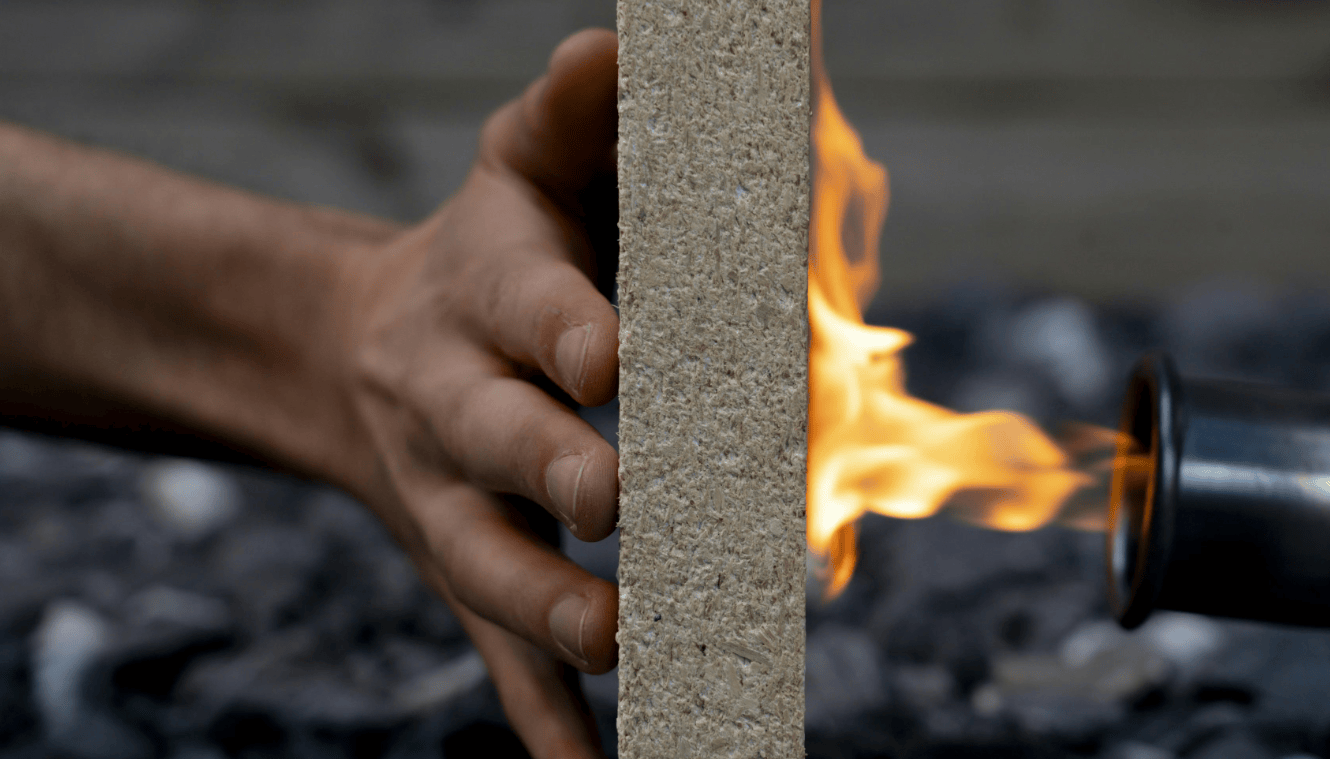
The related research, published in the journal *Chem Circularity*, focuses on the enzyme-induced solid-mineral phase transition from newberyite to struvite under confined conditions. The researchers utilized urease extracted from watermelon seeds to catalyze the hydrolysis of urea, achieving controlled and gradual release of ammonium ions, thereby effectively driving the crystallization reaction.
The paper points out that this controlled ion release mechanism is crucial for generating large, clear struvite crystals that can adapt to the complex surface topography of particles—an outcome often difficult to achieve with traditional crystallization methods. The technology also demonstrates that the enzymatic reaction rate can serve as a key parameter for regulating crystal morphology and mineral phase outcomes in composite material manufacturing.
For operators of wastewater treatment plants, this process offers a new source of raw materials. Struvite typically accumulates in sewage treatment systems, clogging pipes and posing a disposal challenge. The researchers stated in a press release that these deposits can be transformed into viable raw materials for binders, turning an operational nuisance into a recyclable resource input.
This composite material demonstrates complete recyclability through simple thermal and mechanical processing—the mineral precursors can be recovered, reprecipitated, and reused without significant degradation in mechanical properties, aligning with circular economy design principles.
Future work will focus on scaling up production and optimizing the crystallization process for larger reactor systems. The press release mentions that while sourcing waste streams may improve economic viability, binder costs relative to traditional alternatives remain a primary challenge for industrial application.