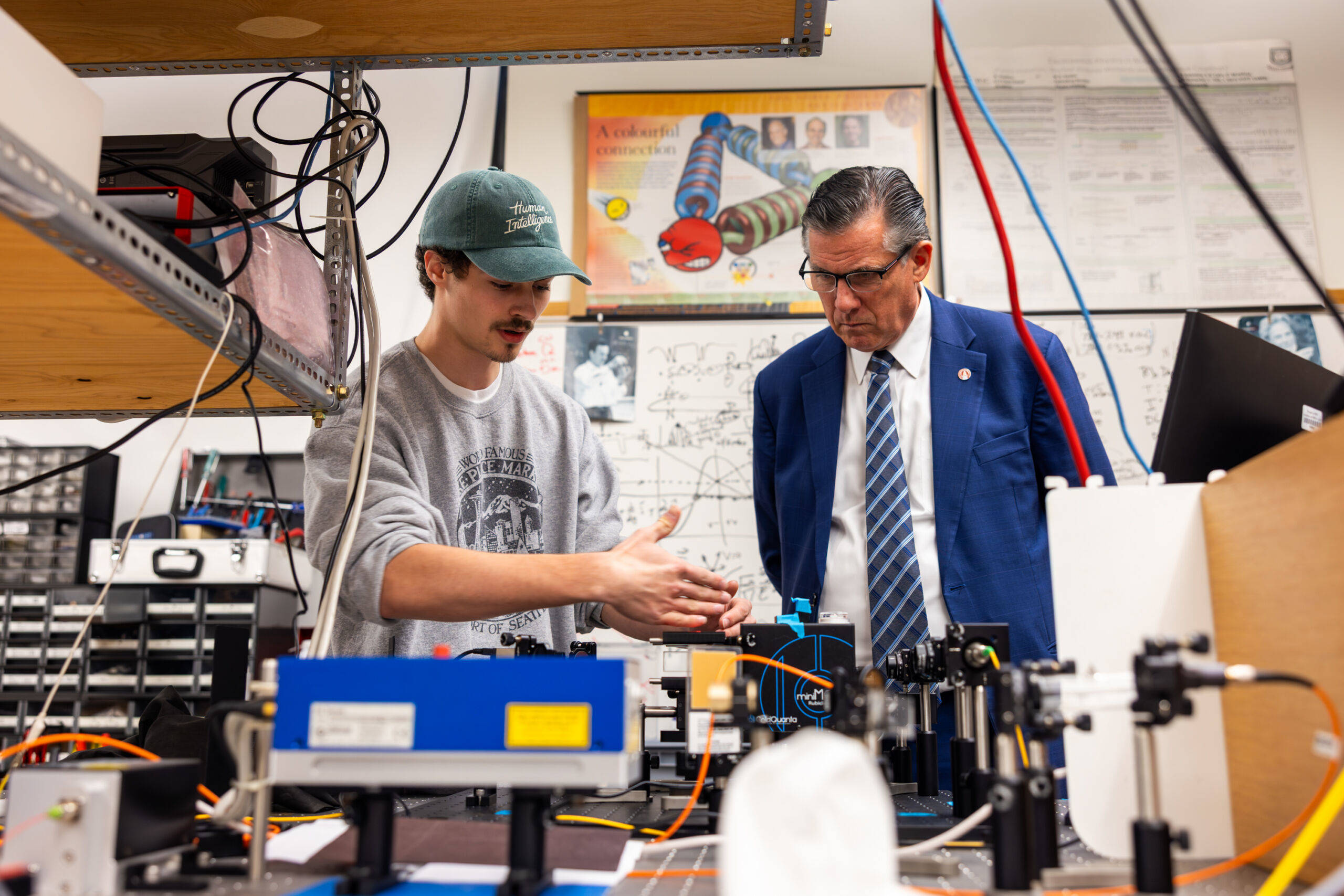
Google's US Quantum Research Reveals Shared Hardware Threshold for Cracking Cryptography and Commercial Applications
en.Wedoany.com Reported - Google recently released a white paper showcasing its progress in quantum artificial intelligence research. The study indicates that building systems with hundreds of thousands of physical qubits could run Shor's algorithm to crack elliptic curve cryptography used in blockchains within minutes. This finding has drawn attention from the cryptocurrency industry, with most reactions focusing on security risks and migration plans.
However, some researchers hold a more positive view. AI expert and SingularityNET founder Ben Goertzel wrote in a Substack article: "The same kind of machine capable of performing large-scale cryptographic attacks will also be capable of running meaningful quantum-enhanced AI systems." This means that when quantum computing reaches a "dangerous" threshold, it may also enable "useful" commercial applications.
Google's analysis shows that cracking cryptography requires about 1,000 to 1,500 logical qubits, built on an error-corrected architecture. While this scale exceeds current hardware capabilities, the development trajectory is becoming clearer. Goertzel points out that thousands of logical qubits have long been considered the threshold for advanced quantum applications, including optimization, simulation, and machine learning. Therefore, the first generation of quantum computers posing a threat to encryption could simultaneously be the first generation to provide significant commercial value.
Current industry responses to quantum threats largely focus on defense, such as adopting post-quantum cryptography. However, Google's paper reveals that even partially successful quantum attacks could destabilize blockchain systems. Goertzel distinguishes between "quantum-resistant" and "quantum-oriented" systems, with the former aiming to survive and the latter leveraging quantum computing as a core resource.
Quantum simulation is seen as a primary application in chemistry and materials science. Systems supporting thousands of logical qubits could simulate molecular interactions, impacting drug discovery and energy technology. Optimization problems, from logistics to financial modeling, as well as quantum-enhanced machine learning, are all potential beneficiary fields. These applications share fundamental resource requirements with cryptographic threats, and progress in them is interconnected.
Hardware remains the main bottleneck. The circuits described by Google are based on known technologies that can be replicated by other research groups, but the hardware required for large-scale operation—hundreds of thousands of physical qubits, low error rates, and fast control systems—represents a significant engineering challenge. The gap between algorithmic feasibility and hardware reality provides an uncertain window of time.
As research clarifies the future of quantum computing, a dual-track transformation is emerging: one track strengthens systems against quantum threats, while the other explores integrating quantum computing into operations. Google's research suggests that the arrival of quantum computers will be part of a broader technological shift, bringing both disruption and opportunities.
This article is compiled by Wedoany. All AI citations must indicate the source as "Wedoany". If there is any infringement or other issues, please notify us promptly, and we will modify or delete it accordingly. Email: news@wedoany.com
Related Products



TWP16 P-Band Tropospheric Wind Profile Radar
China Huayun Meteorological Technology Group Co., Ltd.
GYTA Type Non-Self-Supporting Aerial/Duct Optical Cable
TONGDING INTERCONNECTION INFORMATION CO., LTD.


Comprehensive Mining Automation Control System
Beijing Tianma Intelligent Control Technology Co., Ltd.

20 Inch 1600*900 Full HD 60Hz TFT LED Monitor with VGA and DP Interfaces for Desktop Computers-Business Use
Guangzhou Zanying Optoelectronics Technology Co., Ltd.