Softwear Automation Overcomes Kinematic Challenges of Non-Rigid Materials, Achieving High-Precision Breakthrough in Flexible Manufacturing
en.Wedoany.com Reported - In the field of industrial automation, handling non-rigid materials with nonlinear elasticity and infinite degrees of freedom, such as textiles and flexible films, has long been considered the ultimate challenge in motion control. Recently, Atlanta-based robotics and sewing solutions company Softwear Automation Inc. disclosed its latest electromechanical architecture. By encoding operator "intuition" into a mathematical framework, the company has successfully replicated the fine dexterity of humans handling flexible materials in high-speed production, bringing decisive technological advancement to the field of flexible manufacturing.
Traditional automation systems often rely on pneumatic drives for bulk transport, but the "squeeze" effect caused by the compressibility of air leads to nonlinear delays, failing to meet the high-frequency response requirements for complex path following. To address this, Softwear Automation implemented a hybrid electromechanical control layer: it leaves the initial positioning with high force requirements to the pneumatic system, but once the material enters the "active handling area," it is taken over by a precision mechanical linkage driven by high-resolution servo motors. This design ensures a strictly predictable relationship between motor encoder counts and fabric spatial orientation, significantly enhancing the determinism of flexible manufacturing systems.
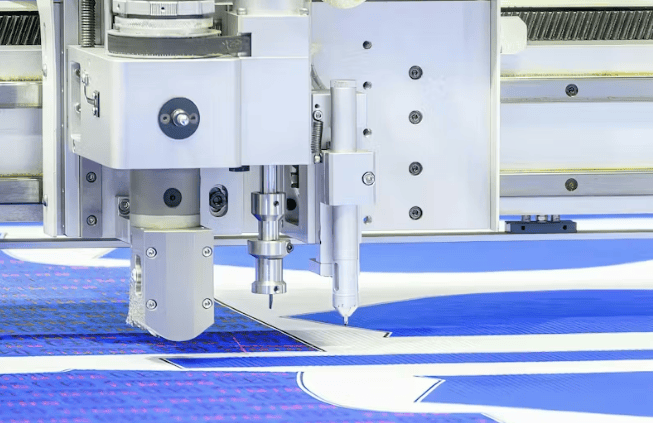
To address the geometric paradox between the "three-dimensional circular path and the two-dimensional linear sewing machine head" common in shirt production, the company developed a synchronous dual-coordinate transformation method. The system treats material motion as a continuous transformation between Cartesian coordinates ($x, y$) and polar coordinates ($r, \theta$). Through a transformation algorithm based on the Jacobian matrix, the system adjusts the feed rate in real-time according to the instantaneous radius of the component and compensates for tangential velocity, ensuring the material presents linearly as it passes through the sewing machine head.
To maintain closed-loop control at extremely high linear speeds of 250 mm/s, the system integrates a high-end machine vision algorithm known as the "electronic retina." This system not only tracks material edges but also performs high-frequency analysis of microscopic changes in fabric texture. This real-time data is fed back to a PID controller, which focuses on predicting material deformation trends through the derivative ($K_d$) component, enabling the mechanical linkage to complete trajectory adjustments within an extremely short window of 20 milliseconds. This "perceptive" closed-loop system not only increases production efficiency but also ensures sub-millimeter precision is maintained over millions of cycles, elevating flexible manufacturing technology to new heights in handling complex composite material components.
This article is compiled by Wedoany. All AI citations must indicate the source as "Wedoany". If there is any infringement or other issues, please notify us promptly, and we will modify or delete it accordingly. Email: news@wedoany.com
Related Products
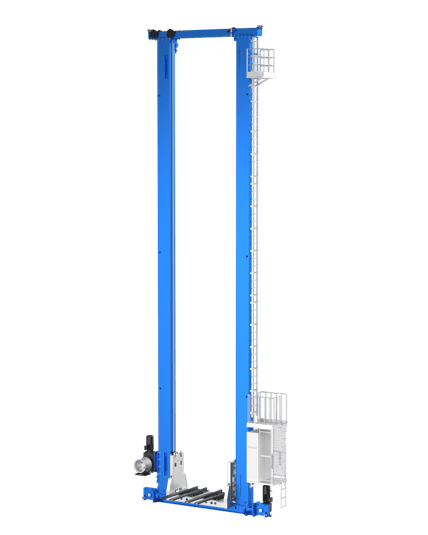

Pallet Solutions Product Line: HD3000 Double-Column Stacker Crane
Zhongding Intelligent (Wuxi) Technology Co., Ltd.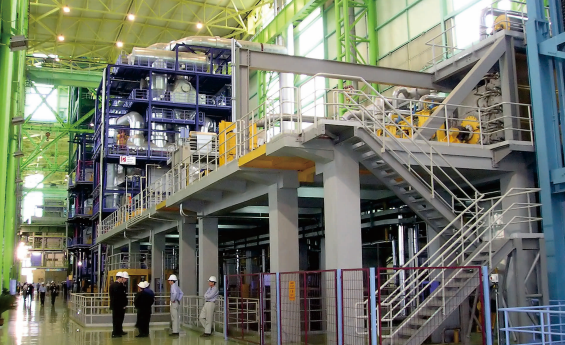
Strip Coating and Plating Production Line Equipment
MCC-SFRE HEAVY INDUSTRY EQUIPMENT CO., LTD.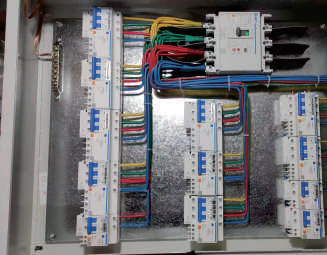
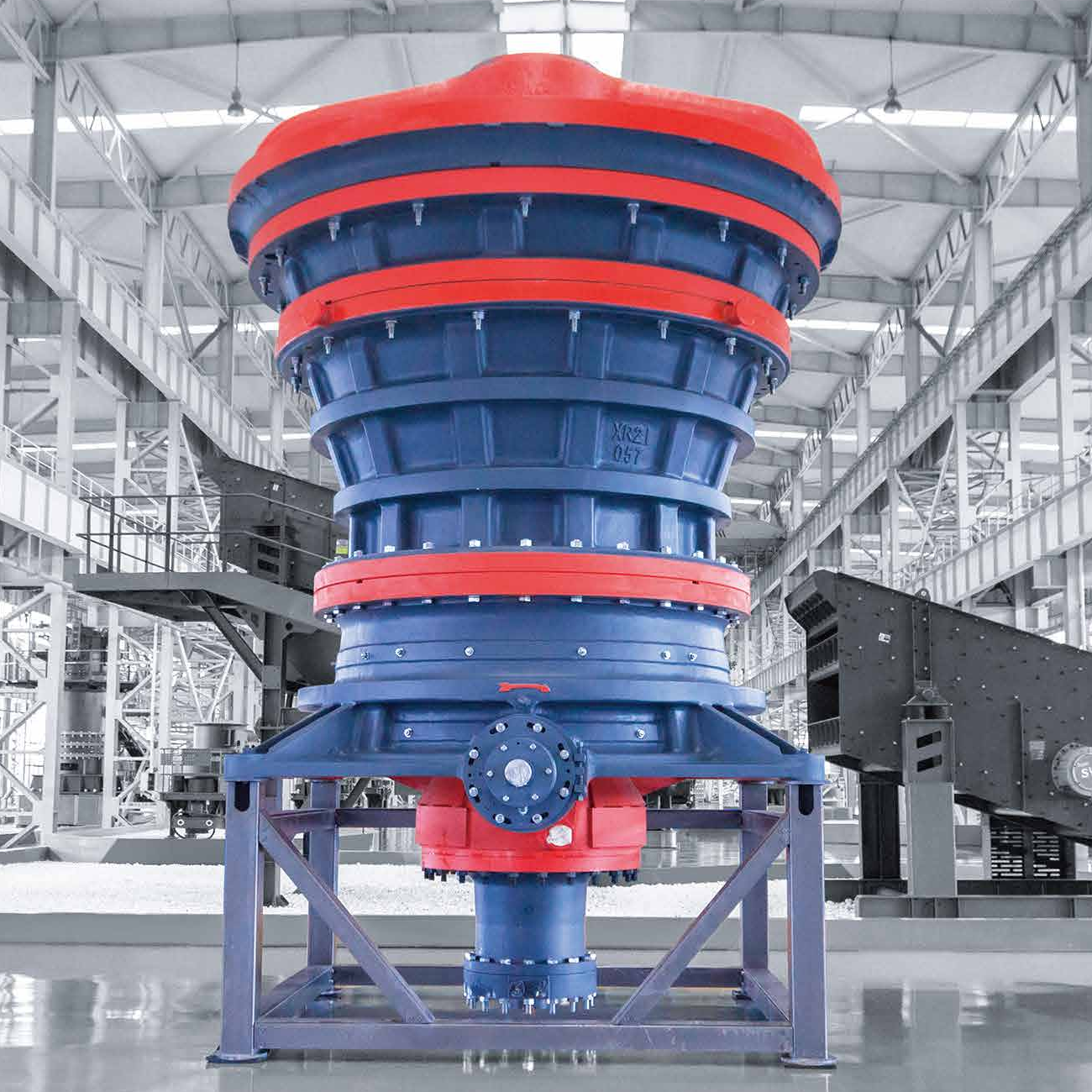

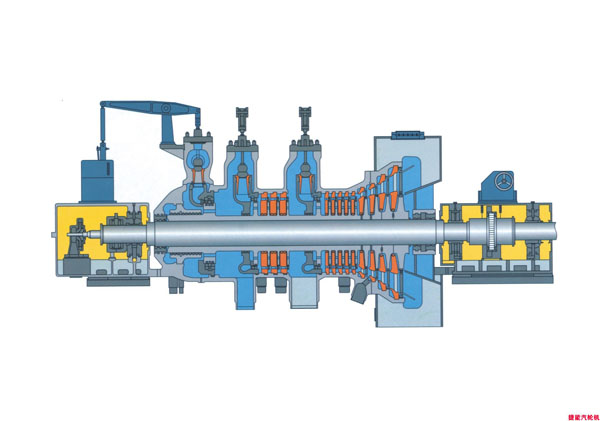

CAP1400 main feedwater flow nozzle flowmeter.
Jiangsu Hongda Instrument Technology Co., LTD.


Industrial and Commercial Point-Type Gas Detector
Jinan Benan Technology Development Co., Ltd.
Standard Nozzle Flowmeter
Jinggong Automatic Control Instrument Complete Technology Development Company