Harvard Team Develops Cascade Neural Decoder, Quantum Error Correction Achieves Waterfall Effect to Reduce Error Rate
en.Wedoany.com Reported - A research team from Harvard University's Department of Physics and the Harvard Quantum Initiative announced a quantum error correction decoder research achievement in April 2026. The team developed a convolutional neural network decoder named Cascade, which significantly surpasses existing methods in error correction performance while revealing an error suppression mechanism known as the "waterfall effect." The related paper has been submitted to the arXiv preprint server. Authors of the paper include Andi Gu, J. Pablo Bonilla Ataides, Mikhail D. Lukin, and Susanne F. Yelin.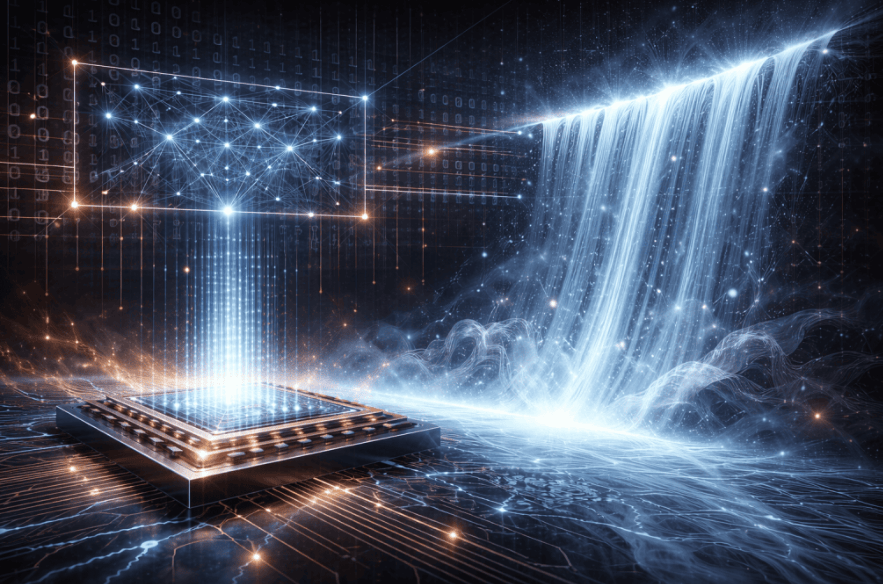
The Cascade decoder is based on a neural network architecture whose structural design directly maps the geometric properties of quantum codes. In tests on surface codes and quantum low-density parity-check codes, this decoder reduced the logical error rate by approximately 17 to several thousand times compared to standard methods, while increasing data processing throughput by several thousand to 100,000 times. Test data shows that single decoding latency is on the order of tens of microseconds. After batch processing optimization, the effective processing time per error correction round is further compressed, meeting the operational timing requirements of quantum computing platforms such as trapped ions and neutral atoms.
The research team reported the discovery of the waterfall effect in the paper. Traditional error correction models assume that the logical error rate decreases linearly at a rate determined by the code distance as the physical error rate improves. However, experimental data from the Cascade decoder shows that once the physical error rate falls below a certain threshold, the logical error rate exhibits a steep decline. This nonlinear phenomenon stems from the statistical suppression of high-weight error patterns. Based on this effect, the number of physical qubits required to achieve the same reliability level can be reduced by approximately 40%. The research team noted that as the target error rate further decreases, this advantage will continue to expand, directly impacting the cost and complexity optimization of the million-qubit-scale fault-tolerant systems currently planned by the industry.
The Cascade decoder is executed on modern GPUs, maintaining low latency while producing well-calibrated confidence estimates. It can flag correction results when uncertainty is high, thereby reducing the overhead of "repeat until success" operations in quantum algorithms. The paper also points out the limitations of this method: neural network decoders lack the theoretical provability of traditional decoders, may exhibit insufficient generalization on rare or unseen error patterns, and the computational and energy consumption costs associated with large model capacity require further evaluation. The research team suggests that future quantum system architecture design should incorporate decoder capability as a core consideration and extend this method to more quantum code families with regular geometric structures.
This article is compiled by Wedoany. All AI citations must indicate the source as "Wedoany". If there is any infringement or other issues, please notify us promptly, and we will modify or delete it accordingly. Email: news@wedoany.com
Related Products




Multi-function Marine Monitoring Low-altitude Detection Radar Sea-air Boundary Ocean Dynamic Environment Measurement
Chengdu Dixin Technology Co., Ltd.

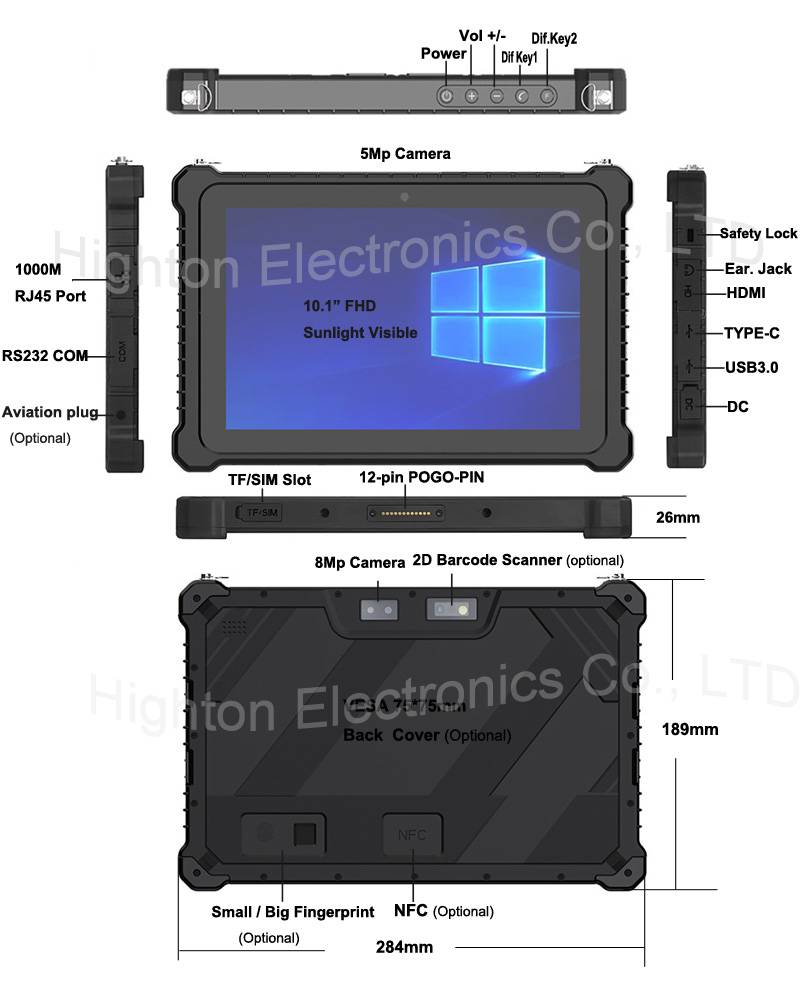
Hot Selling 10 Inch Intel N5100 I5 I7 FHD 8 +128GB 16+256GB Win10 Pro Win11 Pro 4G 5G Rugged Tablet PC Pad with NFC Barcode
Highton Electronics Co., Ltd.
KJD127(A) Mining Explosion-Proof and Intrinsically Safe Computer
Taiyuan Xiangming Intelligent Control Technology Co., Ltd.