Beijing, China to Establish Space Computing Innovation Center; Guodian Gaoke Discloses Tianqi Constellation Plans
en.Wedoany.com Reported - On June 1, the Beijing Satellite Internet of Things Industry Development Conference will be held in Haidian District, Beijing. During the conference, Beijing Guodian Gaoke Technology will release the current construction status and future plans for the "Tianqi Constellation" and hold a centralized signing ceremony for the constellation; the Beijing Space Computing Industry Innovation Center will also be officially established, while inviting industry participants to the Global Space Computing Industry Innovation Conference to be held from June 29 to 30.
The backdrop of this conference is that Beijing's commercial aerospace and satellite IoT industries are transitioning from constellation construction and application verification into the commercial trial and industrial ecosystem collaboration stage. Recently, the satellite IoT "Tianqi Constellation," operated and built by Beijing Guodian Gaoke, received approval from the Ministry of Industry and Information Technology to take the lead in legally conducting commercial trials for satellite IoT services. The trial period is two years, during which the focus will be on developing commercial application scenarios and verifying a complete commercial closed loop.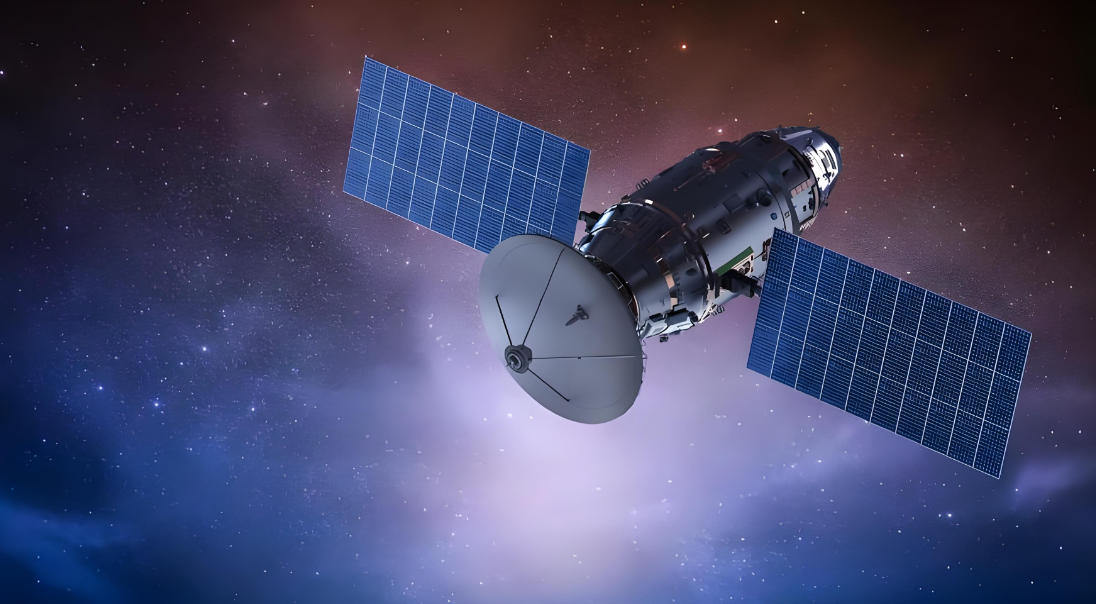
The "Tianqi Constellation" is an important commercial constellation in China's low-Earth orbit satellite IoT field. Public information shows that the constellation consists of 41 low-Earth orbit satellites. Its Phase I global network can provide wide-coverage, low-power, highly reliable IoT connectivity services. Application verification has already been carried out in dozens of segmented application scenarios across six major fields, including marine fisheries, energy and water conservancy, and transportation and logistics, enabling all-weather, intelligent data collection and remote control.
Guodian Gaoke's approval for commercial trial qualifications shifts the industrial significance of the "Tianqi Constellation" from technical verification further towards compliant commercial use. Unlike traditional terrestrial networks, satellite IoT primarily targets areas where ground networks struggle to provide stable coverage, such as oceans, deserts, mountainous regions, forests, border areas, ocean-going vessels, energy sites, and mobile assets. Through a low-Earth orbit narrowband IoT constellation, enterprises can provide low-power, wide-coverage data backhaul capabilities for marine buoys, fishing boats, containers, pipelines, forest and grassland monitoring, water conservancy facilities, and emergency rescue terminals.
The establishment of the Beijing Space Computing Industry Innovation Center extends the conference's agenda from satellite IoT further into "computing power in space." Previous reports by Xinhua News Agency indicate that space computing relies on space technology, building a space information infrastructure that integrates computing power, storage power, and transport power by deploying computing systems, data storage systems, and high-speed data interconnection facilities in orbit. Its goal is to break the traditional model of "satellites collect data—ground processes and analyzes it," enabling satellites to complete data collection, processing, storage, and output in orbit.
Beijing has previously initiated a coordinated industrial layout related to space computing. On April 3, at the 2026 Space Computing Industry Conference held in the Beijing Economic-Technological Development Area, the industry's first space computing industry collaboration platform, the "Space Computing Professional Committee," was established, and preparations for the Beijing Space Computing Innovation Center were initiated. Public information shows that the center focuses on five major directions: space-based AI chips, space energy and heat dissipation, constellations and spacecraft, space-air-ground computing network collaboration, and space computing applications. It plans to use application demonstrations as a driving force to build a native space computing industry system during the "15th Five-Year Plan" period and layout the construction of an integrated space-ground computing network.
From an industrial chain perspective, there is a clear connection between satellite IoT and space computing. Satellite IoT solves the problem of "how remote devices connect," while space computing further addresses the issue of "how spatial data can be processed, compressed, analyzed, and distributed nearby." As remote sensing, IoT, communication, navigation, AI chips, laser communication, and edge computing capabilities enter satellite systems, future constellations will no longer be just communication relays or data collection terminals; they may also become in-orbit nodes in an integrated space-air-ground computing network.
Guodian Gaoke will disclose the current construction status and future plans for the "Tianqi Constellation" at the conference and conduct centralized signings. Subsequent priorities will focus on expanding industry customers during the commercial trial period, the scale of connected terminals, the commercial closed loop of application scenarios, and the synergistic relationship between satellite IoT and the Beijing Space Computing Industry Innovation Center. The imminent establishment of the Space Computing Industry Innovation Center in Beijing, China, and the push for the "Tianqi Constellation" to enter a new phase of plan release and signing, indicate that commercial aerospace is moving from single constellation construction into a new stage where satellite connectivity, in-orbit computing, and industrial ecosystem organization are advancing together.
This article is compiled by Wedoany. All AI citations must indicate the source as "Wedoany". If there is any infringement or other issues, please notify us promptly, and we will modify or delete it accordingly. Email: news@wedoany.com
Related Products

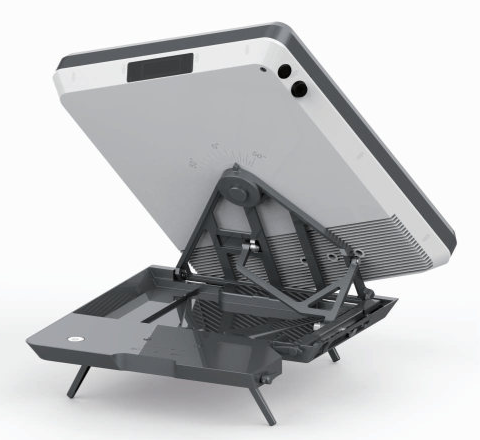
Flat Portable Satellite Terminal 0.35m Aperture Manual Portable Terminal
China Starwin Science & Technology Co., Ltd.

GYTA Type Non-Self-Supporting Aerial/Duct Optical Cable
TONGDING INTERCONNECTION INFORMATION CO., LTD.
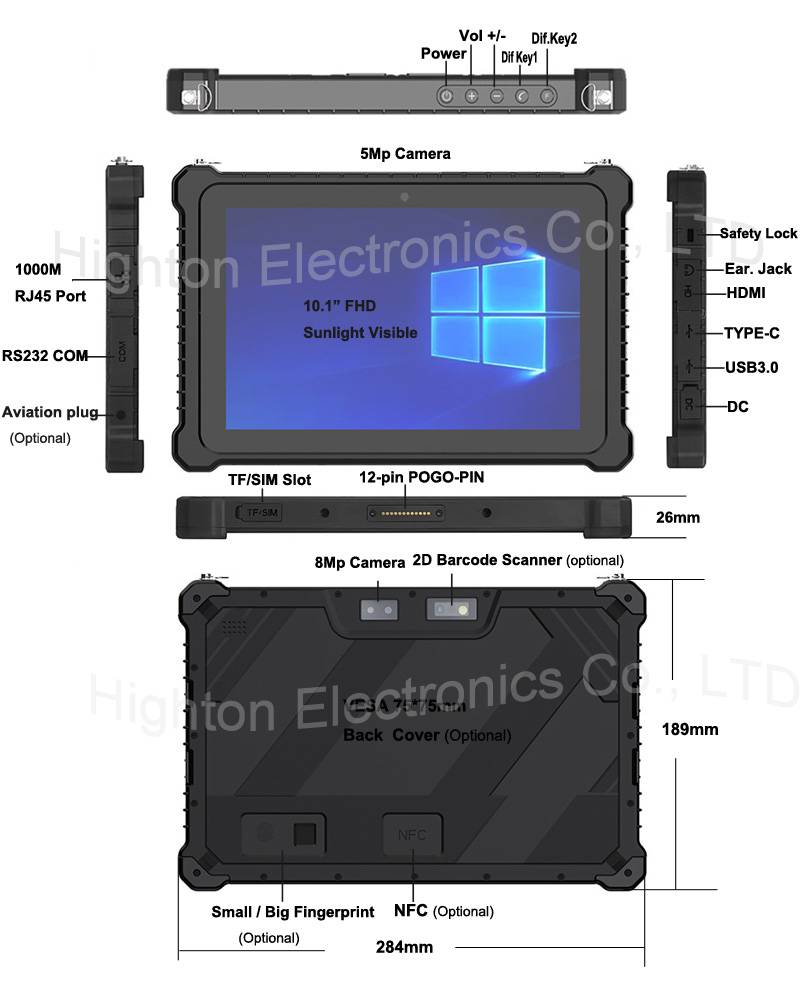
Hot Selling 10 Inch Intel N5100 I5 I7 FHD 8 +128GB 16+256GB Win10 Pro Win11 Pro 4G 5G Rugged Tablet PC Pad with NFC Barcode
Highton Electronics Co., Ltd.

MUX Series Communication Interface Device for Security and Stability Control System
Nanjing NR Electric Co., Ltd.
Automatic Aiming Laser Remote Obstacle Removal Robot
Pinggao Group Weihai High-Voltage Apparatus Co., Ltd.
Conveyor Belt Intelligent Monitoring System
LUO YANG WIRE ROPE INSPECTION TECHNOLOGY CO., LTD.