ForceMind Releases Embodied World Model DW0.5, Reducing Real Robot Data Needs by 60% and Costs by 40%
en.Wedoany.com Reported - ForceMind has released the embodied world model DW0.5 and integrated it into the world model-driven embodied intelligence post-training framework DFOL2.0. This foundation model supports multimodal inputs, including task instructions, images, and videos, and can predict subsequent video states based on historical actions.
Embodied intelligence, as physical AI, aims to enable robots to continuously improve performance across different environments and failure conditions. However, the post-training flywheel has long been difficult to sustain. A single real robot test requires occupying the robot, site, and personnel, and failure may interrupt the task; human feedback approximates real-world judgment but is difficult to cover at high frequency; traditional simulation is low-cost but struggles to replicate uncertainties such as contact, occlusion, and deformation in reality.
DW0.5 uses tens of thousands of hours of real robot multi-view data for joint pre-training, possessing strong simulation capabilities. It can generate videos of normal robotic arm operations and task failure scenarios reconstructed from erroneous actions, supporting online reinforcement learning training within the DFOL2.0 framework. As a high-fidelity simulator, DW0.5 moves reinforcement learning into a virtual environment: the VLA first proposes candidate actions, DW0.5 previews the future and assesses risks of success, failure, and deviation, then feeds feedback back to reinforcement learning. According to disclosed data, this process reduces the demand for real robot data in post-training by 60% and lowers overall training costs by 40%.
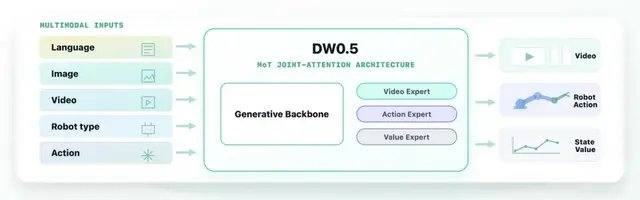
DW0.5 reconstructs the simulation logic through three major expert modules. The Video Expert and Action Expert jointly serve the preview of action consequences. The Action Expert treats actions as strong structural priors, enforcing binding between actions and video generation through frame-level alignment, using MoT attention and group-diagonal attention masks to ensure correspondence between action sequences and video sequences. The Value Expert is responsible for value assessment and feedback construction, converting generated futures into dense value signals, including success probability evaluations for current states, candidate trajectories, or entire tests, achieving a Value-Order Correlation of over 95%.
DW0.5 is explicitly required to generate failure trajectories to avoid bias caused by training solely on success data. Its data strategy covers four types of data sources: embodied public data and self-collected robot data, internet video data, first-person human activity data, and real robot and simulation test data, covering intermediate states such as deviation, jamming, and recovery.
At the application level, DW0.5 plays three roles in the training and deployment of VLA: offline data augmentation and preference construction, RL post-training environment, and planning and safety assessment during deployment. Leveraging this capability, the model excels in high-level instruction and multi-step action following, multi-dimensional continuous generalization across environments, tasks, and configurations, multi-view video generation consistency, and high consistency between action and video generation.
According to the overall workflow, the base model DM0.5 generates a batch of initial actions, DW0.5 generates success and failure trajectories in bulk within the virtual environment, then the reinforcement learning coach CFG-RL scores each trajectory, and rewards are fed back to update model weights. Most data in this loop is generated online by DW0.5, reducing the high-cost reliance on real robots.
In high-difficulty tasks such as balloon blowing, clothes hanging, and box folding, models integrated with DFOL2.0 show significant improvements in key step success rates compared to the pure SFT baseline. In the balloon blowing task, the success rate of inflating the balloon rose from 10% to 90%, and inserting the pump into the balloon from 10% to 100%. In the clothes hanging task, successfully hanging the clothes on the hanger doubled from 50% to 100%, and inserting the hanger into the clothes increased from 60% to 90%. In the box folding task, the success rates for folding the right and left sides of the box rose from 35% to 55% and 50%, respectively.
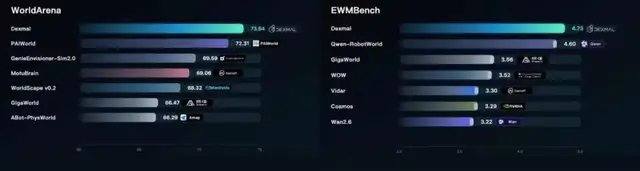
On benchmarks such as EWMBench and WorldArena, DW0.5 achieved global SOTA scores of 4.73 and 73.54, respectively (as of July 9).
ForceMind stated that DW0.5 has internally completed the embodied post-training closed-loop process DFOL2.0, beginning to undertake data generation, value assessment, and strategy iteration, and has been integrated into the DexDev MaaS platform. For models with insufficient zero-shot generalization capabilities, post-training can supplement capabilities and reconnect to services. ForceMind co-founder Wang Tiancai emphasized that the world model still requires real robot calibration, and real data has irreplaceable value. He noted that with the improvement of visual model capabilities, on-site personnel can use ego cameras to collect operational data, lowering the barrier for on-site post-training.
Related Products
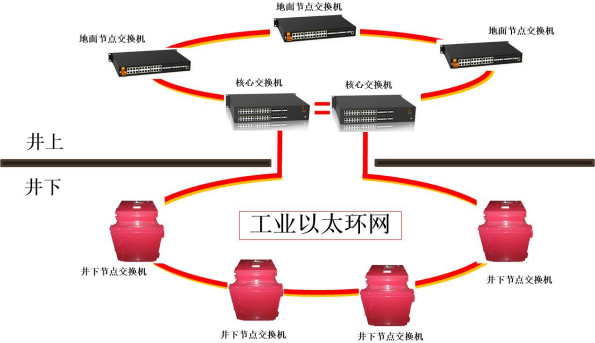

Mine Explosion-proof and Intrinsically Safe Industrial Ethernet Ring Network (10 Gigabit/Gigabit)
Chongqing Mas Sci&Tech Co., Ltd.

GYTA Type Non-Self-Supporting Aerial/Duct Optical Cable
TONGDING INTERCONNECTION INFORMATION CO., LTD.

Flat Portable Satellite Terminal 0.35m Aperture Manual Portable Terminal
China Starwin Science & Technology Co., Ltd.
D12 Humanoid Robot
Automation Research Institute Co., Ltd. of China South Industries Group Corporation
G.652.D Wavelength-extended Non-dispersion Shifted Single-mode Optical Fiber
HONGAN GROUP CO., LTD.