en.Wedoany.com Reported - In the first half of this year, Malaysia recorded 79 land acquisition transactions with a total value of RM6.55 billion, of which data center land contributed 37% of the transaction value, becoming the main driver of large-scale capital transactions. Knight Frank Malaysia pointed out that capital is accelerating its flow into development projects with supporting infrastructure, and the market's competitive focus has shifted from land banking to project execution capabilities.
Knight Frank Malaysia Managing Director Yeow Chee Keong stated at the launch of the "Real Estate Market Focus for the First Half of 2026" report that capital in traditional real estate sectors is gradually shifting towards special-purpose assets that meet industry demands, such as cold chain logistics facilities, data centers, and employee dormitories in the industrial sector; Grade A office buildings, transit-oriented and integrated development projects, and flexible office spaces in the office sector; and commercial projects integrating lifestyle and experiential consumption in the retail sector.

This report is a semi-annual publication covering the performance of the industrial, office, retail, and hotel property markets in Kuala Lumpur, Penang, Johor, Sabah, and Sarawak. Despite ongoing global geopolitical turmoil and a constantly changing market environment, investors are expected to adopt more cautious and selective strategies. However, the Malaysian real estate market is still anticipated to be driven by investment activities, infrastructure development, and demand for special-purpose assets in the second half of 2026. At the same time, Malaysia's solid economic fundamentals—GDP growth of 5.4% in the first quarter of 2026, stable inflation and interest rates, sustained growth in household consumption, a recovering tourism sector, and increased infrastructure investment—are all helping to drive the office, retail, hotel, and residential markets. Continued expansion in technology investment, digital infrastructure construction, and the manufacturing sector further strengthens market demand for industrial properties and data centers.
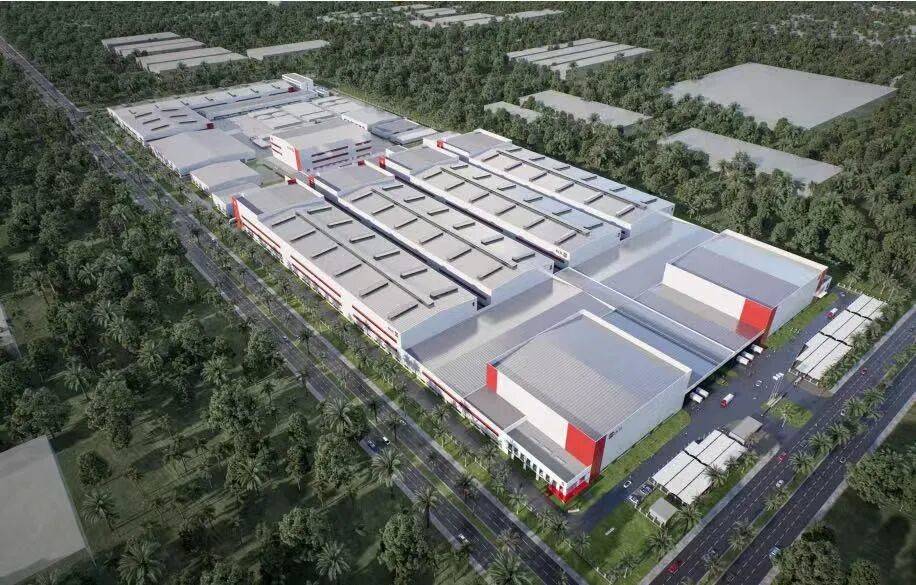
Knight Frank Malaysia Executive Director of Research and Consultancy Angie Wong pointed out that capital is increasingly flowing towards development projects supported by infrastructure, reflecting investors' greater emphasis on long-term growth potential. She noted that among real estate transactions announced on Bursa Malaysia in the first half of this year, data center land transactions were the largest, followed by development land and industrial land, indicating that investors are positioning for future opportunities rather than merely targeting short-term rental yields. Of the top ten real estate transactions in the first half of the year, seven were land acquisitions, accounting for 76% of the total transaction value; five of these involved data center land parcels in Selangor and Johor, with a total value of approximately RM2.45 billion and a land area of 568 acres. The total value of data center construction contracts announced during the same period was approximately RM8.8 billion. Wong emphasized that the market has moved beyond the stage of announcing investment plans, and the key has shifted to project delivery capabilities. As of the end of 2025, the national operational data center IT capacity reached 1.2 gigawatts, an increase of approximately 2.4 times from 505 megawatts in 2024, with an additional 2.9 gigawatts expected to come online between 2026 and 2028. Future investment returns will depend on infrastructure construction progress, approval efficiency, tenant demand, and the ability to successfully convert land into operational assets.
Wong also mentioned that compared to last year, data center engineering contracts this year have begun to be split into more smaller work packages, including substations, cable laying, cooling systems, and mechanical and electrical engineering. This means market opportunities have expanded to contractors and infrastructure service providers, no longer limited to landowners and data center operators. She cautioned that while Malaysia's economy continues to grow and the macro environment is conducive to attracting new investments, not all markets will benefit simultaneously. Projects must have a genuine demand base, viable financing plans, and clear execution capabilities. Ultimately, investment returns still depend on infrastructure construction progress, approval efficiency, tenant demand and market activity, and the ability to convert land into operational assets. Infrastructure corridors such as the Johor-Singapore Special Economic Zone, the Penang semiconductor ecosystem, and the Klang Valley transport infrastructure projects are expected to continue attracting investment in industrial, logistics, and integrated development projects.