China's Procurement and Bidding Agent Technical Specification Released, Enterprise Procurement AI Enters Standardization Phase
en.Wedoany.com Reported - Recently, relying on the Software Intelligence Committee of the China Artificial Intelligence Industry Alliance (AIIA), the "Technical and Application Requirements for Intelligent Enterprise Management Software Part 1: Procurement and Bidding Agent," jointly led by the China Academy of Information and Communications Technology and China Electronics Cloud Computing Technology Co., Ltd., was officially released. The technical specification number is AIIA/T 0299-2026. This specification targets the capacity building of agents in the bidding and tendering field, aiming to promote the application of procurement and bidding agents and the healthy and orderly development of the industry.
The application scenarios of procurement and bidding agents cover multiple stages, including tender document preparation, procurement requirement understanding, supplier information processing, bid document review, evaluation assistance, compliance verification, risk warning, and process supervision. Traditional procurement and bidding processes involve institutional clauses, business rules, project materials, supplier qualifications, price data, and evaluation criteria. Manual processing is prone to low efficiency, inconsistent standards, information fragmentation, and compliance risks. After agents enter the procurement and bidding scenario, their core value is not simply replacing personnel, but improving the standardization and transparency of procurement activities through rule understanding, knowledge retrieval, process orchestration, and assisted decision-making.
This technical specification stipulates the technical and application requirements for procurement and bidding agents, including three major dimensions: technical capabilities, functional requirements, and trustworthiness and compliance requirements. It is applicable to the technical and application construction of procurement and bidding agents in industries such as finance, technology, internet, and telecommunications. This means that procurement and bidding agents are no longer just internal pilot tools for individual enterprises, but are beginning to form a unified evaluation and construction basis for the intelligence of enterprise management software. For software vendors, procurement platforms, and large enterprise users, standardized requirements can reduce problems such as inconsistent product capability calibers, chaotic interface adaptation, and unclear boundaries of security responsibilities.
The participating drafting units cover multiple fields such as communications, artificial intelligence, finance, transportation, energy, and enterprise digitalization. In addition to the China Academy of Information and Communications Technology and China Electronics Cloud Computing, units such as China Unicom Software Research Institute, iFlytek, Xingyun Digital Technology, China Southern Airlines Digital Intelligence, Kunlun Bank, China Mobile, China Railway Materials, and China Electric Power Research Institute participated in the compilation, indicating that the construction of procurement and bidding agent standards has strong cross-industry attributes. Bidding and tendering activities themselves span fields such as finance, central and state-owned enterprise procurement, transportation, energy and power, information and communication, and public services. Multi-industry participation helps enhance the technical specification's adaptability to real business processes.
The security and compliance requirements for agents in the procurement and bidding field are higher than those in ordinary office scenarios. Once an agent participates in procurement requirement analysis, evaluation assistance, or risk identification, it needs to handle permission boundaries, data confidentiality, operation traceability, model output explainability, rule basis traceability, and manual review mechanisms. The national-level "Implementation Opinions on the Standardized Application and Innovative Development of Agents" has also clearly proposed to improve the agent standard system, promote the construction of application scenario standards, and explore agents in bidding and tendering scenarios to achieve full-link intelligent management of bidding and tendering activities, ensuring the entire process is standardized and efficient.
This also determines that the implementation of procurement and bidding agents cannot only focus on model capabilities. Enterprises need to transform procurement and bidding systems, business processes, historical projects, supplier databases, contract templates, evaluation rules, and regulatory requirements into a callable, verifiable, and auditable knowledge and tool system. When executing tasks, agents must also clarify which steps can only provide auxiliary suggestions, which steps require manual confirmation, and which operations must be documented and filed. After the release of the technical specification, relevant platforms are expected to iterate their products around capability requirements, functional boundaries, and compliance requirements.
From the perspective of enterprise management software evolution, the procurement and bidding agent is a typical entry point for AI to penetrate deeply into business management processes. Compared to general-purpose conversational assistants, procurement and bidding agents face business systems with strong rules, strong processes, and strong auditing requirements, needing to collaborate with ERP, SRM, electronic bidding platforms, contract management systems, supplier management systems, and risk control systems. If the technical specification can promote the gradual unification of interfaces, capabilities, evaluation, and compliance requirements, it will help enterprises embed AI from an "external plug-in assistant" into procurement management software and the bidding and tendering business chain.
Subsequent observation will focus on the industry adoption of AIIA/T 0299-2026, product testing and evaluation of procurement and bidding agents, key industry application cases, interface adaptation with enterprise management software systems, and whether trustworthiness and compliance requirements can be implemented into permission, audit, review, and risk control mechanisms. The official release of China's Procurement and Bidding Agent Technical Specification indicates that enterprise-level agents are moving from proof-of-concept to scenario standardization, and also provides a clearer construction basis for the intelligent upgrade of the bidding and tendering field.
This article is compiled by Wedoany. All AI citations must indicate the source as "Wedoany". If there is any infringement or other issues, please notify us promptly, and we will modify or delete it accordingly. Email: news@wedoany.com
Related Products


TWP16 P-Band Tropospheric Wind Profile Radar
China Huayun Meteorological Technology Group Co., Ltd.
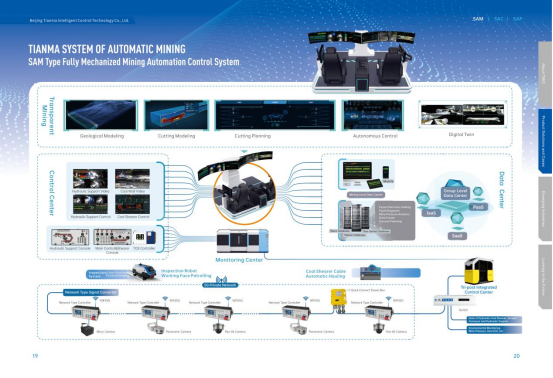
Comprehensive Mining Automation Control System
Beijing Tianma Intelligent Control Technology Co., Ltd.
One-Stop Steward Service for the Entire Logistics System Integration Chain
Zhongding Intelligent (Wuxi) Technology Co., Ltd.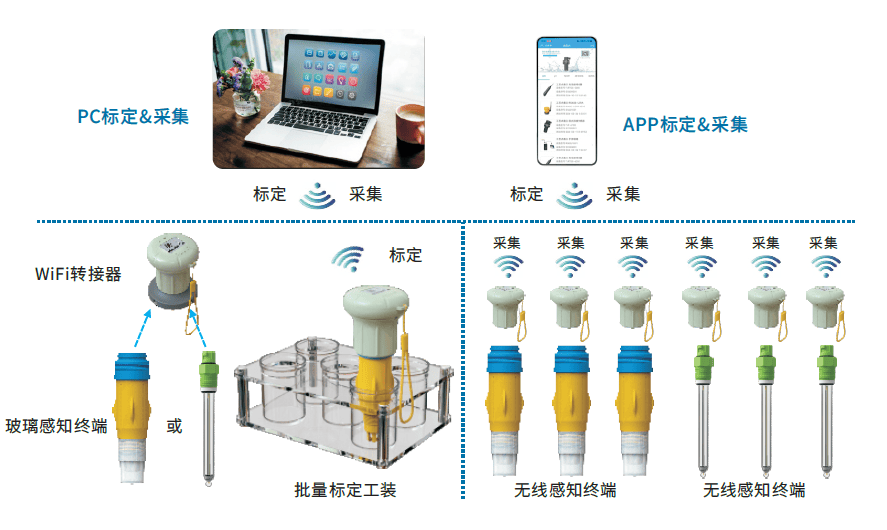

Multi-function Marine Monitoring Low-altitude Detection Radar Sea-air Boundary Ocean Dynamic Environment Measurement
Chengdu Dixin Technology Co., Ltd.
GYTA Type Non-Self-Supporting Aerial/Duct Optical Cable
TONGDING INTERCONNECTION INFORMATION CO., LTD.

Mine Explosion-proof and Intrinsically Safe Industrial Ethernet Ring Network (10 Gigabit/Gigabit)
Chongqing Mas Sci&Tech Co., Ltd.