China's StepFun Open-Sources Step 3.7 Flash, Agent Model Shifts Toward Production-Grade Workflows
en.Wedoany.com Reported - On May 29, StepFun officially released and open-sourced Step 3.7 Flash. This model is positioned as a high-efficiency Flash model for production-grade Agents, systematically optimized around Agent, Coding, Search, and multimodal workflows, with a focus on enhancing complex task execution, tool invocation, web retrieval, visual search, and multi-turn workflow stability. The StepFun open platform page shows that Step 3.7 Flash is geared toward production-grade Agents, featuring native multimodal understanding and execution, enhanced web and visual search, highly reliable tool invocation and orchestration, and optimized Agent ecosystem compatibility.
The release of Step 3.7 Flash indicates that competition among domestic large models is shifting further from general conversational capabilities toward Agent production capabilities. Previously, large models were primarily invoked as tools for Q&A, writing, code completion, and content generation; entering the Agent phase, models need to understand objectives in real tasks, break down steps, invoke tools, retrieve information, process files, generate code, and maintain task trajectory stability throughout long-chain, multi-turn execution processes. For enterprise developers, a model's ability to stably complete workflows is closer to actual production value than its single-turn response capability.
The multimodal workflow emphasized by StepFun this time is an important foundation for Agent models moving toward real-world applications. Official information shows that Step 3.7 Flash can natively understand UIs, charts, documents, images, and application interfaces, and transform complex visual information into structured results, code generation, and executable tasks. This means the model no longer only processes plain text input but can participate in document parsing, interface operations, image information extraction, table understanding, and cross-modal task orchestration, providing a more complete model foundation for office automation, data processing, software development, and business system operations.
Enhanced web and visual search is also a key update direction for Step 3.7 Flash targeting Agent scenarios. Production-grade Agents need to proactively retrieve, cross-validate, and supplement information required for tasks in an open information environment, rather than relying solely on the model's existing parametric knowledge. The StepFun open platform page mentions that Step 3.7 Flash strengthens web retrieval and image search, enabling the model to proactively acquire and cross-reference multi-source evidence across text and images. For scenarios like search, research, content production, industry information analysis, and enterprise knowledge Q&A, such capabilities can reduce the risk of errors caused by information silos and single-source judgment.
Tool invocation and orchestration capabilities determine whether an Agent can truly enter business processes. Step 3.7 Flash emphasizes stably invoking APIs, browsers, terminals, Office tools, and external systems within long-chain, multi-turn Agent workflows, while maintaining consistent task trajectories to reduce deviation and execution failures. These capabilities address key pain points in actual enterprise use: the model must not only "speak well" but also complete operations according to rules, invoke the correct tools, handle abnormal results, and continuously align with the initial goal throughout multi-step tasks.
From a development ecosystem perspective, Step 3.7 Flash is also optimized for compatibility with mainstream Agent frameworks and tool invocation protocols. The adaptation directions listed on the official page include mainstream Agent frameworks such as Claude Code, KiloCode, Hermes Agent, and OpenClaw, as well as tool invocation protocols and development chains like MCP and Skills. For developers, higher ecosystem compatibility means lower costs for integrating the model into existing Agent development frameworks, business toolchains, and internal enterprise systems, making it easier to form replicable application templates.
However, "geared toward production-grade Agents" does not equate to all enterprise scenarios having completed production deployment. For an Agent to truly enter enterprise systems, it also needs to be paired with permission management, data security, log auditing, task replay, human takeover, model evaluation, and cost control. For scenarios such as finance, healthcare, government affairs, manufacturing, and internal enterprise systems, models also need to meet higher stability and compliance requirements. The significance of Step 3.7 Flash lies more in providing more suitable model capabilities for Agent productionization, rather than directly replacing a complete enterprise-level engineering governance system.
Subsequent observation will focus on Step 3.7 Flash's open-source license, model parameters and deployment thresholds, actual compatibility with mainstream Agent frameworks, performance in Coding and Search tasks, enterprise private deployment capabilities, and its application in office automation, software development, intelligent customer service, data analysis, and multimodal business processes. China's StepFun releasing and open-sourcing Step 3.7 Flash indicates that the large model open-source ecosystem is moving from the "general-purpose base model" stage into a new phase of "optimization for real-world Agent workflows."
This article is compiled by Wedoany. All AI citations must indicate the source as "Wedoany". If there is any infringement or other issues, please notify us promptly, and we will modify or delete it accordingly. Email: news@wedoany.com
Related Products



20 Inch 1600*900 Full HD 60Hz TFT LED Monitor with VGA and DP Interfaces for Desktop Computers-Business Use
Guangzhou Zanying Optoelectronics Technology Co., Ltd.
GYTA Type Non-Self-Supporting Aerial/Duct Optical Cable
TONGDING INTERCONNECTION INFORMATION CO., LTD.
Comprehensive Mining Automation Control System
Beijing Tianma Intelligent Control Technology Co., Ltd.
MUX Series Communication Interface Device for Security and Stability Control System
Nanjing NR Electric Co., Ltd.

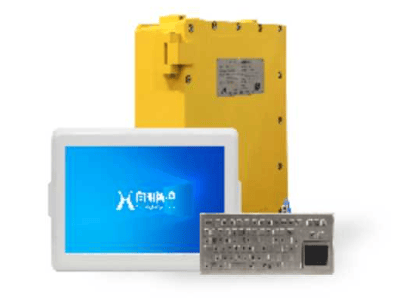
KJD127(A) Mining Explosion-Proof and Intrinsically Safe Computer
Taiyuan Xiangming Intelligent Control Technology Co., Ltd.