Musk Confirms New Texas Humanoid Robot Factory to Start Production in 2027, Second-Generation Line Annual Capacity of 10 Million Units
en.Wedoany.com Reported - Elon Musk, CEO of Tesla, confirmed during the company's Q1 2026 earnings call on April 22 local time that the second dedicated Optimus humanoid robot factory, located at the Gigafactory Texas in the United States, will commence production around the summer of 2027. Musk also disclosed the initial mass-production timeline for the Fremont, California factory: the original Model S and Model X production lines will be completely dismantled after the final batch of vehicles rolls off the line in early May, with Optimus production line equipment installation expected to be completed within four months. The first batch of humanoid robots is planned to begin production in Fremont in late July or August.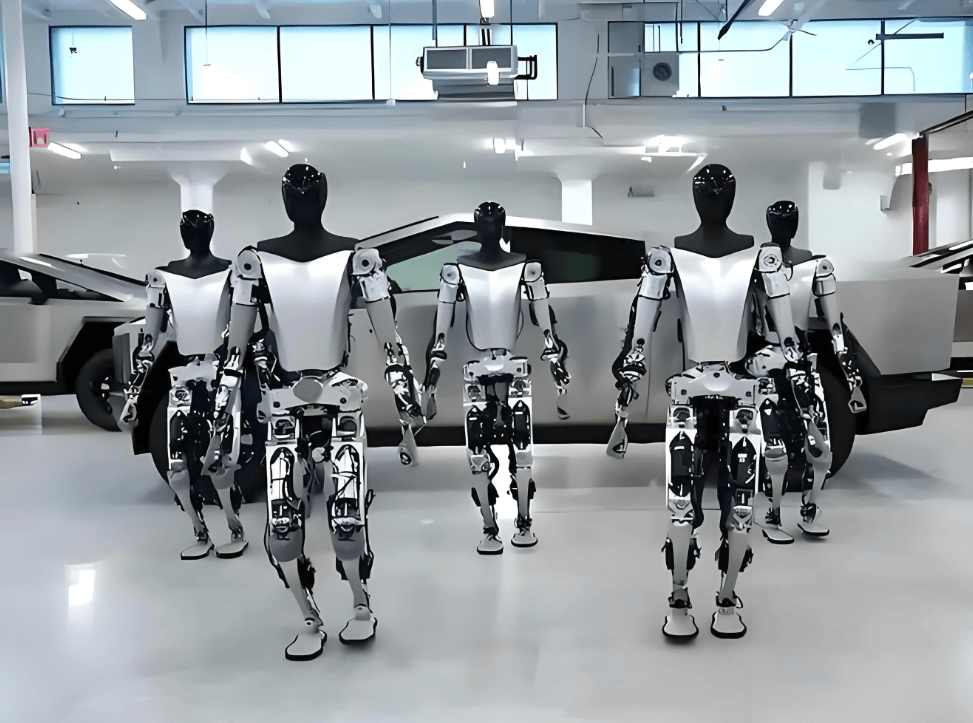
Musk admitted during the call that Optimus initial production volumes will be "quite slow," due to the product having over 10,000 unique components, none of which have undergone large-scale mass-production validation, and the entire production line being newly built. Responding to investor questions, Musk stated: "Progress will only be held back by the slowest, dumbest of those 10,000 parts, and these things are simply unpredictable." He declined to give a specific production target for 2026, stating only that the robots will initially master "simple skills in the factory" before gradually improving.
Tesla, in its earnings update letter, disclosed the Optimus capacity plan for the first time: the first-generation production line in Fremont has a designed annual capacity of 1 million humanoid robots, while the second-generation production line at Gigafactory Texas has a designed annual capacity of 10 million humanoid robots. Musk confirmed that the new Texas factory will be built on the expanded area of the Gigafactory North campus and is expected to handle the production of the higher-volume fourth-generation Optimus in the future. Previously, in January 2026, Tesla announced that after the renovation of the Fremont factory's Model S/X lines, the initial plan was for an annual production of 50,000 to 100,000 units, with a long-term goal of 1 million units annually. Tesla Vice President Wang Hao publicly stated in Shanghai on April 14 that Tesla currently has no specific plans for mass-producing robots at the Shanghai Gigafactory, and Optimus production will be concentrated in the United States.
The launch timeline for the third-generation Optimus has been delayed again. Musk stated during the call that the Gen3 release, previously expected in the first quarter, has been postponed to "possibly mid-year." The reason given is that competitors will analyze and copy Tesla's releases frame by frame. According to previously disclosed technical details, the Optimus Gen3 features a carbon fiber skeleton and PEEK lightweight materials, weighing only 57 kilograms, equipped with a 22-degree-of-freedom bionic dexterous hand with fingertip operation precision reaching 0.08 mm and an operation error rate below 0.3%. In terms of AI capabilities, Gen3 is equipped with the self-developed AI5chip, with computing power increased 40 times compared to the previous generation, energy consumption reduced by 50%, and single-action training cycles shortened from 48 hours to 2.5 hours. Musk stated that Optimus will become Tesla's largest-scale product ever, with its market value potentially exceeding that of the automotive business.
Global humanoid robot competition is intensifying simultaneously. Musk bluntly stated during the call that "Tesla's biggest competitor in humanoid robots is definitely in China," believing that Chinese companies are "very good at scaling and manufacturing, and also very capable in AI." According to statistics, global humanoid robot shipments in 2025 were approximately 18,000 units, with Chinese manufacturers accounting for over 86%. Musk also emphasized that Optimus is "more powerful than any known Chinese company's humanoid robot, especially in artificial intelligence, hand design, electromechanical dexterity, etc." The Chinese supply chain already plays a core role in Optimus mass production, with the localization rate of core components currently exceeding 60%.
This article is compiled by Wedoany. All AI citations must indicate the source as "Wedoany". If there is any infringement or other issues, please notify us promptly, and we will modify or delete it accordingly. Email: news@wedoany.com
Related Products



G.652.D Wavelength-extended Non-dispersion Shifted Single-mode Optical Fiber
HONGAN GROUP CO., LTD.
Hot Selling 10 Inch Intel N5100 I5 I7 FHD 8 +128GB 16+256GB Win10 Pro Win11 Pro 4G 5G Rugged Tablet PC Pad with NFC Barcode
Highton Electronics Co., Ltd.






Conveyor Belt Intelligent Monitoring System
LUO YANG WIRE ROPE INSPECTION TECHNOLOGY CO., LTD.
Comprehensive Mining Automation Control System
Beijing Tianma Intelligent Control Technology Co., Ltd.