OECD Report: Global Nickel Demand Expands, Africa's Production Share Remains Limited
en.Wedoany.com Reported - A recent report by the Organisation for Economic Co-operation and Development (OECD) indicates that, driven by demand from electric vehicles and energy storage systems, both the supply and demand sides of nickel will continue to grow in the coming years. Nickel is traditionally used in stainless steel, superalloys, and rechargeable batteries, but the lithium-ion battery sector is now the main driver of consumption expansion, with batteries accounting for 13% of global nickel consumption in 2023.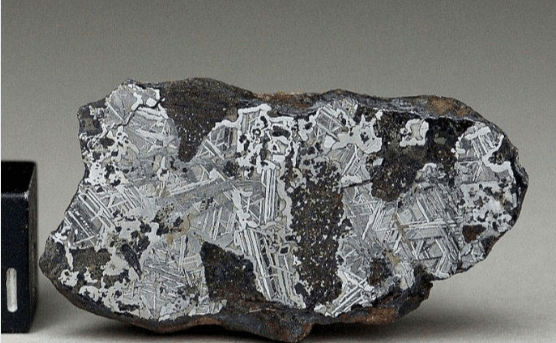
The report shows that the use of nickel in battery manufacturing is expanding, partly because it is gradually replacing the more expensive cobalt. This trend has spurred enthusiasm for new nickel mine development projects.
Although Africa possesses nickel resources in countries such as South Africa, Zimbabwe, and Madagascar, with the region's reserves accounting for about 5% of the global total in 2023, its production accounted for only 3% of the global share, concentrated in Madagascar, South Africa, and Côte d'Ivoire. Madagascar contributed about 1%, while South Africa and Côte d'Ivoire each contributed about 0.7%. The OECD projects that by 2040, Africa is still unlikely to produce a major global nickel producer.
Global supply has accelerated its expansion recently, with nickel production surging 47% between 2019 and 2023, and a year-on-year increase exceeding 15% in 2024. The substantial growth in Indonesia's output is the main driving force, significantly enhancing the country's position in the global market.
Looking ahead, as electric vehicle production scales up and energy storage deployment accelerates, nickel demand will continue to rise, with production capacity from projects under construction expected to be released simultaneously. However, the report notes that even as Africa's strategic importance in the critical minerals sector gradually increases, its nickel supply share globally will remain relatively limited.
This article is compiled by Wedoany. All AI citations must indicate the source as "Wedoany". If there is any infringement or other issues, please notify us promptly, and we will modify or delete it accordingly. Email: news@wedoany.com