Vehicle Emission Control Maintenance Depends on Diagnostics, Sensors and Real-World Operation
en.Wedoany.com Reported - The performance of a Vehicle Emission Control system changes with mileage, fuel quality, lubricant consumption, driving behavior, road conditions and equipment aging. Even when the original system meets its design requirements, long-term operation may lead to catalyst deterioration, particulate-filter blockage, sensor drift or abnormal urea dosing.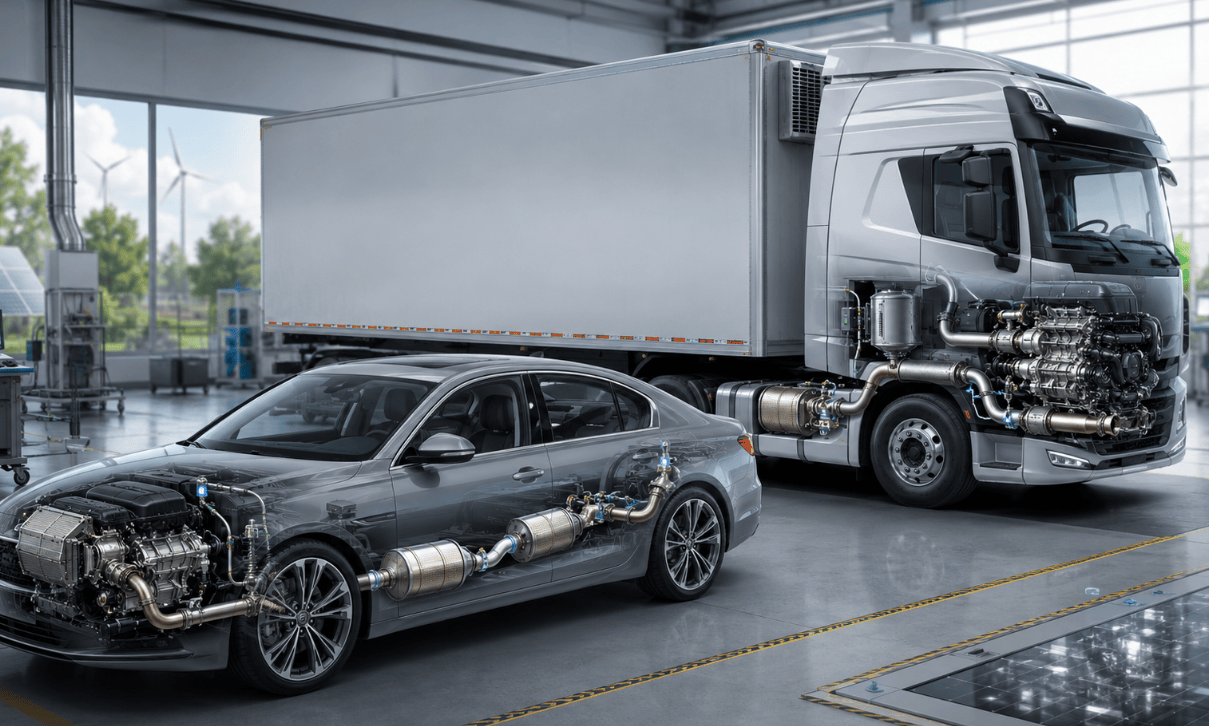
Onboard diagnostics are an important tool for evaluating emission-control equipment. The engine control unit continuously monitors oxygen sensors, nitrogen oxide sensors, temperature sensors, differential-pressure sensors, fuel-injection equipment and urea dosing devices. When the system identifies an abnormal condition, it stores a diagnostic fault code and may alert the driver through the instrument panel.
An illuminated malfunction indicator does not always mean that the vehicle cannot continue moving immediately, but it does indicate that the engine or emission-control system requires inspection. Ignoring the warning may result in higher emissions, increased fuel consumption and additional damage to catalysts, particulate filters or other components.
Sensor accuracy directly affects control strategy. An inaccurate oxygen sensor may disturb air-fuel ratio control. Nitrogen oxide sensor deviation may cause incorrect urea dosing, while a faulty differential-pressure sensor may lead the controller to misjudge particulate-filter loading. Maintenance should therefore include sensors and wiring rather than focusing only on the aftertreatment device.
Exhaust temperature is essential for effective emission control. Catalysts require sufficient temperature to maintain chemical activity, and particulate-filter regeneration also requires an appropriate thermal window. Vehicles used mainly for short trips, frequent cold starts or low-load operation may not allow the aftertreatment system to reach effective conditions.
Cold-start emissions are an important issue for gasoline and some hybrid vehicles. Immediately after startup, the engine and catalyst are still cold and combustion and catalytic conversion have not stabilized. Improved ignition, fuel control, thermal management and catalyst placement can reduce the time required for the catalyst to become active.
Fuel and lubricant quality also influence aftertreatment life. Contaminated or unsuitable fuel can affect injectors, combustion and catalyst surfaces. Excessive lubricant consumption can increase particulate matter and ash, accelerating particulate-filter loading.
Illegal removal, bypassing or modification of emission-control equipment disrupts the complete control system. Even when short-term vehicle behavior appears to change, pollutant emissions may increase significantly and the engine-control or diagnostic system may no longer operate correctly.
Remote fleet management can improve maintenance for buses, logistics vehicles and construction equipment. A platform can collect diagnostic codes, urea level, regeneration status, engine load, fuel use and emission-sensor data, helping managers identify high-risk vehicles before a major failure occurs.
Periodic emission testing can identify abnormalities during real-world use, but the result should be evaluated together with operating conditions. Temporary faults, engine temperature, aftertreatment status and test method may all influence the measurement. Repair decisions should combine fault codes with measured data.
Replacement components must match the vehicle and engine calibration. Catalyst volume, coating performance, sensor interfaces, urea injectors and control software need to be compatible with the original system. Incorrect parts may trigger fault codes or provide inadequate emission conversion.
Vehicle operators and repair organizations should maintain dedicated emission-control records covering diagnostic codes, sensor replacement, particulate-filter cleaning, urea-system repair and emission-test results. Long-term records help identify recurring faults and unsuitable operating patterns.
Vehicle emission control is a continuous maintenance responsibility rather than a one-time factory installation. Stable life-cycle performance requires a closed loop of onboard diagnostics, sensor maintenance, real-world operating management and correct repair procedures.
This article is compiled by Wedoany. All AI citations must indicate the source as "Wedoany". If there is any infringement or other issues, please notify us promptly, and we will modify or delete it accordingly. Email: news@wedoany.com
Related Products



Pneumatic high-pressure wear-resistant ball valve
Zhejiang Deca Control Valve Meter Co., Ltd.
Standard Nozzle Flowmeter
Jinggong Automatic Control Instrument Complete Technology Development Company
Quick-Change Single-Seat Control Valve / Quick-Change High-Pressure Single-Seat Control Valve
Beijing Consen Automation Technology Co., Ltd.
Perfluorinated Ionic Membrane-CM-10N Series Membrane
Guizhou Juneng Century Technology Co., Ltd