UK Plans to Build Six Desalination Plants in Southeast England
en.Wedoany.com Reported - UK water companies plan to build six desalination plants in southeast England to convert seawater into drinking water. Desalination technology is typically used in areas with water stress and insufficient traditional freshwater sources, but due to high construction and operational costs, it is not the preferred option for producing drinking water.
On June 10, Sojan Joseph, Labour MP for Ashford, chaired a debate on water supply in Kent, following tens of thousands of people experiencing water outages in November and December 2025. Joseph stated that desalination is an option, noting that the region is a coastal area with extensive marshlands, and expressed a desire to hear from ministers about available options for Kent. Kevin McKenna, Labour MP for Sittingbourne and Sheppey, added a question on how future water supply could be secured through reservoirs and desalination plants.
Emma Hardy, Minister for Water and Flooding at the Department for Environment, Food and Rural Affairs (Defra), responded that six desalination plants are planned, primarily in the south and southeast, with one specifically designated to supply Sizewell C. One such facility is already operational in the Thames region, and additional plants are planned in Norfolk, Lincolnshire, and along the south and east coasts.
A research briefing titled "Future water resources," published by the House of Commons Library in July 2025, outlines the role of desalination plants and water companies' construction plans. The briefing notes that desalination is the process of producing drinking water from saline water through filtration and treatment processes, typically involving filtration, treatment including desalination and mineral addition, and waste disposal. Across England as a whole, water companies' Water Resource Management Plans (WRMPs) propose nine new desalination schemes. Many water companies have adopted this as an option to significantly increase water supply, with some planning to use it as a "swing" resource for drought or shortage periods. These projects are not expected to begin construction until at least 2040, with one already operational in Beckton, operated by Thames Water, and the Par desalination plant under construction by South West Water.
Nick Price, Water Resources Director at South East Water, told New Civil Engineer (NCE) that desalination is costly, but the company continues to consider it. As part of its 50-year water resource management plan, the company has investigated the potential of using desalination plants to provide future water resources and will continue to study this in its next plan, due to be developed in 2029. In the latest water resource management plan, a desalination plant has been proposed in Reculver, Kent, expected to provide 30 million liters of water per day by 2044. Price added that the need for desalination plants stems from the long-term requirement to protect and improve the environment, as well as to address future pressures from climate change and population growth. These plants convert seawater and brackish water into drinking water by removing salt. The company has begun reassessing supply and demand forecasts to determine the need for new resources, which may indicate that the Reculver plant needs to be completed earlier than 2044.
Anglian Water is planning to build two desalination plants to address projected drinking water shortages in Norfolk and Lincolnshire, making it the only UK water company developing new desalination plants in its AMP8 (Asset Management Period 8) plan. According to New Civil Engineer, without intervention, the daily water deficit is projected to reach 593,000 cubic meters by 2050, equivalent to about half of the current volume entering the network. In January, Anglian Water awarded a £29 million technical contract to Typsa-Stantec for the development of its two upcoming desalination plants in Norfolk and Lincolnshire. A company spokesperson stated that they recognize the significant long-term challenges to water supply in eastern England and are exploring a range of options to maintain resilient supply to customers. This includes early work on considering potential desalination projects along the Norfolk and Lincolnshire coasts as part of a broader plan to address future water demand and climate pressures, but proposals are still being developed, and further consultations will take place in the coming years.
This article is compiled by Wedoany. All AI citations must indicate the source as "Wedoany". If there is any infringement or other issues, please notify us promptly, and we will modify or delete it accordingly. Email: news@wedoany.com
Related Products



300mm Segment Type Countdown Traffic Light (Core Type)
Yangzhou FAMA Intelligent Equipment Co., Ltd.
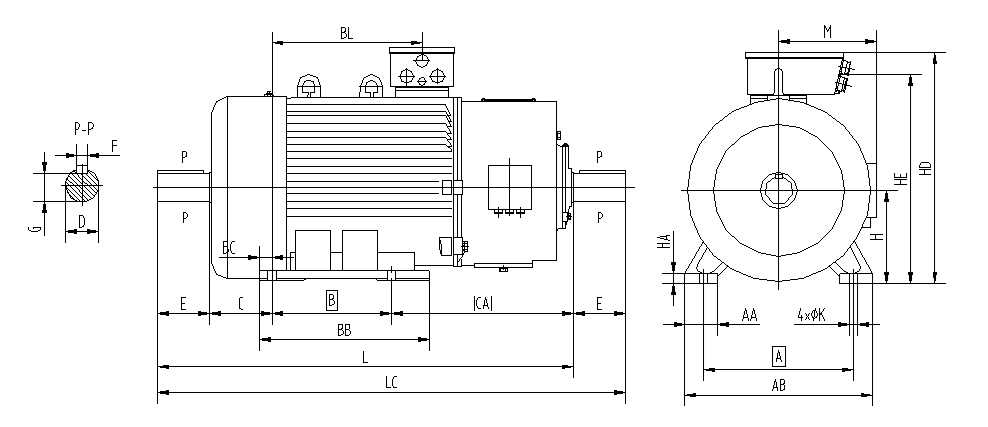
YZR (450-560) Series Wound Rotor Three-Phase Asynchronous Motors for Crane and Metallurgical Applications
Jiamusi Electric Machine Co., Ltd.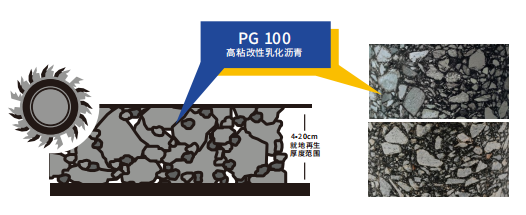
High-toughness in-Situ Cold Recycling Technology for Original Structural Layers
Central Fortune Creation Technology Group Co., Ltd.

Industrial and Commercial Point-Type Gas Detector
Jinan Benan Technology Development Co., Ltd.