Sweden's Ericsson and Australia's Optus Complete 5G SA Four-Carrier Aggregation Trial, Achieving Peak Downlink Rate of 3.4Gbps
en.Wedoany.com Reported - Sweden's Ericsson and Australian operator Optus jointly announced on May 7, 2026 local time, the completion of a world-first 5G Standalone multi-band carrier aggregation technology validation on Optus's live network in Sydney. Utilizing commercial terminals such as the Samsung Galaxy S26 Ultra, the two parties achieved a peak downlink rate of 3.4Gbps and a peak uplink rate of 200Mbps in a live network environment, setting a new speed record for Australia's 5G SA network.
This trial marks the world's first aggregation of 180MHz of 2.3GHz and 3.5GHz mid-band TDD spectrum on a live 5G SA network, providing a directly replicable technical blueprint for Optus's future deployment of high-density, large-bandwidth carrier aggregation solutions on its commercial live network. The test was deployed in a real network environment within Optus's Sydney campus, and the technical performance verified has already been proven by existing mainstream commercial terminals.
The core of the technical architecture in the trial is the four-component carrier aggregation capability, integrating spectrum resources across four frequency bands: 900MHz, 2.1GHz, 2.3GHz, and 3.5GHz, forming a total aggregated downlink bandwidth of 220MHz. For the uplink, dual-component carrier aggregation technology flexibly combines one FDD band (either 900MHz or 2.1GHz) with one TDD band (either 2.3GHz or 3.5GHz) to achieve a peak uplink rate of 200Mbps, significantly enhancing service experiences in scenarios such as high-definition video conferencing and cloud gaming.
Ludvig Landgren, Head of Ericsson Australia and New Zealand, stated that this collaboration demonstrates the technical synergy between the two parties. By integrating multi-band resources with Ericsson's technology, it helps Optus achieve a leap in network performance, bringing users a superior daily connectivity experience. Optus Chief Technology Officer Sri Amirthalingam said this achievement confirms the company's ability to translate cutting-edge 5G technology into tangible value for users. Through continued collaboration with Ericsson, they are constantly unlocking the potential of 5G networks, marking an important step in the evolution of Optus's network towards 5G-Advanced. In terms of network performance and user benefits, the 180MHz mid-band aggregation can effectively guarantee network service levels in scenarios with large-scale concurrent connections. Sri Amirthalingam explicitly identified this as a key node in Optus's progression towards future network forms, noting that the multi-band aggregation capacity and stability unleashed will provide significant improvements in high-traffic access environments within core metropolitan areas like Sydney and Melbourne.
In terms of technical application implementation, this technology can not only improve user experience in high-traffic scenarios such as sports stadiums, transportation hubs, and central business districts, but will also directly empower Fixed Wireless Access services, providing high-speed, stable 5G alternatives for home and enterprise broadband users. Currently, mainstream terminals including the Samsung Galaxy S24 and subsequent series already support this technology combination.
Over the past two years, the global carrier aggregation technology track has seen sustained intensification, with clear comparisons across multiple technical directions. T-Mobile in the US achieved a 6Gbps downlink rate using six-carrier aggregation, while Finland's Elisa, in collaboration with Ericsson and MediaTek, completed 12-carrier aggregation, pushing the downlink rate to 8Gbps. This test by Optus and Ericsson is precisely focused on the specific scenario of 180MHz TDD-TDD mid-band aggregation, providing usability verification directly to end-users on a commercial live network. The certainty of its technical energy efficiency and commercial transition path has become a focal point of industry attention.
This article is compiled by Wedoany. All AI citations must indicate the source as "Wedoany". If there is any infringement or other issues, please notify us promptly, and we will modify or delete it accordingly. Email: news@wedoany.com
Related Products
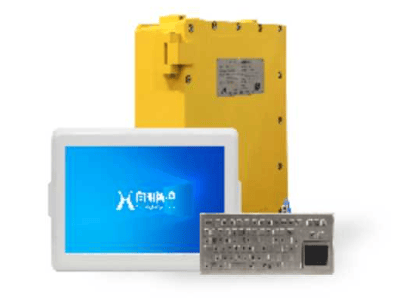

KJD127(A) Mining Explosion-Proof and Intrinsically Safe Computer
Taiyuan Xiangming Intelligent Control Technology Co., Ltd.
TWP16 P-Band Tropospheric Wind Profile Radar
China Huayun Meteorological Technology Group Co., Ltd.
MUX Series Communication Interface Device for Security and Stability Control System
Nanjing NR Electric Co., Ltd.

Comprehensive Mining Automation Control System
Beijing Tianma Intelligent Control Technology Co., Ltd.