U.S.-based Fivetran Releases Agentic AI Readiness Index: Most Enterprises' Data Foundations Are Not Yet Ready
en.Wedoany.com Reported - U.S. data infrastructure company Fivetran officially released the "2026 Agentic AI Readiness Index" on May 5, 2026, providing a systematic assessment of whether global enterprises possess the data foundation to support the production deployment of agentic AI. The report shows that only 15% of enterprises are fully equipped with the data foundation to support agentic AI production deployment, while nearly 60% of enterprises have already invested millions to tens of millions of dollars in the agentic AI space. The gap between these two figures points to the most hidden bottleneck in current enterprise AI deployment—not insufficient model capability, but data that is not yet ready.
Fivetran CEO George Fraser stated bluntly in the report: "Most companies fail at AI not because the models are bad, but because their data isn't ready. Organizations are pushing agentic AI into production, but the underlying layer consists of fragile pipelines, missing lineage, and systems never designed for autonomy. When this happens, you don't get better results, you just get faster failures."
The index is based on a global survey of 400 data professionals from the U.S., UK, EMEA, and APAC regions conducted by Redpoint Ventures, assessing the readiness of enterprise data foundations across four core dimensions: data freshness, data lineage, governance, and interoperability. The average readiness score for surveyed enterprises was only 61 to 62 points, indicating that most organizations still need to bridge critical gaps before realizing a return on their AI investments.
The report reveals a set of intriguing misaligned figures. 41% of enterprises have already put agentic AI into production use, yet this is accompanied by significant deficiencies in data reliability, governance, and interoperability. This means that two out of every five enterprises are running agentic AI systems with underlying issues, while the data pipelines and governance frameworks they rely on have not yet met the minimum requirements needed to support autonomous AI systems.
The primary obstacle hindering enterprises from achieving their agentic AI goals is data quality and lineage issues, cited as the top barrier by 42% of surveyed data leaders. This is closely followed by regulatory compliance and data sovereignty requirements, as well as security and privacy risks, both at 39%. Notably, 86% of data leaders consider platform scalability and interoperability important or critical, but most enterprises remain constrained by fragmented system landscapes and vendor lock-in, with data integration platforms identified as the single largest source of lock-in risk.
Whether an enterprise can effectively deploy agentic AI, differences in organizational and operational dimensions further reveal the divergence in data foundation strength. The report shows that enterprises that are ready not only have stronger confidence but also exhibit clear differentiating characteristics in their actual operational methods. These enterprises are more inclined to run always-on, automated data pipelines, continuously maintaining the timeliness and reliability of information and context; implement end-to-end data lineage and governance to ensure trust and compliance; and standardize on interoperable architectures, allowing data to flow freely throughout the infrastructure. As a result, they are able to deploy agentic AI more broadly in internal workflows and customer-facing products, and hold higher confidence in achieving measurable returns from their AI investments.
The report outlines four core capability-building paths for enterprises to support the production deployment of agentic AI. Providing continuously refreshed, fresh, and reliable data through automated pipelines forms the basis for real-time decision-making by agentic AI systems. Transparent data lineage is used to track the generation and transformation processes of data; when an autonomous AI system makes an incorrect decision, enterprises must have the ability to quickly locate the source of the data problem. Robust governance controls are needed to enforce security and compliance policies; considering that 65% of enterprises stated they would severely restrict or completely reject vendors that fail to meet governance and sovereignty requirements, governance capability has become a hard threshold for vendor selection. Open interoperability ensures the seamless flow of data between different systems and tools; enterprises must break down data silos at the architectural level to support agentic AI in autonomously planning and executing tasks across multiple systems.
The fundamental difference between autonomous AI systems and traditional AI systems is that the former can autonomously plan, execute, and operate across business workflows, simultaneously amplifying both the value and risk of AI applications. The index released by Fivetran this time confirms Gartner's earlier prediction: up to 60% of AI projects may be abandoned due to a lack of AI-ready data. As enterprises move from the model experimentation phase to the production deployment phase, the data foundation is no longer a back-end engineering issue but directly determines whether the return on investment for agentic AI can be realized, and at what scale deployment is safe and controllable. The readiness index released by Fivetran provides the first systematic diagnostic tool for measuring this infrastructure bottleneck.
This article is compiled by Wedoany. All AI citations must indicate the source as "Wedoany". If there is any infringement or other issues, please notify us promptly, and we will modify or delete it accordingly. Email: news@wedoany.com
Related Products



Automatic Aiming Laser Remote Obstacle Removal Robot
Pinggao Group Weihai High-Voltage Apparatus Co., Ltd.

Conveyor Belt Intelligent Monitoring System
LUO YANG WIRE ROPE INSPECTION TECHNOLOGY CO., LTD.

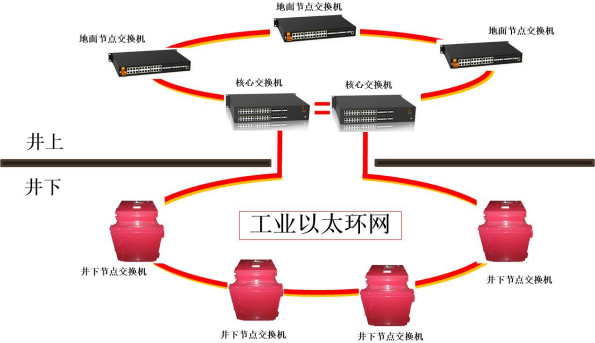
Mine Explosion-proof and Intrinsically Safe Industrial Ethernet Ring Network (10 Gigabit/Gigabit)
Chongqing Mas Sci&Tech Co., Ltd.
MUX Series Communication Interface Device for Security and Stability Control System
Nanjing NR Electric Co., Ltd.
Industrial and Commercial Point-Type Gas Detector
Jinan Benan Technology Development Co., Ltd.