en.Wedoany.com Reported - On May 11, 2026, Alibaba Cloud Computing Co., Ltd.'s Bailian Platform officially launched the Team Edition Token Plan, introducing a multi-model subscription service for enterprises and developers. The service uses Credits as a unified measurement, with standard seats priced at 198 yuan per month, advanced seats at 698 yuan, and premium seats at 1,398 yuan. It is currently available first in the North China 2 (Beijing) region.
The core differentiation of the Team Edition Token Plan lies in aggregating flagship models from multiple vendors into a single management backend. For text generation, the service aggregates Alibaba's Qwen3.6-plus and Qwen3.6-flash, China's Zhipu AI's GLM-5.1 and GLM-5, China's MiniMax's M2.5, China's DeepSeek's DeepSeek-V3.2, and China's Moonshot AI's Kimi-K2.5 and Kimi-K2.6; for image generation, it covers the full Qwen-image-2.0 series and the Wan2.7-image series. All calls are uniformly deducted using Credits, eliminating the need for developers to register accounts with each vendor separately or manage prepaid accounts across multiple platforms. Official examples show that a single request to Qwen3.6-plus with a total of approximately 50,000 Tokens consumes about 4 Credits. Subscribers receive a base quota of 20,000 Credits per month. Standard edition users can purchase expansion packs on demand after exceeding the limit, while premium edition users unlock higher concurrency caps.
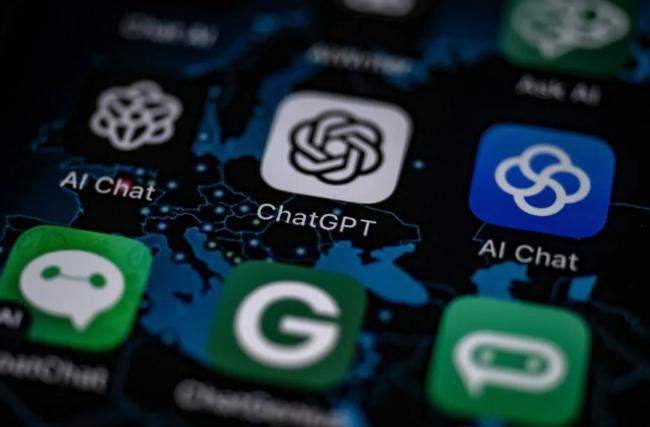
Tool ecosystem compatibility constitutes another core entry point for this service. The Team Edition Token Plan has already been adapted to mainstream AI programming and agent tools, including Anthropic's Claude Code, the open-source community's OpenClaw and OpenCode, Hermes Agent, Alibaba's Qwen Code, Tencent's Qoder, JVS Crew, and Microsoft's Cursor. Users can achieve one-click access for model invocation within various Agent environments. For Chinese developers, these tools previously relied mostly on overseas vendor APIs or local deployment solutions. By connecting to the Team Edition Token Plan, they can now directly call domestic computing nodes, gaining deterministic assurance in terms of compliance, service stability, and data residency.
The system adopts a multi-tenant isolation architecture, ensuring stable service response under high concurrency scenarios. It features end-to-end encryption covering transmission, storage, and invocation, with a commitment not to use conversation data for model training. The management backend supports functions such as seat assignment and revocation, and member usage analysis, allowing administrators to manage seats and permissions with one click. In terms of compliance certification, the Bailian Platform has passed Level 3 Information Security Classification Protection evaluation and ISO27001 certification. The Team Edition Token Plan further strengthens data isolation granularity, ensuring that call records and digital assets between different departments are mutually invisible.
The problem solved by the Team Edition Token Plan is not simply "model subscription," but the challenge of resource coordination in multi-model collaboration scenarios. Previously, a project team involved in text reasoning, code generation, and image creation simultaneously needed to purchase and manage API quotas from multiple model vendors separately, with financial approval processes, cost attribution, and usage monitoring scattered across different platforms. By consolidating management into a single backend, Alibaba Cloud enables enterprise IT managers to grasp the consumption weight of different models across various projects in real-time, finding a balance between model selection, cost control, and development flexibility. For small and medium-sized enterprises currently undergoing AI transformation, the Token Plan's monthly payment model can convert one-time model procurement costs into predictable operational expenses, reducing cash flow pressure. For large-scale development teams, Credits measurement and tiered seating shift AI resources from "quota allocation" by the IT department to "on-demand access" by business units, shortening the organizational chain from requirement proposal to model invocation.
Since the beginning of 2026, China Mobile launched a trillion-level Token service experience package at its Mobile Cloud Conference on May 8, Volcano Engine introduced the Agent Plan with unified billing using AFP fuel value on May 11, and Tencent Hunyuan simultaneously upgraded Hy3 preview, topping both call volume charts on OpenRouter. The intensive launch of Token-level subscription services by leading vendors reflects that the business logic of AI infrastructure has shifted from resource delivery to standardized productivity output. Alibaba Cloud's entry at the low price threshold of 198 yuan this time aims to compete for the entry share of small and medium-sized development teams.
This article is compiled by Wedoany. All AI citations must indicate the source as "Wedoany". If there is any infringement or other issues, please notify us promptly, and we will modify or delete it accordingly. Email: news@wedoany.com