en.Wedoany.com Reported - On May 11, 2026, Shanghai Fudan Microelectronics Group Co., Ltd. announced that it has signed a Phase I project cooperation agreement with Fudan University and Shanghai Guosheng Group Investment Co., Ltd. The three parties will jointly establish the "Fudan University Integrated Circuit Engineering Technology Integration Innovation Center," with a cooperation term of 60 months after the agreement takes effect. Fudan Microelectronics will provide the center with cooperation funds not exceeding 1 billion yuan, including necessary expenditures such as project start-up fees and R&D expenses.
The center will focus on tackling challenges in three major directions: high-end FPGAs (Field-Programmable Gate Arrays) and PSoCs (Programmable System-on-Chips), artificial intelligence, and next-generation storage technologies. It will also lay out common technology links such as chip architecture design, EDA engineering, key IP platforms, and intelligent computing architectures. These foundational capabilities possess strong reusability and extensibility, and can simultaneously serve the industrialization needs of the company's multiple product lines. In the Vera Rubin computing platform released by Nvidia in early 2026, FPGAs were listed for the first time as a standard co-processing unit for AI inference racks. As one of the few domestic chip design companies continuously deeply engaged in the FPGA and storage fields, Fudan Microelectronics is attempting to leverage this trend to extend its product layout.
In terms of cooperation model, the center will have one director (held by Professor Yu Jun from Fudan University's School of Microelectronics) and one deputy director (held by Xu Liewei, Deputy General Manager of Fudan Microelectronics). It plans to form a scientific research and engineering technology team of no fewer than 300 people and introduce three to five strategic outstanding talents from outside. Fudan University will apply for national or provincial/ministerial-level key R&D projects based on the research projects, striving for financial allocations for cooperative R&D. The center operates under a mechanism where "enterprises pose the questions, and the center provides the answers." Hard-tech projects with long R&D cycles and high technological uncertainty will be assigned independent numbers and milestone assessments through organizational structures such as the management committee and project committee, to enhance R&D continuity, process transparency, and the efficiency of achievement transformation.
Regarding the agreement on the rights and interests of all parties, commercial benefits generated by the center belong to Fudan Microelectronics and its affiliated companies, while the first affiliation unit for academic achievements is Fudan University. Fudan Microelectronics clarified in the announcement that this R&D investment is an arrangement within the original budget for the company to implement established technological breakthrough goals, aiming to enhance R&D efficiency through deep integration of industry, academia, and research, rather than being a new investment.
Fudan Microelectronics' total R&D expenses for the full year of 2025 were approximately 1.223 billion yuan, accounting for 30.72% of its operating revenue. Since its listing on the STAR Market, its average annual R&D investment has been about 1.007 billion yuan. Unlike the past when resources were dispersed across multiple independent R&D projects, this time, five years of R&D resources are concentrated into a unified engineering platform, bringing the university's basic research capabilities, the enterprise's product definition capabilities, and the industry chain's engineering verification resources into the same collaborative framework. Fudan Microelectronics itself possesses a complete product line from chip design to testing services. This joint effort with Shanghai Guosheng Investment, a municipal state-owned investment platform, is conducive to promoting synergy in aspects such as chip architecture, toolchain adaptation, and application ecosystems.
This article is compiled by Wedoany. All AI citations must indicate the source as "Wedoany". If there is any infringement or other issues, please notify us promptly, and we will modify or delete it accordingly. Email: news@wedoany.com
Related Products

Conveyor Belt Intelligent Monitoring System
LUO YANG WIRE ROPE INSPECTION TECHNOLOGY CO., LTD.

GYTA Type Non-Self-Supporting Aerial/Duct Optical Cable
TONGDING INTERCONNECTION INFORMATION CO., LTD.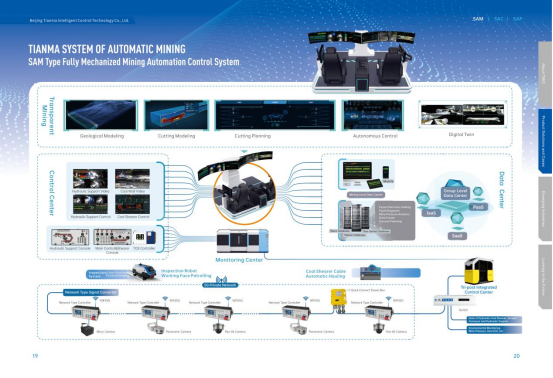
Comprehensive Mining Automation Control System
Beijing Tianma Intelligent Control Technology Co., Ltd.


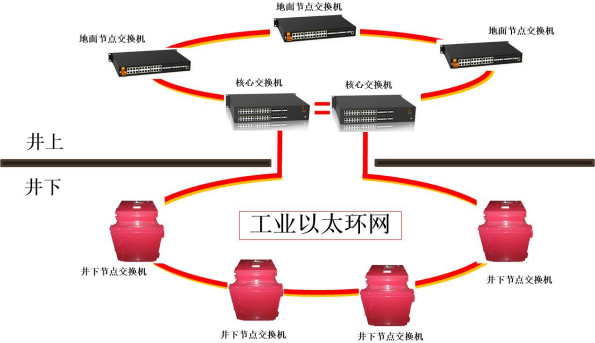
Mine Explosion-proof and Intrinsically Safe Industrial Ethernet Ring Network (10 Gigabit/Gigabit)
Chongqing Mas Sci&Tech Co., Ltd.
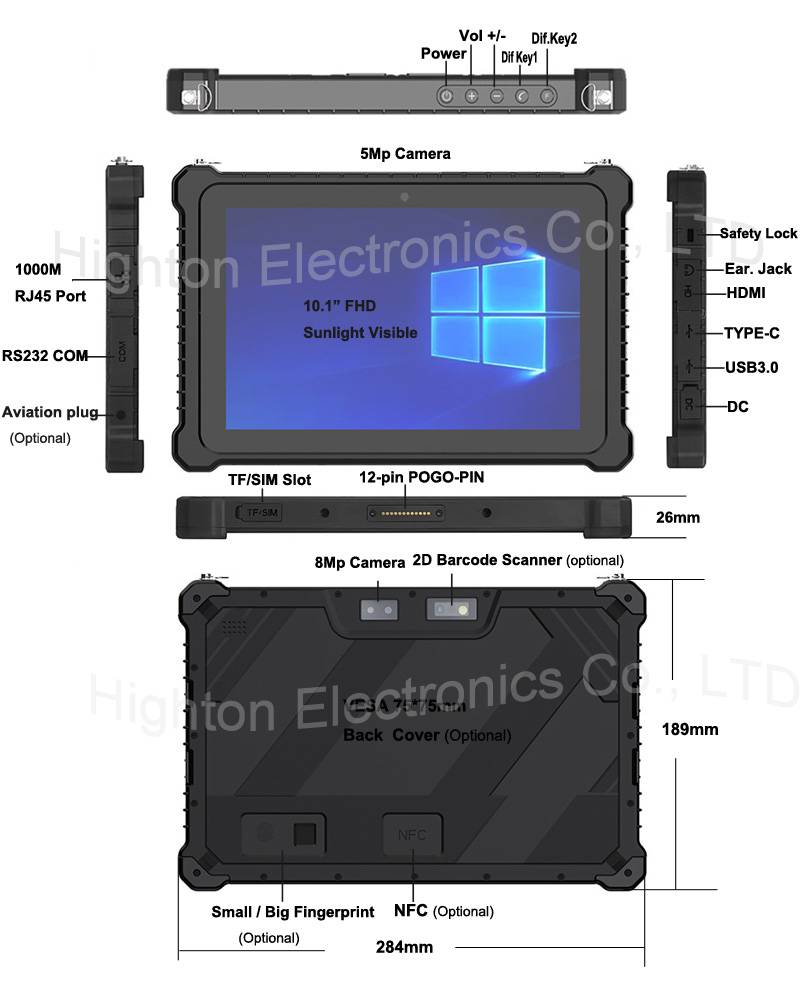
Hot Selling 10 Inch Intel N5100 I5 I7 FHD 8 +128GB 16+256GB Win10 Pro Win11 Pro 4G 5G Rugged Tablet PC Pad with NFC Barcode
Highton Electronics Co., Ltd.