Google US Unveils AI-Native Laptop Googlebook, Acer, ASUS, Dell, HP, and Lenovo to Launch First This Fall
en.Wedoany.com Reported - On May 12, 2026, Google US officially unveiled the Googlebook, a brand-new laptop category, during its online event "The Android Show: I/O Edition." Positioned as an AI-native device built from the ground up around Gemini Intelligence, Alex Kuscher, Senior Director of Google's Laptop & Tablet Business, stated during the event: "Computing is shifting from the era of operating systems to the era of intelligent systems, and we saw an opportunity to rethink the laptop." The first Googlebooks will be launched by five PC manufacturers—Acer, ASUS, Dell, HP, and Lenovo—this fall, covering a variety of form factors and size specifications.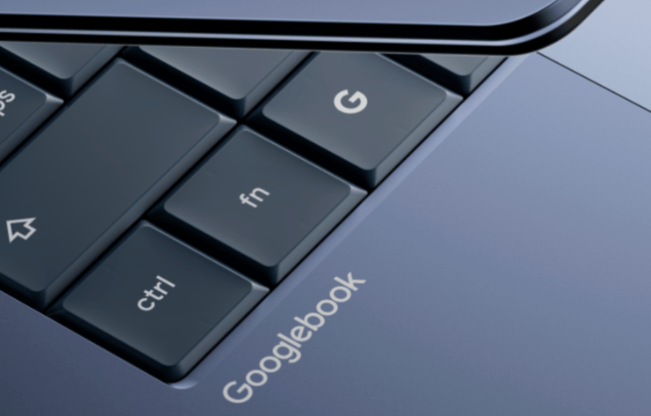
Magic Pointer is the most eye-catching interactive innovation of the Googlebook. This feature, jointly developed by Google and the Google DeepMind team, directly embeds the capabilities of the Gemini agent into cursor operations. By simply wiggling the cursor slightly, Gemini provides instant contextual suggestions based on the screen content the cursor points to—pointing at a date in an email allows for quick meeting creation, while selecting two images can instantly composite a preview of a living room photo with a new sofa. For the first time, the cursor, a fundamental interactive element used for decades, transforms from a mere pointing and clicking tool into an AI interaction gateway, allowing users to complete these operations without installing separate applications or entering any prompts.
Personalization at the desktop level has also been placed on the core agenda. The Create My Widget feature allows users to describe desired components in natural language, and Gemini can instantly generate a customized desktop information panel, linking Gmail, Calendar, and other Google services, and combining web search results to assemble a personalized dashboard. An example provided by Google shows a user planning a family gathering in Berlin using this feature to integrate flight information, hotel reservations, restaurant arrangements, and a countdown into a single desktop widget. This feature will also be coming to Pixel and Samsung Galaxy models later.
Deep synergy with Android phones constitutes the key differentiator setting the Googlebook apart from Chromebooks. The Cast My Apps feature supports one-click projection of phone apps onto the laptop screen for use, without requiring downloads, installations, or touch simulation. Quick Access bridges the file systems of both devices, allowing users to directly browse, search, and insert photos and documents stored on their phone within the Googlebook's native file browser. In the Chromebook era, Android apps ran in a containerized environment and could not natively access the file system. The Googlebook reorganizes the operating system architecture with the Android technology stack as its foundation, enabling the laptop and phone to share the same app ecosystem and AI layer.
On the hardware front, it is currently only confirmed that the Googlebook will be uniformly positioned in the high-end market, featuring premium materials and craftsmanship, and equipped with a distinctive and functional luminous light strip called the Glowbar. John Maletis, Google's Vice President overseeing ChromeOS business, described the partner manufacturers' hardware as "beautiful devices, stunning hardware," and revealed that the first models will use chip solutions from Intel, Qualcomm, and MediaTek, compatible with both x86 and ARM instruction set architectures, with the debut products positioned as "super flagships." Specific details regarding screen size, memory, storage, battery life, and pricing have not been announced.
The question of the Chromebook's future received a clear response during this launch. Google confirmed that existing Chromebooks will continue to receive update support within their established lifecycles, and some devices may be upgradeable to an experience equivalent to the Googlebook, but did not commit to whether new Chromebook models will continue to be released. Over 15 years have passed since the first Chromebook was launched on May 11, 2011, and the introduction of the Googlebook is viewed by the industry as a systematic strategic shift in Google's laptop strategy from the ChromeOS path to the Android plus Gemini path.
Among the five partner manufacturers, Samsung's absence from the initial launch list, despite being one of the six major partners in the Chromebook ecosystem, has drawn industry attention. Samsung's Galaxy Chromebook Plus is positioned in the high-end market, while its Galaxy Book series concurrently manages Windows laptops. The brand's absence may be related to channel conflicts and product line strategic choices. The first Googlebooks are expected to hit the market as early as late September this year, with more hardware details to be gradually disclosed closer to launch.
This article is compiled by Wedoany. All AI citations must indicate the source as "Wedoany". If there is any infringement or other issues, please notify us promptly, and we will modify or delete it accordingly. Email: news@wedoany.com
Related Products



20 Inch 1600*900 Full HD 60Hz TFT LED Monitor with VGA and DP Interfaces for Desktop Computers-Business Use
Guangzhou Zanying Optoelectronics Technology Co., Ltd.

G.652.D Wavelength-extended Non-dispersion Shifted Single-mode Optical Fiber
HONGAN GROUP CO., LTD.

Industrial and Commercial Point-Type Gas Detector
Jinan Benan Technology Development Co., Ltd.
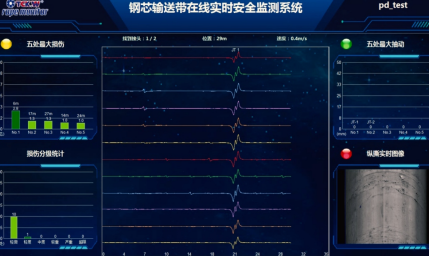
Conveyor Belt Intelligent Monitoring System
LUO YANG WIRE ROPE INSPECTION TECHNOLOGY CO., LTD.