en.Wedoany.com Reported - Wedoany News, Controlled nuclear fusion has long been regarded as the ultimate solution to humanity's energy problems. In Tianfu New Area, a major breakthrough has been achieved in the research and development of China's first quasi-axisymmetric stellarator, which has for the first time obtained an ultra-high-precision quasi-axisymmetric magnetic field configuration, filling a gap in China's stellarator research field.
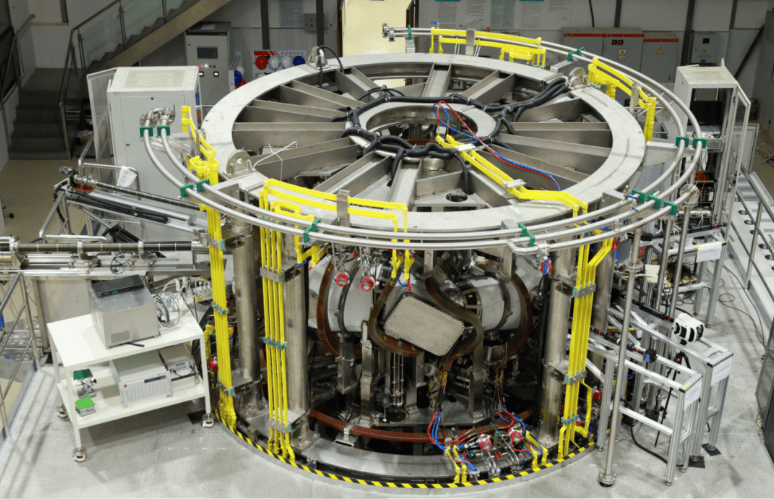
At the 2026 Fusion Sci-Tech Innovation City Industrial Ecosystem Exchange Event held in Sichuan Tianfu New Area, the research progress and preliminary experimental results of China's first quasi-axisymmetric stellarator (CFQS) were released.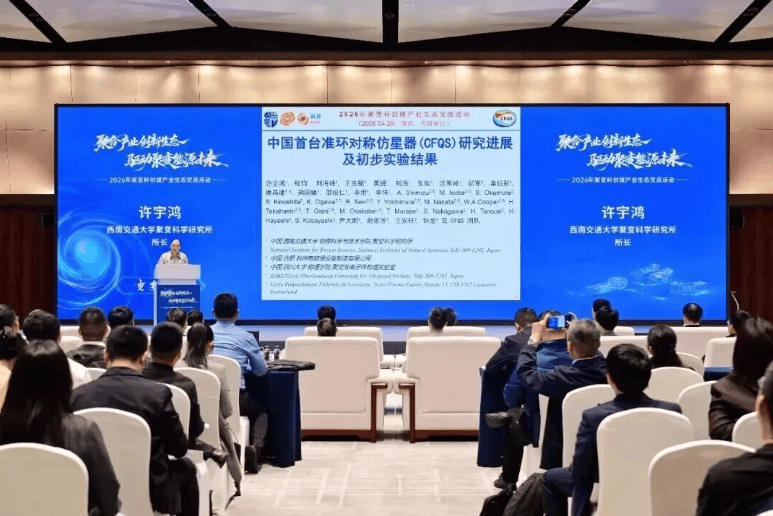
Professor Xu Yuhong, Director of the Institute of Fusion Science at Southwest Jiaotong University, released the "Research Progress and Preliminary Experimental Results of China's First Quasi-Axisymmetric Stellarator (CFQS)." This progress result achieved an ultra-high-precision quasi-axisymmetric magnetic field configuration for the first time, filling a gap in China's stellarator research field, forming a technical complement to the tokamak approach, and providing core support for breakthroughs in advanced magnetic confinement fusion technology. Currently, the CFQS device has officially entered the installation and commissioning phase, with construction work progressing steadily, and it is expected to be put into operation in March 2027.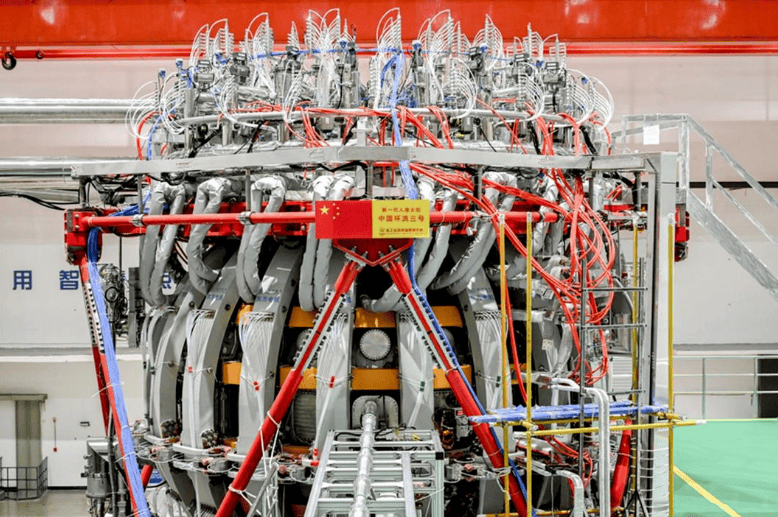
Recently, the Southwestern Institute of Physics (SWIP) under the China National Nuclear Corporation released the "Latest Progress on Magnetic Confinement Tokamak Research and the Construction of the Tianfu Fusion Technology R&D Center." Phase I of the Tianfu Fusion Technology R&D Center has been completed and put into use, with major facility platforms such as the high-field liquid metal experimental platform and the material high heat load testing platform officially commencing operation; Phase II is planned to officially start construction soon, providing solid and powerful hardware support for SWIP to carry out fusion technology R&D and industrial introduction.
The Institute of Fluid Physics of the China Academy of Engineering Physics released "Opportunities and Challenges for Z-Pinch Fusion Energy Development," systematically interpreting the opportunities and challenges of Z-pinch technology from three aspects: Z-pinch fusion-fission hybrid reactors, challenges and innovations, and prospects and summaries. Currently, the large scientific facility for electromagnetically driven fusion has received the feasibility study approval from the National Development and Reform Commission, with construction planned to start in 2026. Upon completion, it will verify the feasibility of "Z-pinch fusion" ignition.
Meanwhile, there is a wave of progress in the fusion field in Tianfu New Area. In July 2025, the first-generation fusion device HHMAX-901 mainframe, built by an enterprise in Tianfu New Area, was completed and successfully achieved plasma ignition. This is China's first completed FRC-type fusion device, with 100% of the core technology independently originated by a Chinese team, marking a major breakthrough in China's commercial exploration of controlled nuclear fusion, especially in the commercial application of the linear field-reversed configuration technical route. The dream of clean energy "artificial sun" is accelerating into reality.
What is a Quasi-Axisymmetric Stellarator
The quasi-axisymmetric stellarator device features a central magnetic field strength of 1 Tesla, a major radius of 1 meter, and an average minor radius of 0.25 meters. Oriented towards the world's scientific and technological frontiers in the field of nuclear fusion and the national major strategy of "building a clean, low-carbon, safe, and efficient energy system," it is the most advanced device in terms of magnetic field configuration in the field of controlled nuclear fusion stellarators today. Upon completion, it will fill the gap in China's stellarator-related research fields, achieving a breakthrough from 0 to 1, and enhancing China's original innovation capability in the field of controlled nuclear fusion.
This article is compiled by Wedoany. All AI citations must indicate the source as "Wedoany". If there is any infringement or other issues, please notify us promptly, and we will modify or delete it accordingly. Email: news@wedoany.com