Swedish Ericsson Launches Cradlepoint W2255 Wireless WAN Device, Offering Proactive Connection Management
en.Wedoany.com Reported - Swedish telecommunications giant Ericsson officially launched the Ericsson Cradlepoint W2255 5G Adapter on May 14, simultaneously updating its NetCloud Wireless WAN orchestration platform. As a next-generation wireless WAN solution for distributed enterprises, this device marks Ericsson's push to transform wireless WAN from a traditional backup link into core infrastructure for daily enterprise operations.
The core breakthrough of the W2255 lies in its proactive connection management capability, designed to help enterprises tackle increasingly severe network disruption challenges. Ericsson's research indicates that the cost of a single major network outage can exceed $500,000, with over one-third of enterprises estimating this figure at $1 million. To ensure continuity for critical applications, the W2255 implements dual-SIM dual-standby technology on a single modem, enabling a switch to a backup carrier network up to 10 times faster than traditional solutions when primary connection quality degrades. Furthermore, the device integrates eSIM and carrier selection intelligence, automatically performing speed tests upon initial startup to identify and connect to the strongest local carrier, thereby significantly reducing the need for on-site manual configuration.
Built on the 3GPP 5G SA Release 17 technical standard, the W2255 is a single-model device suitable for deployment across various indoor and outdoor scenarios. Behind its office-friendly industrial design lies an IP67-rated protective enclosure capable of withstanding harsh outdoor environments, including winds up to 130 mph and K.21-level lightning surge protection. The device natively supports 5G Standalone multi-slicing functionality, utilizing User Equipment Route Selection Policy to allow enterprises to isolate and prioritize critical traffic, such as point-of-sale terminal payments, from general traffic like guest Wi-Fi, thus enabling granular service scheduling. Simultaneously, the W2255 achieves seamless integration with Low Earth Orbit satellite services, enabling hybrid networking between cellular and satellite links to provide link and service provider diversity for remote areas susceptible to extreme weather.
The W2255 delivers a maximum throughput of up to 2.4 Gbps, operates within a temperature range of -30°C to 70°C, and supports PoE power supply. When combined with Ericsson's E-series routers, the system can scale to up to 5 cellular links and 4 LEO satellite links, leveraging NetCloud SASE's intelligent WAN bonding capabilities to enhance network resilience and optimize application experience.
The W2255 is centrally orchestrated via the NetCloud platform. IT teams gain a unified view of cellular health, LEO satellite status, SIM profiles, and security events. The platform can automatically detect and integrate LEO satellite traffic, providing telemetry data and basic management controls, achieving the goal of managing hybrid links from a single interface.
Brandon Butler, Senior Research Manager for Network Infrastructure and Services at IDC, stated that for industries reliant on distributed operations, such as retail and manufacturing, a single unplanned outage can disrupt payment processing, logistics, and daily operations. A hybrid WAN strategy converging 5G and LEO satellites not only expands coverage and increases path diversity but also ensures critical workloads remain online if any single link fails. This platform provides the necessary resilience and uptime support for demanding applications, including AI workloads.
This article is compiled by Wedoany. All AI citations must indicate the source as "Wedoany". If there is any infringement or other issues, please notify us promptly, and we will modify or delete it accordingly. Email: news@wedoany.com
Related Products


G.652.D Wavelength-extended Non-dispersion Shifted Single-mode Optical Fiber
HONGAN GROUP CO., LTD.
Conveyor Belt Intelligent Monitoring System
LUO YANG WIRE ROPE INSPECTION TECHNOLOGY CO., LTD.
Multi-function Marine Monitoring Low-altitude Detection Radar Sea-air Boundary Ocean Dynamic Environment Measurement
Chengdu Dixin Technology Co., Ltd.


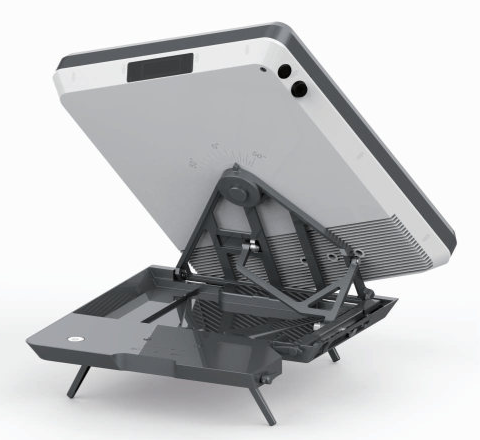
Flat Portable Satellite Terminal 0.35m Aperture Manual Portable Terminal
China Starwin Science & Technology Co., Ltd.
MUX Series Communication Interface Device for Security and Stability Control System
Nanjing NR Electric Co., Ltd.
Comprehensive Mining Automation Control System
Beijing Tianma Intelligent Control Technology Co., Ltd.