Ireland Advances National Quantum Strategy Through Multinational Enterprise Cluster, Aiming to Become an International Technology Hub by 2030
en.Wedoany.com Reported - The Irish government recently released a progress report on the implementation of its quantum technology strategy, disclosing the latest advancement status of several key initiatives under the "Quantum 2030" strategy. These cover dimensions including the expansion of major scientific research facilities, the financing and listing of indigenous quantum startups, and the deepening of collaboration with multinational enterprises. The report outlines a clear roadmap: by leveraging the cluster of global technology companies and the university research network gathered in Ireland, the country is attempting to carve out a differentiated position in the European quantum race.
The "Quantum 2030" strategy was officially launched by the Irish government in November 2023, setting the goal of becoming an internationally competitive quantum technology center by 2030. The strategy is built around four core pillars—fundamental and applied research, science and engineering talent, national and international collaboration, and innovation and entrepreneurship—along with a fifth, cross-cutting pillar focused on enhancing public awareness. The progress report indicates that the specialized programs planned under this framework have entered a window for large-scale execution, with resources in talent, facilities, and funding being concentrated in this field.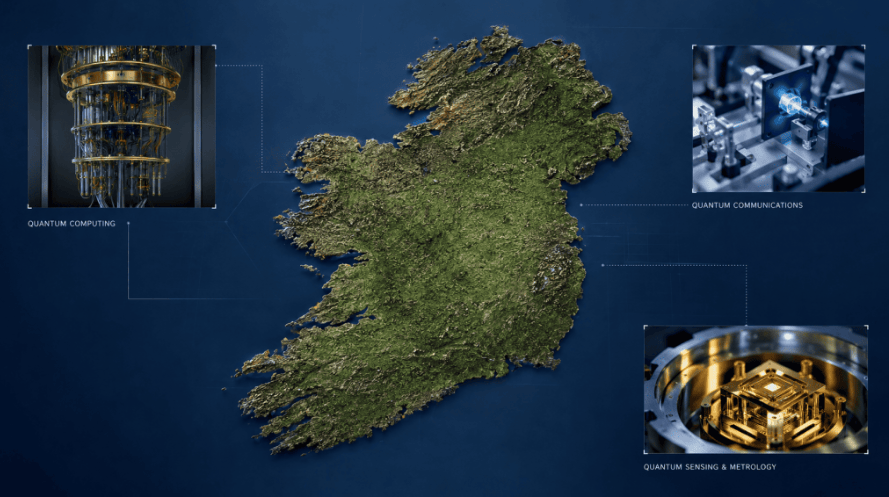
The physical expansion of major research facilities represents the most visible progress in the current phase. The Tyndall National Institute in Cork received over €100 million in government funding in January 2026, with plans to double its experimental space and facility scale within three years. Tyndall is one of Europe's largest R&D organizations in the fields of chips, quantum, materials, and devices, and this expansion specifically supports breakthrough research in quantum technology, artificial intelligence, and next-generation computing. In terms of international collaboration, Tyndall participates in the EPIQUE project funded by the "Horizon Europe" program, which has a total budget of €10.3 million and brings together 18 partners to develop scalable, fault-tolerant photonic quantum computers. The concurrently launched P4Q program spans 12 countries, with Tyndall responsible for developing advanced packaging technologies for quantum photonic chips, aiming to build a European sovereign ecosystem for the large-scale manufacturing of quantum photonic chips.
Indigenous startups have entered an intensive cycle of financing and public listings. In March 2025, Equal1, a company incubated at University College Dublin, launched Bell-1, Ireland's first domestically produced quantum processing unit. According to official company information, this is the world's first silicon-based quantum server designed for data center and high-performance computing environments, capable of operating without a dilution refrigerator. In January 2026, Equal1 completed $60 million in financing, led by the Ireland Strategic Investment Fund, with participation from the European Innovation Council Fund, Atlantic Bridge, and Enterprise Ireland. The funds will be used to expand deployment and advance towards million-qubit scale. In March 2026, Horizon Quantum Computing went public on the Nasdaq via a SPAC merger, raising approximately $120 million for the development of quantum computing software infrastructure.
The multinational enterprise cluster is the most unique asset of Ireland's quantum strategy. Nine of the top ten US technology companies globally have established operations in Ireland, with the information and communication technology sector directly employing over 100,000 people locally. In 2023, Microsoft, IBM, Horizon Quantum Computing, and Algorithmiq, as founding partners, joined forces with Trinity College Dublin to establish the Trinity Quantum Alliance, aiming to catalyze investment and talent aggregation in the indigenous quantum ecosystem driven by industry needs.
The talent supply side is also accelerating. In November 2025, the Walton Institute received €4 million in funding to lead and coordinate the Questing doctoral network, uniting nine European universities and thirteen industry partners with the plan to train 15 interdisciplinary scholars. The network's goal is to establish a unified curriculum system that becomes the standard for quantum network systems talent training in Europe. In December 2025, the Irish government launched the "Incentive Program," identifying quantum computing as a priority direction directly related to the transformation of the national knowledge economy.
The technical roadmap of Ireland's quantum industry focuses on interfacing its existing semiconductor ecosystem with quantum technology. Equal1 has chosen the silicon-based spin qubit route, directly utilizing standard semiconductor processes from foundries like TSMC to manufacture quantum chips, bypassing the specialized facilities required by superconducting approaches. Tyndall's expertise in quantum photonics packaging and cryogenic electronics serves EU-level quantum manufacturing projects like P4Q. The core logic of this path lies in embedding quantum computing into the existing semiconductor and ICT industry cluster, rather than building a separate, independent system.
This article is compiled by Wedoany. All AI citations must indicate the source as "Wedoany". If there is any infringement or other issues, please notify us promptly, and we will modify or delete it accordingly. Email: news@wedoany.com
Related Products

Mine Explosion-proof and Intrinsically Safe Industrial Ethernet Ring Network (10 Gigabit/Gigabit)
Chongqing Mas Sci&Tech Co., Ltd.


20 Inch 1600*900 Full HD 60Hz TFT LED Monitor with VGA and DP Interfaces for Desktop Computers-Business Use
Guangzhou Zanying Optoelectronics Technology Co., Ltd.
Multi-function Marine Monitoring Low-altitude Detection Radar Sea-air Boundary Ocean Dynamic Environment Measurement
Chengdu Dixin Technology Co., Ltd.
Comprehensive Mining Automation Control System
Beijing Tianma Intelligent Control Technology Co., Ltd.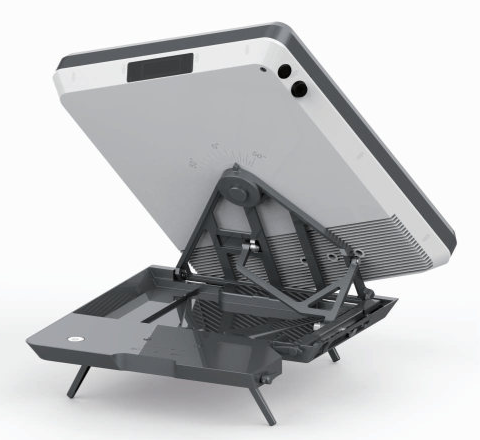
Flat Portable Satellite Terminal 0.35m Aperture Manual Portable Terminal
China Starwin Science & Technology Co., Ltd.


GYTA Type Non-Self-Supporting Aerial/Duct Optical Cable
TONGDING INTERCONNECTION INFORMATION CO., LTD.