Grid upgrades should not be evaluated only by the one-time cost of equipment procurement. For factories, industrial parks, urban distribution networks, renewable energy projects, and public buildings, the real factors affecting investment returns include design, construction, outage losses, later-stage operation and maintenance, energy consumption, and future expansion costs. If a project focuses only on low-cost equipment at the early stage, it may face frequent failures, repeated upgrades, limited expansion capacity, and rising maintenance costs later, ultimately increasing the overall investment.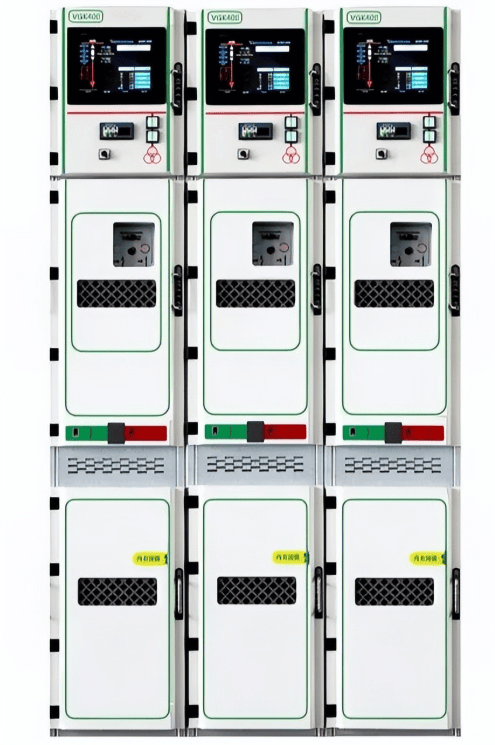
In actual projects, users often face four major pain points. First, early-stage budgets are underestimated, with only equipment prices considered while design, installation, commissioning, and outage coordination costs are ignored. Second, equipment reliability may be insufficient, leading to more frequent maintenance after several years of operation and affecting production continuity. Third, expansion capacity may not be properly reserved. When companies add new production lines, connect solar and energy storage systems, or install charging facilities, another round of grid upgrades may be required. Fourth, long-term energy losses remain a problem. Transformer losses, line losses, insufficient reactive power, and harmonics can all affect system efficiency.
Therefore, grid upgrades should be planned from the perspective of full-lifecycle cost rather than initial investment alone. Before a project starts, load calculation and power consumption scenario analysis should be carried out to clarify current capacity, future growth potential, equipment operating conditions, and safety requirements. For factories, data centers, and industrial parks with rapidly growing loads, transformer capacity, switchgear circuits, and cable channels should be reasonably reserved to avoid repeated construction in the short term.
In equipment selection, priority should be given to high-reliability, low-loss, and easy-to-maintain products. For example, energy-efficient transformers can reduce long-term operating losses; high-efficiency distribution cabinets and intelligent circuit breakers can improve power supply safety; reactive power compensation equipment and harmonic mitigation devices can improve power quality and reduce abnormal heating and operating losses; and energy management systems can monitor, analyze, and optimize electricity consumption data, providing support for future energy-saving management.
Modular solutions are also important for reducing overall costs. Modular distribution cabinets, prefabricated substations, standardized switchgear, and expandable monitoring systems can improve construction efficiency, shorten on-site installation cycles, and leave room for future expansion and maintenance. For overseas projects, industrial park projects, and grid projects supporting renewable energy, such solutions can also improve delivery stability and operational convenience.
From the perspective of business opportunities, grid upgrades are shifting from single-equipment procurement to systematic solutions. Equipment companies can provide combined product solutions around energy-efficient transformers, high-efficiency distribution cabinets, intelligent circuit breakers, reactive power compensation, harmonic mitigation, and online monitoring equipment. Engineering companies can extend their services to consulting, design, construction, commissioning, and integrated operation and maintenance. Platforms can improve service value by offering product recommendations, supplier matching, and project demand connections, helping buyers find suitable solutions more efficiently.
The core of grid upgrading is not simply spending less money, but finding the best balance among safety, efficiency, and long-term operating costs.