Grid upgrades for aging residential communities and public buildings are not simply about replacing old wiring. They are a comprehensive improvement of electrical safety, power supply capacity, and construction organization. As air conditioners, elevators, commercial lighting, kitchen equipment, charging facilities, and intelligent building systems continue to increase, existing low-voltage distribution systems often struggle to meet modern electricity demand. Problems such as aging cables, insufficient capacity, and outdated protection configurations are becoming increasingly apparent.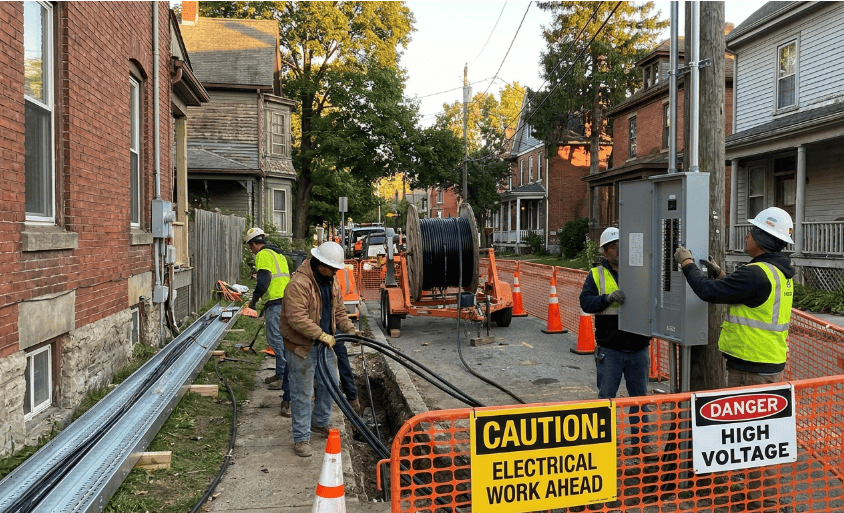 In actual renovation projects, users are most concerned about safety risks and construction disruption. Some aging buildings may have deteriorated cable insulation, overheating joints, insufficient leakage protection, and undersized distribution boxes, which can lead to overloads, short circuits, and electrical fire hazards. At the same time, aging residential communities and public buildings often have limited space, complex cable routes, distribution rooms, and vertical shafts. Construction must also minimize disruption to residents, businesses, and office users.
Therefore, line inspection and load calculation should be carried out before renovation begins, in order to clarify the carrying capacity of existing lines, equipment operating conditions, and future electricity demand. Severely aged cables, distribution boxes, and switching devices should be replaced in stages. For new elevators, charging piles, commercial electricity use, and other added loads, capacity should be reasonably reserved to avoid repeated construction in the short term.
In terms of system optimization, low-voltage distribution boxes, power cables, cable trays, circuit breakers, and leakage protection devices can be upgraded to improve power supply safety. Smart meters and electrical fire monitoring systems can also be installed to monitor electricity usage, provide abnormal condition warnings, and support fault tracing. For public buildings with high occupant density, special attention should be paid to fire protection linkage, emergency power supply, and zoned distribution design.
From the perspective of business opportunities, grid upgrades for aging buildings will drive demand for low-voltage electrical products, cables, building electrical systems, electrical fire monitoring, and integrated renovation services. Companies with capabilities in on-site inspection, solution design, equipment supply, installation, and follow-up operation and maintenance are more likely to build competitive advantages in such projects.