Safety is one of the most important concerns for companies before purchasing commercial and industrial energy storage systems. These systems operate for long periods in factories, industrial parks, commercial buildings and charging stations. If a failure occurs, it may affect power supply and create equipment loss or safety risks. Therefore, companies should not judge reliability only by battery cell brands or supplier promises.
A safe energy storage system requires design across multiple levels, including batteries, electrical protection, cooling, fire protection, monitoring and maintenance. The battery should have stable consistency and reliable cycle performance. The battery management system should continuously monitor voltage, current, temperature, state of charge and state of health, and detect abnormal conditions such as overcharging, over-discharging, overheating and short circuits.
Thermal management is also critical. Batteries generate heat during charging and discharging. If heat is not removed evenly, battery lifetime may be affected, and in severe cases, safety risks may increase. Common cooling methods include air cooling and liquid cooling. Air cooling is relatively simple and suitable for some small and medium-sized projects. Liquid cooling provides more uniform temperature control and is more suitable for high-power, high-cycle applications or scenarios requiring better temperature consistency. The choice should depend on project size, operating frequency, ambient temperature and budget.
Fire protection should not be treated as an optional accessory. Commercial and industrial energy storage systems should include necessary fire detection, gas detection, automatic fire suppression, isolation protection and emergency response design. In densely populated areas, charging stations, commercial buildings and indoor installations, fire protection design must follow applicable standards and requirements.
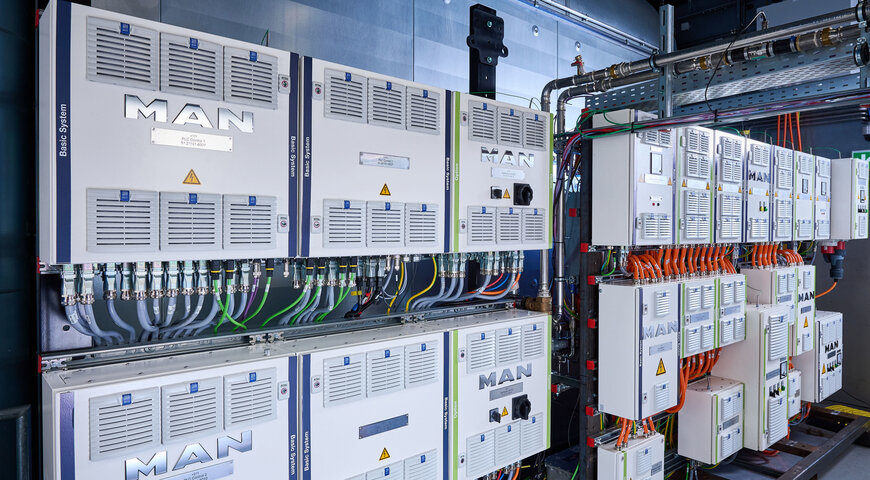
Beyond equipment, safety also depends on system integration and construction quality. Batteries, PCS, EMS, distribution cabinets, fire protection and monitoring systems must work together. If communication, protection logic or wiring is poorly implemented, operating risks may increase significantly.
Before procurement, companies should ask suppliers several key questions. Is there a complete safety design? Does the system support remote monitoring and fault warning? Does the supplier have real project experience? Are warranty responsibilities and maintenance response mechanisms clearly defined? Are regular inspection services provided?
Commercial and industrial energy storage is not a device that can be ignored after purchase. It is a long-term energy system that requires continuous operation and maintenance. A safe and reliable project must form a complete closed loop from design, manufacturing, installation and commissioning to operation and maintenance. For companies, safety is not just a cost. It is the foundation for long-term value creation.