University of Illinois Uses ECAM to 3D Print Pure Copper Cold Plates for Electronics Cooling
en.Wedoany.com Reported - A research team at the University of Illinois Urbana-Champaign has developed a cold plate design workflow that combines topology optimization with electrochemical additive manufacturing (ECAM) to print liquid-cooled components with micron-scale fin structures using pure copper. The achievement aims to address a challenge in cold plate development: computational design tools can generate optimal fin structures with sub-100-micron features, but traditional manufacturing processes cannot reliably fabricate them in copper.
"Cooling is the bottleneck in chip design," said Behnood Bazmi, the paper's first author and a mechanical engineering graduate student at the university. "By bridging the gap between computational design and manufacturing capabilities, we provide a pathway to more energy-efficient liquid cooling for chips and other electronic devices." Topology optimization ultimately converges on an optimal design that maximizes thermal performance while minimizing pumping power, added research lead and founding professor Nenad Miljkovic. The resulting fins feature tapered profiles and fine branching tips—geometries that increase wetted surface area and locally guide coolant flow, but are far more complex than what traditional machining or fusion-based metal additive manufacturing processes can achieve.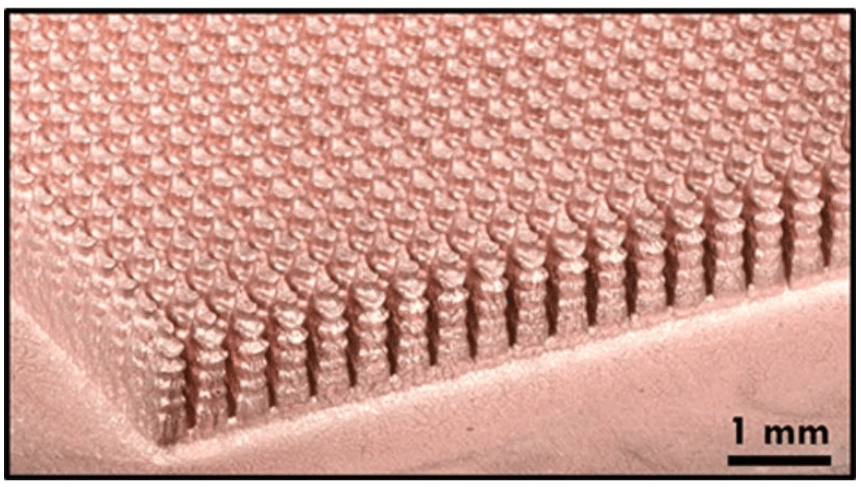
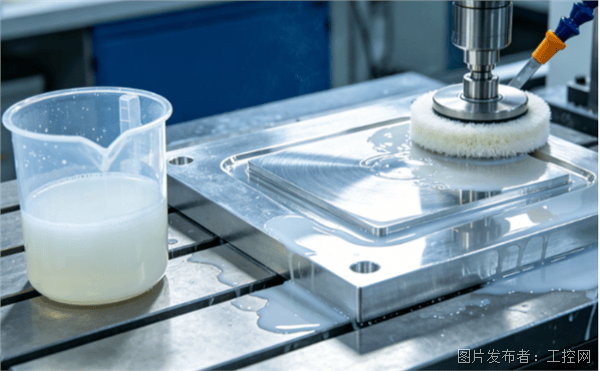
To realize these geometries in pure copper, the team collaborated with San Diego-based Fabric8Labs. The company's ECAM platform employs a densely packed array of individually addressable microelectrodes to deposit copper ions layer by layer from an aqueous electrolyte, with a voxel resolution of approximately 33 microns. The process operates at room temperature, avoiding the thermal distortion associated with laser melting or sintering, and produces copper with a purity of up to 99.95%. Most fusion-based additive manufacturing processes struggle with copper due to its high reflectivity and thermal conductivity. "ECAM can fabricate pure copper parts with features as fine as 30 to 50 microns—thinner than a human hair," Miljkovic said. The aqueous electrolyte feedstock is recyclable and can be replenished with low-cost metal salts or scrap copper, and the arrayed printhead supports batch manufacturing of multiple components, which the researchers believe is conducive to scalable production.
The team conducted a data center energy consumption analysis based on a 42U rack, 167-kilowatt direct-to-chip liquid cooling architecture. The results showed that the proposed solution's cooling energy consumption accounts for only 1.1% of the total data center energy consumption, with a total usage effectiveness (TUE) of 1.011. "Using our cold plates, a 1-gigawatt data center would need only 11 megawatts for cooling, instead of 550 megawatts," Miljkovic said.
This article is compiled by Wedoany. All AI citations must indicate the source as "Wedoany". If there is any infringement or other issues, please notify us promptly, and we will modify or delete it accordingly. Email: news@wedoany.com
Related Products


Strip Coating and Plating Production Line Equipment
MCC-SFRE HEAVY INDUSTRY EQUIPMENT CO., LTD.
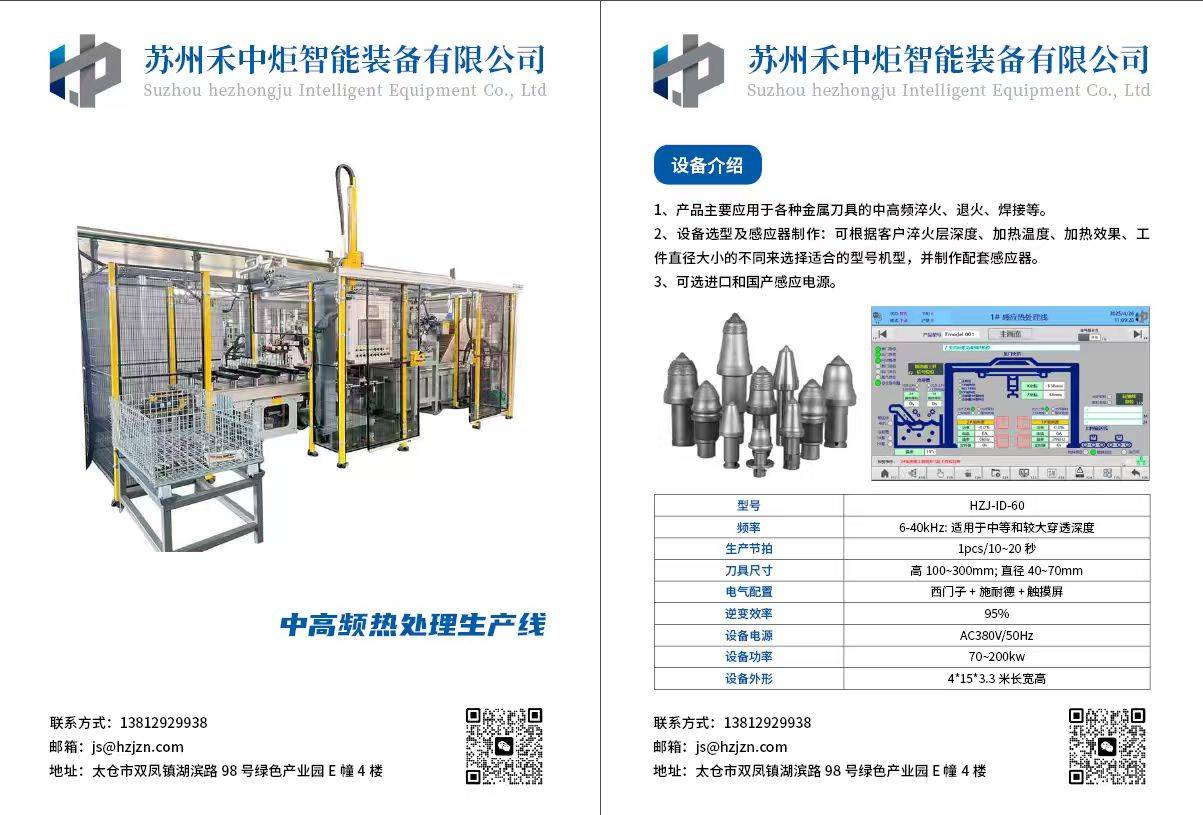
Excavator Bucket Teeth Heat Treatment Production Line
Suzhou Hezhongju Intelligent Equipment Co., Ltd.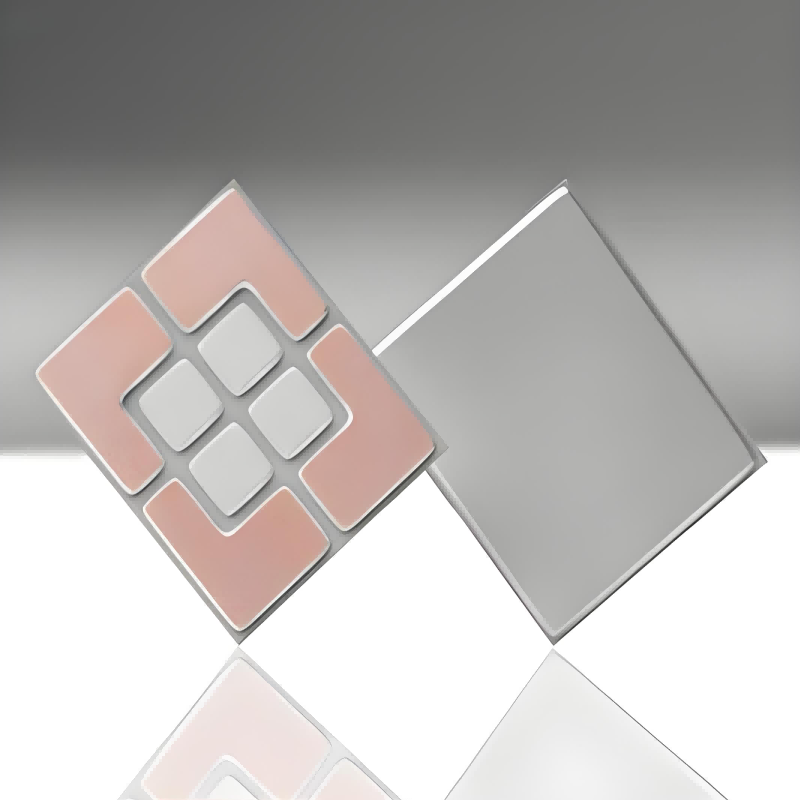

LBH4000 Batch Environmental Protection Asphalt Mixing Plant | Asphalt Batching Plant | Asphalt Mixing Plant
Jilin Province Road Construction Machinery Co., Ltd.
Standard Nozzle Flowmeter
Jinggong Automatic Control Instrument Complete Technology Development Company