An Official from the Department of American and Oceanian Affairs of the Ministry of Commerce Interprets the Preliminary Outcomes of China-U.S. Economic and Trade Consultations
en.Wedoany.com Reported - At the invitation of President Xi Jinping, President Trump of the United States paid a state visit to China from May 13 to 15. During the visit, the two heads of state held a meeting in Beijing. From May 12 to 13, the Chinese and U.S. economic and trade teams held consultations in South Korea, making preparations in the economic and trade field for the meeting of the two heads of state. The two sides engaged in intensive consultations on the specific content of the outcomes and reached a positive consensus. An official from the Department of American and Oceanian Affairs of the Ministry of Commerce interprets the relevant preliminary economic and trade outcomes.
I. On Tariff Arrangements
Q: China and the U.S. have reached a consensus on relevant tariff arrangements this time. Could you provide more specific details?
A: Tariffs are one of the key issues in China-U.S. economic and trade relations. Since 2025, the two sides have conducted multiple rounds of consultations on tariffs, promoting a de-escalation of the "tariff war." In February 2026, the U.S. Supreme Court ruled that the tariffs imposed by the U.S. administration under the International Emergency Economic Powers Act (IEEPA) were illegal. Subsequently, the U.S. initiated two separate Section 301 investigations against numerous global trading partners and indicated that new Section 301 tariffs would replace the previous IEEPA tariffs.
During these economic and trade consultations, the Chinese and U.S. economic and trade teams engaged in in-depth communication on the tariff issue and made arrangements regarding relevant bilateral tariffs. It is hoped that the U.S. side will honor its commitments. In the future, regardless of the reasons for imposing or substituting tariffs on China, the overall level of U.S. tariffs on China should not exceed the level stipulated in the joint arrangement of the Kuala Lumpur economic and trade consultations. Furthermore, through subsequent consultations, relevant unilateral tariffs on China should be further eliminated to create positive conditions for expanding bilateral economic and trade cooperation.
Meanwhile, the two sides agreed in principle to discuss, under the Trade Council, a framework arrangement for reciprocal tariff reductions on products of equivalent scale, each amounting to 30 billion U.S. dollars or more. Products of mutual concern agreed upon by both sides are expected to be eligible for Most-Favored-Nation (MFN) tariff rates or even lower. Once implemented, this arrangement will not only help stabilize and expand bilateral trade between China and the U.S. but also provide a useful reference for global openness and cooperation. The economic and trade teams of both sides will maintain close communication to finalize specific arrangements and promote implementation as soon as possible.
II. On the Trade Council and Investment Council
Q: China and the U.S. have reached a series of economic and trade outcomes this time, including the agreement to establish a Trade Council and an Investment Council. Could you provide specific details?
A: The essence of China-U.S. economic and trade relations is mutual benefit and win-win cooperation. In the face of differences and frictions, equal consultation is the only correct choice. Following consultations, China and the U.S. agreed to establish an intergovernmental Trade Council and an Investment Council. The economic and trade teams of both sides will maintain close communication and work out specific arrangements regarding the structure, functions, and operational models of the councils as soon as possible.
Once established, the two councils will provide platforms for pragmatic discussions on issues of mutual concern in the trade and investment fields. This will facilitate policy exchanges, expand cooperation, manage differences, and promote the shift of China-U.S. economic and trade consultations from "crisis response" to "institutionalized management," providing an effective institutional guarantee for bilateral economic and trade cooperation.
III. On Expanding Agricultural Trade
Q: Could you elaborate on the consensus reached between China and the U.S. on expanding two-way trade, especially in agricultural products?
A: China-U.S. agricultural trade is an important component of bilateral economic and trade cooperation, representing a win-win collaboration that complements supply and demand. China is the world's most important agricultural market. Importing U.S. agricultural products can help fill structural supply-demand gaps in the domestic market and enrich the dining tables of Chinese people. China's vast consumer market also provides stable economic income for American farmers. At the same time, Chinese specialty agricultural products such as dairy products, aquatic products, vegetables, and fruits also have significant potential demand in the U.S. market.
Following consultations, the two sides reached a series of positive consensuses on promoting the resolution of certain non-tariff barriers and market access issues for some agricultural products from both sides. They also agreed in principle to include relevant products in the framework arrangement for reciprocal tariff reductions and set guiding targets for expanding two-way agricultural trade. It is expected that both sides will create favorable conditions for two-way agricultural trade by jointly lowering tariffs, reducing non-tariff barriers, and expanding market access, thereby promoting the restoration and continuous expansion of trade cooperation in the agricultural sector.
IV. On the Extension of the Joint Arrangement from the Kuala Lumpur Economic and Trade Consultations
Q: During these consultations, did the two sides discuss the extension of the joint arrangement from the Kuala Lumpur economic and trade consultations?
A: In October 2025, China and the U.S. reached a joint arrangement in Kuala Lumpur to address economic and trade issues of respective concern, suspending the implementation of certain tariff and non-tariff measures until November 10, 2026. This included the U.S. 24% reciprocal tariffs and China's corresponding countermeasures; the U.S. 50% penetration rule for export controls and China's related export control measures; the U.S. Section 301 investigation measures on China's maritime, logistics, and shipbuilding industries and China's corresponding countermeasures, among others.
The relevant arrangements are of great significance for the stability of China-U.S. economic and trade relations. Promoting the extension of these arrangements serves the common interests of both countries and meets the expectations of the international community. During these consultations, China and the U.S. reaffirmed their commitment to continuing the implementation of the outcomes from previous economic and trade consultations. The economic and trade teams of both sides will maintain close communication and consultation to promote the extension of the joint arrangement from the Kuala Lumpur economic and trade consultations, providing a more stable policy environment and market expectations for bilateral economic and trade cooperation.
V. On Rare Earth Export Controls
Q: The White House website mentioned that "China will address U.S. concerns regarding supply chain shortages of rare earths and other critical minerals (including yttrium, scandium, neodymium, indium). China will also address U.S. concerns regarding the prohibition or restriction of the sale of rare earth production and processing equipment and technology." What is China's comment on this?
A: The Chinese and U.S. economic and trade teams had full communication and exchanges on relevant export control issues. Both sides will jointly study and address each other's reasonable and legitimate concerns. The Chinese government implements export controls on rare earths and other critical minerals in accordance with laws and regulations, and reviews applications for compliant, civilian-use permits. China is willing to work with the U.S. side to jointly create favorable conditions for promoting mutually beneficial cooperation between enterprises of the two countries and ensuring the security and stability of global industrial and supply chains.
VI. On Aircraft Trade
Q: President Trump of the United States claimed that the Chinese side agreed to purchase 200 Boeing aircraft. Could you provide specific details?
A: Aviation is a key area for deepening mutually beneficial and win-win cooperation between China and the U.S. In line with the important consensus reached by the two heads of state, and based on its own air transport development needs, Chinese aviation will introduce 200 Boeing aircraft following commercial principles. At the same time, the U.S. side will provide China with sufficient guarantees for the supply of engines and components.
VII. On Agricultural Product Market Access
Q: Recently, the spokesperson for the Ministry of Commerce stated that China and the U.S. have achieved preliminary outcomes in the economic and trade field, including that both sides will resolve or substantively promote the resolution of certain non-tariff barriers and market access issues for some agricultural products. Could you provide specific details?
A: Agricultural trade cooperation is an important component of China-U.S. economic and trade relations. The two countries are highly complementary in the agricultural sector, with vast space for cooperation. Through equal consultations, the two sides achieved positive outcomes in the agricultural field and reached several consensuses on two-way agricultural market access. These outcomes accommodate the concerns of both sides and achieve mutual benefit and win-win results.
The U.S. side committed to resolving or substantively promoting the resolution of certain non-tariff barriers and market access issues for some Chinese agricultural products, mainly including: First, committing to lift the automatic detention measure imposed since 2008 on Chinese dairy products and milk-containing products exported to the U.S. The lifting of this measure will provide more convenient trade conditions for the export of relevant Chinese products to the U.S. Second, agreeing to accept Chinese medium-based bonsai for trial export to the U.S. and promptly initiating the revision of relevant regulations to promote the realization of market access for Chinese medium-based bonsai to the U.S. Third, agreeing to promote the lifting of the automatic detention measure for three categories of Chinese aquatic products exported to the U.S. In addition, the U.S. side made positive commitments regarding the recognition of Shandong as a Highly Pathogenic Avian Influenza (HPAI)-free zone and accelerating the review of applications for relevant Chinese enterprises to be removed from the import alert red list.
In accordance with relevant laws and regulations, the Chinese side will resume the registration of U.S. beef enterprises exporting to China that meet requirements, lift restrictions related to HPAI outbreaks in certain eligible U.S. states, and resume the import of poultry products from relevant U.S. states. It will accelerate the review of corrective materials from U.S. beef enterprises whose exports to China were suspended due to drug residue issues, and will engage in exchanges and communication with the U.S. side on agricultural biotechnology issues of U.S. concern.
China and the U.S. are important agricultural trade partners to each other. The achievement of the above outcomes not only resolves specific issues of concern to both sides but also lays a foundation and creates a positive atmosphere for deepening cooperation. Some commitments have already been implemented as scheduled. Going forward, both sides should continue to adhere to equal dialogue and work in the same direction, continuously lengthening the list of cooperation and shortening the list of issues in the agricultural field. China is willing to work with the U.S. side to fully leverage their respective resource endowments and comparative advantages, creating favorable conditions for deepening bilateral agricultural cooperation and promoting agricultural trade.
VIII. On the Registration of U.S. Beef Enterprises
Q: Recently, the U.S. side indicated that during the China-U.S. economic and trade consultations in Seoul, the Chinese side had resolved the issue of registration for U.S. beef enterprises exporting to China. Could you provide specific details?
A: During the China-U.S. economic and trade consultations in Seoul, the two sides had in-depth exchanges on the issue of registration for relevant U.S. beef enterprises. Previously, considering the risk of cross-species transmission of HPAI within the U.S., and to ensure the safety of beef imported from the U.S., the General Administration of Customs of China temporarily suspended the approval of registration for U.S. beef enterprises in China. Subsequently, the U.S. side provided relevant technical information on epidemic control multiple times as requested by the Chinese side. Based on China's relevant laws and regulations and international animal health rules, the Chinese side conducted a rigorous scientific assessment of the information provided by the U.S. side, concluded that the measures taken by the U.S. side met China's requirements, and decided to resume the registration of relevant U.S. beef enterprises in China. Meanwhile, for some U.S. beef enterprises whose imports were suspended due to excessive residues of certain drugs, the Chinese side has provided the U.S. side with a resolution path, including requirements for corrective actions. It will conduct a risk assessment of the U.S. side's corrective actions based on scientific principles and dispatch a technical team to the U.S. for on-site inspections. The Chinese side will determine the next steps based on the assessment results.
The Chinese side attaches importance to China-U.S. agricultural trade cooperation, welcomes high-quality U.S. agricultural products into the Chinese market, and will maintain close communication with the U.S. side under the China-U.S. economic and trade consultation mechanism regarding follow-up work, promoting the proper resolution of issues of respective concern to both China and the U.S.
This article is compiled by Wedoany. All AI citations must indicate the source as "Wedoany". If there is any infringement or other issues, please notify us promptly, and we will modify or delete it accordingly. Email: news@wedoany.com
Related Products


"Shunyi 1600" Deep-submerging Bottom-sitting Multi-functional Wind Power Engineering Vessel
Zhengli Offshore Engineering Co., Ltd.


ERW Welded Pipe (Black Pipe and Hot-dip Galvanized Steel Pipe)
Handan Zhengda Steel Pipe Co., Ltd.

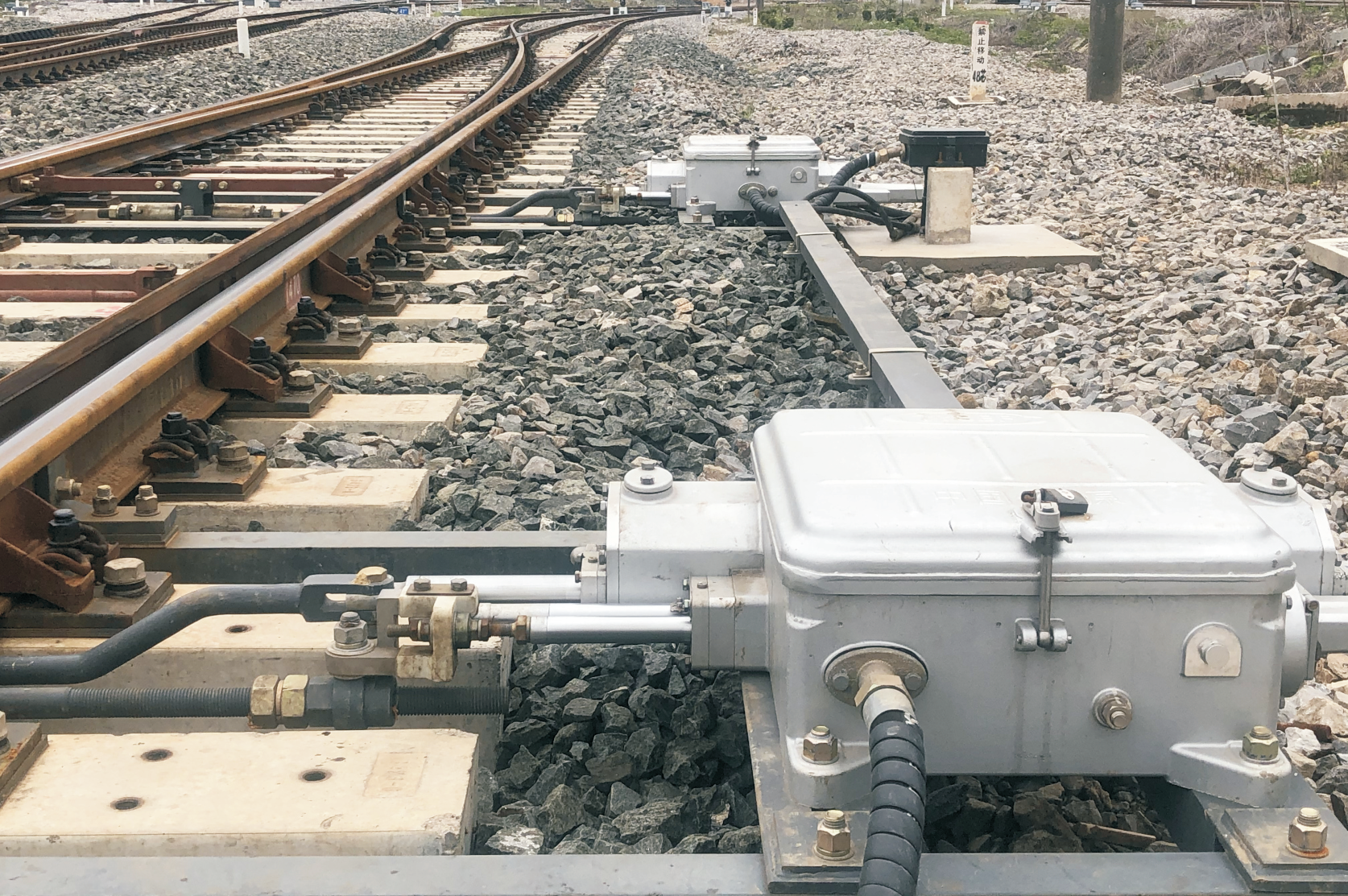
ZY(J)7(M) Sealed Type Electro-Hydraulic Turnout Machine
TAIYUAN CR JINGFENG EQUIPMENT TECHNOLOGY CO., LTD.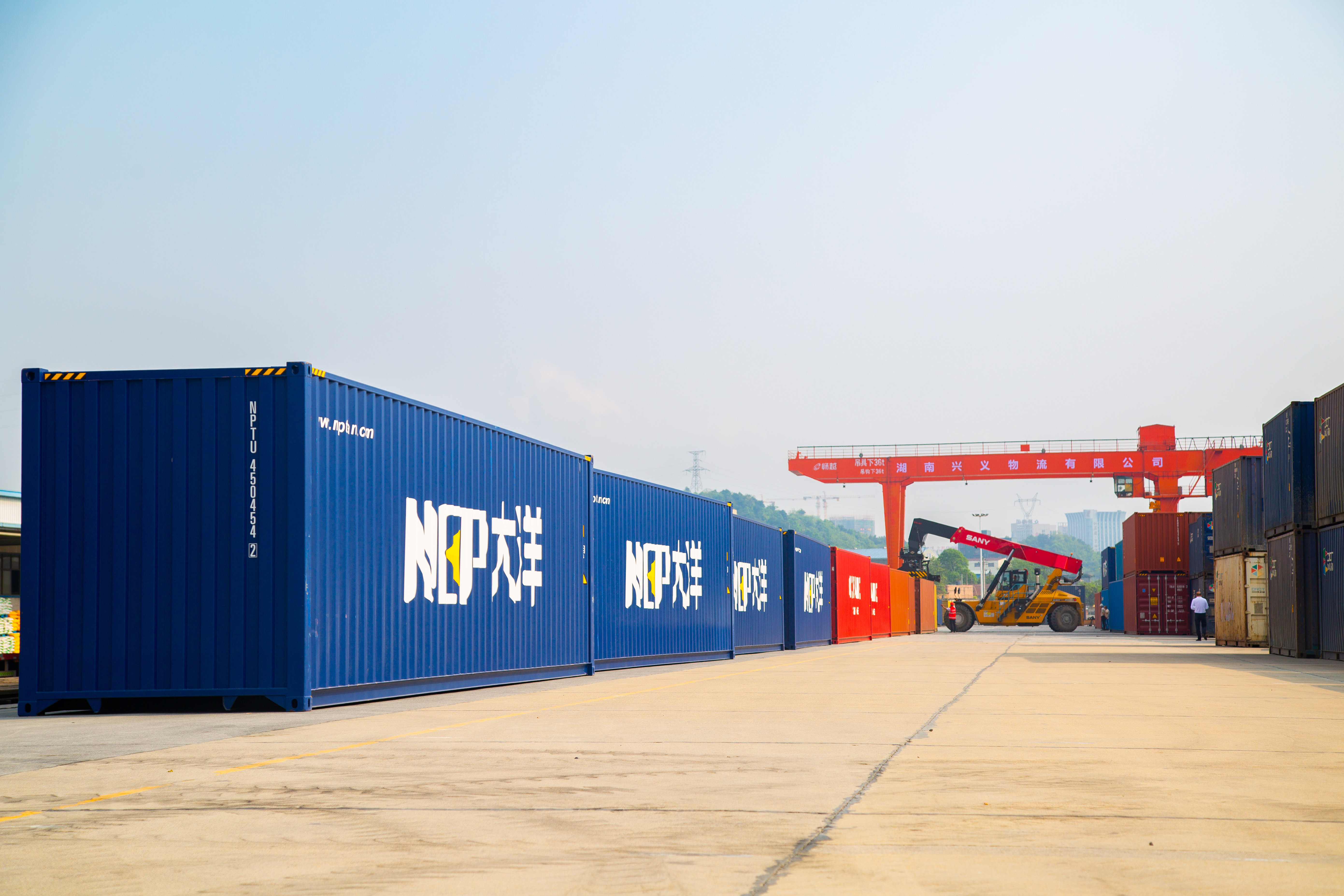
China - Alashankou/Khorgos - Europe Full Range Transportation (Mala/Hamburg/Duisburg/Budapest, etc.)
Shenzhen Neptune Logistics Co., Ltd.