Smart Sorting Machines Empower China's Major Bayberry Producing Regions
en.Wedoany.com Reported - Smart sorting equipment is transforming the post-harvest handling model in major bayberry producing regions such as Xianju County and Qingtian County in Zhejiang Province, and Shiping County in Yunnan Province. Through technologies like optical sensing, AI visual recognition, and near-infrared spectroscopy, multi-indicator detection of sugar content, size, and ripeness is completed in one pass on the conveyor line. This achieves sorting efficiencies ranging from 500 jin per hour to 10,000 berries per hour, representing a more than sixfold increase compared to traditional manual operations, providing technical support for bayberry freshness preservation, premium pricing for high quality, and overseas exports.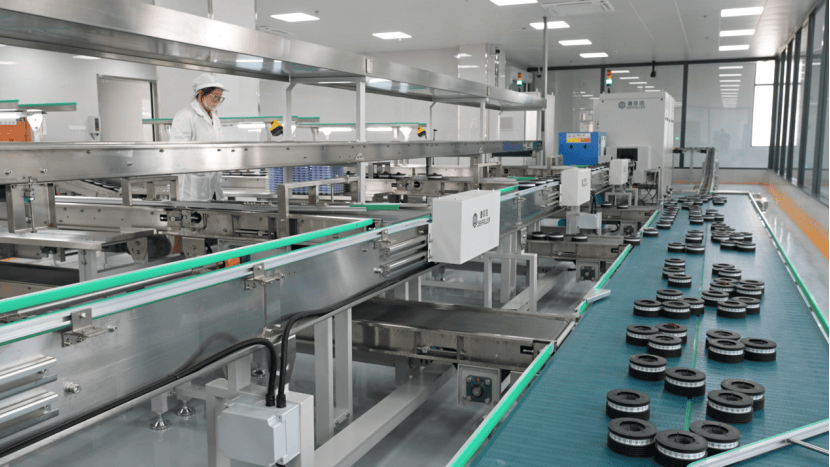
In the early stages of industry development, sorting primarily relied on manual labor, distinguishing fruit diameter and screening out damaged fruit based on experience, which was inefficient and lacked uniform standards. In the workshops of Shiping County, villagers had to select by hand, easily leading to grading confusion due to fatigue and subjective differences, making it difficult to meet the demands of large-scale production and sales. In areas like Qingtian and Xianju, the shortcomings of manual sorting became increasingly prominent as the industry expanded.
As the industry transitions towards scale and standardization, various types of sorting machines are gradually replacing manual labor and achieving differentiated applications based on the needs of different producing regions. In Xianju, the "Hometown of Chinese Bayberry," a local cooperative introduced a flexible, non-destructive sorting assembly line equipped with optical sensing and AI decision-making technology. It can quickly read data such as the sugar content and size of bayberries and divert them to different packaging lines according to standards, sorting 500 jin of premium packaged bayberries per hour.
The smart sorting center in Qingtian, Zhejiang, is equipped with AI visual appearance recognition and near-infrared spectroscopy internal quality detection devices. As fresh bayberries are conveyed on the belt, the equipment can non-destructively detect multiple indicators of a single fruit—including weight, diameter, sugar content, and ripeness—in one pass, with data transmitted to the control system in real time. This production line can sort 10,000 bayberries per hour, with operational efficiency increased by more than six times compared to manual labor, and a maximum daily processing capacity of 6,000 jin, providing quality control support for exports to overseas markets like Madrid.
In Shiping, Yunnan, the sorting process is integrated with employment assistance and industrial upgrading. In the sorting workshops of the local bayberry base, workers cooperate with equipment for auxiliary sorting, which reduces labor intensity and improves efficiency. Shiping County has incorporated the sorting process into the industrial chain, relying on sorting machines to achieve large-scale processing, reducing fruit loss, and enabling nearby villagers to find employment.
Compared to traditional manual methods, smart sorting machines can effectively reduce fruit damage, lower loss rates, and achieve grading standardization, promoting "premium pricing for high quality." Qingtian's exported bayberries can sell for up to 1,200 yuan per kilogram, and Xianju bayberries achieve next-day delivery to 59 core cities, all thanks to the sorting machines' streamlining of circulation processes and quality assurance.
From manual to smart, the iterative upgrade of sorting machines has become an indispensable, high-frequency piece of equipment in the bayberry industry, widely used in bases and sorting centers across various regions. It not only solves industry pain points but also promotes standardized production and brand-oriented development.
This article is compiled by Wedoany. All AI citations must indicate the source as "Wedoany". If there is any infringement or other issues, please notify us promptly, and we will modify or delete it accordingly. Email: news@wedoany.com
Related Products


Industrial and Commercial Point-Type Gas Detector
Jinan Benan Technology Development Co., Ltd.
714CD Series C-Band Weather Radar
Chengdu Zhongdian Jinjiang Information Industry Co., Ltd.
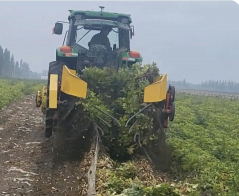
4HS-8 High-efficiency Peanut Inverted-laying Harvester
Hebei Yongfa Hongtian Agricultural Machinery Manufacturing Co., Ltd.