Dow's Flexible Packaging Solutions in the U.S. Focus on Efficiency and Sustainability, Material Innovation Enters Production Line Scenarios
en.Wedoany.com Reported - Recently, Dow held a themed seminar and exchange called "Craftsmanship Shaping" focusing on efficiency improvement and sustainable transformation in the flexible packaging industry, highlighting solutions for flexible packaging production, packaging reduction, recyclable design, and low-carbon material applications. The flexible packaging industry is facing multiple pressures including cost control, stricter regulations, brand carbon reduction, and recycling system construction. The technological roadmap of material companies is shifting from single performance enhancement to comprehensive solutions that balance processing efficiency, packaging strength, recyclability, and carbon footprint management.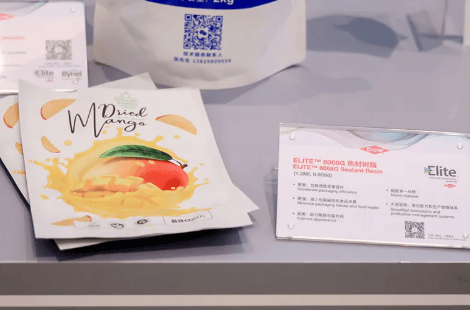
The industrial challenge of flexible packaging lies in the need for it to be lightweight, puncture-resistant, easy to heat-seal, suitable for high-speed packaging lines, while also meeting brand owners' requirements for sustainable packaging. Dow has long focused its flexible packaging innovation directions on plastic reduction, efficiency improvement, recyclability, and carbon footprint reduction. Its packaging innovation platform, Pack Studios, also emphasizes accelerating packaging innovation and sustainability implementation through materials, design, processes, and industry chain collaboration. In actual production, once packaging materials have unstable coefficients of friction, too narrow heat-seal windows, insufficient stiffness, or composite structures that are difficult to recycle, it directly impacts high-speed packaging line stability, scrap rates, and end-of-life recycling value. The heat-seal resin with a stable coefficient of friction previously launched by Dow is an efficiency-oriented solution targeting production pain points in the flexible packaging industry, helping composite films maintain a relatively stable coefficient of friction during lamination, curing, and storage, thereby reducing the risk of high-speed packaging line interruptions and film damage.
Sustainability is another unavoidable main theme for the flexible packaging industry. Compared to rigid packaging, flexible packaging has advantages in weight reduction, logistics efficiency, and material savings. However, multi-layer composite structures, different resin systems, and combinations of inks and adhesives have long made it difficult to recycle. In recent years, Dow has been continuously advancing around mono-material structures, BOPE films, recyclable polyethylene packaging, recycled content applications, and low-carbon packaging. It previously collaborated with P&G China to develop mono-material polyethylene air pillow e-commerce packaging to enhance recyclability and reduce excessive packaging; its recyclable detergent packaging developed in cooperation with brands like Liby also demonstrates the path of flexible packaging moving from material solutions to brand-end applications. For packaging companies and brand owners, truly implementable sustainable packaging cannot just stop at "switching to an environmentally friendly material"; it also requires balancing packaging protection performance, production efficiency, shelf appeal, consumer usage experience, and end-of-life identification and sorting. If material modifications lead to decreased production line speeds, increased breakage rates, or significantly higher costs, sustainable solutions will struggle to enter large-scale application.
Future observation will focus on whether Dow's flexible packaging solutions can further penetrate high-frequency scenarios such as food, daily chemicals, e-commerce, and industrial packaging, and whether its mono-material, recycled content, heat-seal resin, and BOPE-related materials can help packaging companies simultaneously reduce production waste and improve recycling compatibility. The signal released by Dow's "Craftsmanship Shaping" flexible packaging seminar is that flexible packaging innovation is shifting from material display to synergy among production line efficiency, brand carbon reduction, and recycling systems. Industry competition will also move from competing on single-point material performance to a new stage where efficiency and sustainability are equally emphasized.
This article is compiled by Wedoany. All AI citations must indicate the source as "Wedoany". If there is any infringement or other issues, please notify us promptly, and we will modify or delete it accordingly. Email: news@wedoany.com
Related Products

Hongxing Steel Martensitic Stainless Steel Products
Gansu JISCO Group Hongxing Iron and Steel Co., Ltd.
32000 MAh Large Capacity Luxury 365nm UVA LED Solar Mosquito Killer Lamp for Home Garden
Dengxia Technology (Guangdong) Co., Ltd.
BEIREN B624A Web Offset Book and Magazine Printing Press
BEIREN INTELLIGENT EQUIPMENT TECHNOLOGY CO.,LTD.