Shenzhen, China Plans 44-Room Smart Hotel with Full-Process Robot Service
en.Wedoany.com Reported - Recently, Shenzhen Cultural Tourism Industry Development Co., Ltd. and Shenzhen Pudu Technology Co., Ltd. reached a strategic cooperation to jointly build a smart hotel with full-process robot service on the West Artificial Island of the Shenzhen-Zhongshan Bridge. The hotel plans to have 44 high-end guest rooms, along with supporting functional areas such as a restaurant and a gym. The project is expected to open to tourists in early 2027.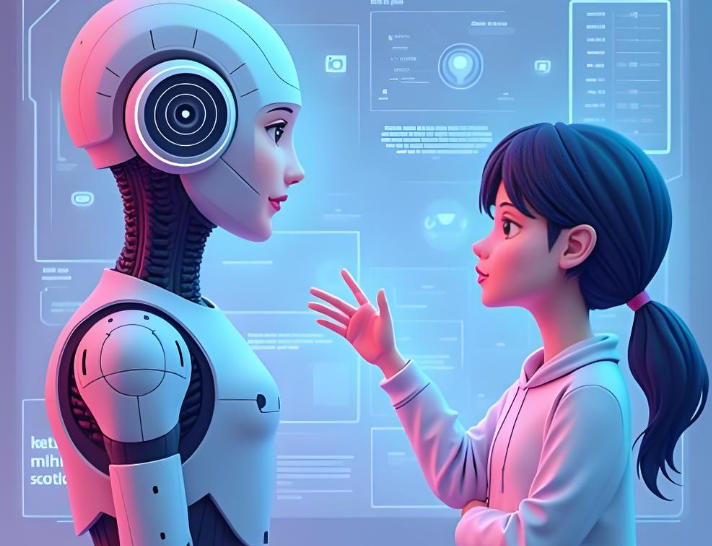
The uniqueness of this hotel lies in the fact that robots are no longer limited to single tasks like food delivery, guidance, or cleaning, but are integrated into the complete process of accommodation services. According to the plan, the hotel will cover core scenarios including guest reception, luggage guidance, room service, food delivery, comprehensive cleaning, security patrol, and interactive companionship, forming a continuous service chain from island arrival, check-in, stay, consumption, to check-out. Pudu Robotics will participate in hotel operations through the collaborative work of multiple types of robots, including interactive devices for front desk reception and route guidance, as well as execution devices for delivery, cleaning, and patrol. For the traditional hotel industry, this deployment method means that service robots are moving from "supplementing manpower" to "restructuring process nodes," with hotel operations relying more on robot scheduling systems, spatial digitization, task assignment, and backend operation platforms.
The project's location also amplifies its significance as a cultural tourism demonstration. The West Artificial Island of the Shenzhen-Zhongshan Bridge was originally a key node of the cross-sea transportation project, with attributes for engineering display, sightseeing, and bay area transportation connectivity. With the introduction of the robot hotel, the West Artificial Island will transform from a single engineering visit point into a cultural tourism scene with accommodation, experience, interaction, and consumption functions. For Shenzhen, such projects can showcase artificial intelligence, service robots, and urban cultural tourism resources in the same space; for tourists in the Guangdong-Hong Kong-Macao Greater Bay Area, the robot hotel may become a new experiential attraction alongside the bridge-tunnel project and island landscape.
The scale of 44 rooms is not large, but it is more suitable as a prototype for full-process intelligent service. Hotel service scenarios are highly fragmented, involving both standardized processes and numerous ad-hoc demands, such as luggage handling, room replenishment, nighttime delivery, sanitation cleaning, equipment inspection, and emergency inquiries. Small-scale high-end guest rooms allow operators to first verify robot group collaboration, equipment movement paths, room interfaces, elevator capabilities, service response speed, and user acceptance, and then gradually optimize the system. If robots can achieve stable service within a limited space, the model can later be replicated in larger hotels, scenic resort facilities, convention accommodation, and urban complexes.
This cooperation also reflects that commercial robot companies are seeking higher-density application scenarios. Food delivery, distribution, and cleaning robots have been used in shopping malls, hotels, hospitals, and office buildings in a scattered manner, but a single device can hardly fully demonstrate the value of embodied intelligence and group scheduling. The hotel scenario simultaneously encompasses people flow, rooms, dining, cleaning, security, front desk, and public spaces, offering a more complete task chain and making it easier to test multi-robot collaboration capabilities. If Pudu Robotics can achieve unified scheduling of multiple product categories in this project, it will help the company extend from a single-product supplier to a full-stack intelligent service solution provider.
Subsequent variables focus on system integration, operational efficiency, and real guest experience. For the robot hotel to truly become an industry benchmark, it cannot rely solely on on-site demonstration effects; it must also maintain stability in scenarios such as peak check-in, late-night service, equipment failures, privacy protection, safe obstacle avoidance, service for children and the elderly, and complex voice interactions. If the project opens to the public as planned in early 2027, it will serve as a concentrated validation of Chinese service robots entering high-end cultural tourism scenarios, and will also drive the hotel industry to reassess the division of labor boundaries between automated services, human services, and smart spaces.
This article is compiled by Wedoany. All AI citations must indicate the source as "Wedoany". If there is any infringement or other issues, please notify us promptly, and we will modify or delete it accordingly. Email: news@wedoany.com
Related Products


Flat Portable Satellite Terminal 0.35m Aperture Manual Portable Terminal
China Starwin Science & Technology Co., Ltd.

Hot Selling 10 Inch Intel N5100 I5 I7 FHD 8 +128GB 16+256GB Win10 Pro Win11 Pro 4G 5G Rugged Tablet PC Pad with NFC Barcode
Highton Electronics Co., Ltd.
Comprehensive Mining Automation Control System
Beijing Tianma Intelligent Control Technology Co., Ltd.
Conveyor Belt Intelligent Monitoring System
LUO YANG WIRE ROPE INSPECTION TECHNOLOGY CO., LTD.

GYTA Type Non-Self-Supporting Aerial/Duct Optical Cable
TONGDING INTERCONNECTION INFORMATION CO., LTD.
Mine Explosion-proof and Intrinsically Safe Industrial Ethernet Ring Network (10 Gigabit/Gigabit)
Chongqing Mas Sci&Tech Co., Ltd.

Multi-function Marine Monitoring Low-altitude Detection Radar Sea-air Boundary Ocean Dynamic Environment Measurement
Chengdu Dixin Technology Co., Ltd.