China Telecom Research Institute and others completed 6G prototype field tests in Wuhan, Hubei, achieving a system downlink peak rate of 10Gbps
en.Wedoany.com Reported - Recently, China Telecom Research Institute, China Telecom Hubei Company, and CICT Mobile conducted field tests on the downlink peak rate of a 6G terminal principle prototype system in Wuhan, Hubei. Test results show that the downlink peak rate for a single terminal reached 5Gbps, and the system downlink peak rate reached 10Gbps, validating the potential of 6G technology in terms of throughput and spectral efficiency in real-world scenarios.
The focus of this test was to move the 6G terminal principle prototype from a laboratory environment to an outdoor field environment. The on-site 6G test system consisted of a sensing, computing, and intelligent 6G cloud-based base station, a massive MIMO AAU active array antenna processing unit, and the 6G terminal principle prototype. Among these, the AAU equipment supports up to 128 digital channels and 1024 antenna elements, providing underlying support for high-capacity wireless transmission, complex beamforming, and multi-user concurrent testing. Compared to the closed laboratory environment, urban field tests are affected by factors such as spatial propagation, environmental obstructions, device synchronization, wireless interference, and on-site link stability. Therefore, they better reflect the engineering adaptability of 6G key technologies for future commercial scenarios.
The on-site test adopted the MU-MIMO (Multi-User Multiple-Input Multiple-Output) method, with two 6G terminal principle prototypes simultaneously connected to the base station. Under the condition that a single terminal supports a downlink signal bandwidth of 400MHz, the downlink peak rates of the two terminals each reached 5Gbps, and the system downlink peak rate reached 10Gbps, achieving a 10-gigabit wireless broadband experience. The value of MU-MIMO lies in allowing multiple terminals to share the same wireless resources, improving spectral efficiency through the spatial dimension. For 6G, the single-point peak rate is only one indicator; more critical is maintaining high-capacity, low-latency, and highly reliable connections in multi-user, multi-service, and complex environments.
This test in Wuhan also aligns with China's 6G research and development phase. Currently, 6G technology is transitioning from theoretical research and laboratory validation to standard formulation, prototype development, and typical scenario verification. The Ministry of Industry and Information Technology previously disclosed that China's 6G R&D has completed the first phase of technical tests, forming a reserve of over 300 key technologies, and has recently initiated the second phase of 6G technical tests. Field peak rate tests can provide engineering data for subsequent air interface technologies, massive MIMO, sensing-computing-intelligence integration, terminal prototypes, network architecture, and spectral efficiency evaluation, helping the technical route move from breakthroughs in individual indicators to system-level validation.
For the information and communication industry, 6G is not just about increasing mobile broadband rates. Future application scenarios will cover immersive communications, industrial control, intelligent transportation, the low-altitude economy, space-air-ground integrated networks, robot collaboration, ultra-high-definition video, and computing power network connections. Field tests at the 10Gbps level indicate that 6G prototype systems have begun to demonstrate their carrying capacity for high-bandwidth services. However, true industrialization still requires multiple steps, including standard freezing, spectrum planning, chip and terminal maturity, network equipment adaptation, cost reduction, and scenario validation. The significance of the successful test lies in providing a measured foundation for subsequent technological breakthroughs, not in indicating that 6G has entered the commercial phase.
Subsequent variables focus on expanding test scenarios, terminal miniaturization, continuous coverage, uplink capability, latency control, and system stability. For 6G to move from peak rate validation to actual network capabilities, continuous verification is needed in areas such as mobility, indoor and outdoor coverage, multi-user concurrency, inter-cell handover, energy consumption control, and equipment engineering. As industry players like China Telecom and CICT continue to advance prototype development and field trials, Wuhan is expected to remain an important city node for China's 6G technology transition from R&D testing to scenario-based validation.
This article is compiled by Wedoany. All AI citations must indicate the source as "Wedoany". If there is any infringement or other issues, please notify us promptly, and we will modify or delete it accordingly. Email: news@wedoany.com
Related Products



Industrial and Commercial Point-Type Gas Detector
Jinan Benan Technology Development Co., Ltd.
TWP16 P-Band Tropospheric Wind Profile Radar
China Huayun Meteorological Technology Group Co., Ltd.

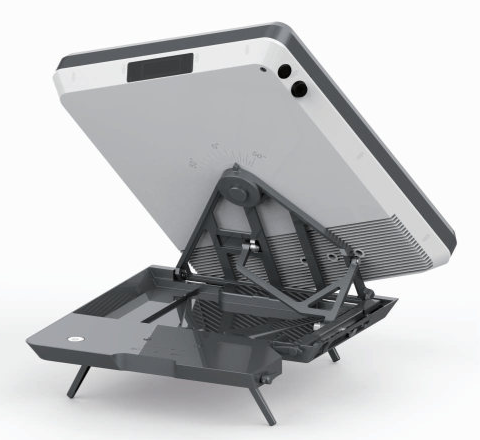
Flat Portable Satellite Terminal 0.35m Aperture Manual Portable Terminal
China Starwin Science & Technology Co., Ltd.
MUX Series Communication Interface Device for Security and Stability Control System
Nanjing NR Electric Co., Ltd.
GYTA Type Non-Self-Supporting Aerial/Duct Optical Cable
TONGDING INTERCONNECTION INFORMATION CO., LTD.