en.Wedoany.com Reported - In welding, grinding, cutting, coating, shot blasting, woodworking, powder feeding, packaging and machining workshops, demand for Dust Removal Equipment is increasing. Unlike large flue gas treatment projects, workshop dust control is closer to frontline operations. It directly affects occupational health, production safety, equipment cleanliness and on-site management.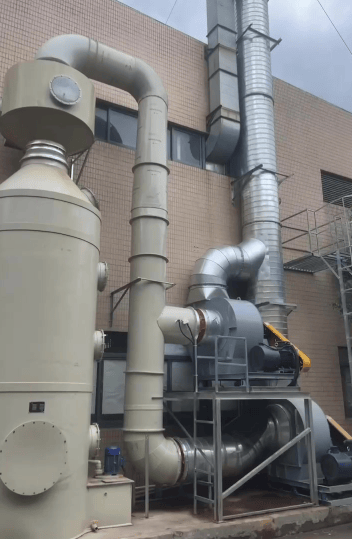
Workshop dust is often generated from scattered points with rapidly changing concentrations. Many dust sources do not discharge from fixed stacks. Dust may spread from workstations, machines, hoppers, transfer points or manual operations. If a workshop relies only on general ventilation, high-concentration dust may not be captured in time and can spread again inside the plant.
This is why workshop dust control emphasizes source capture and localized treatment. Common equipment includes mobile dust collectors, cartridge collectors, welding fume extractors, grinding dust worktables, central dust collection systems and explosion-proof dust control systems.
For welding and grinding stations, the key issues are hood design, filtration accuracy and operator convenience. For powder feeding and packaging processes, enclosed collection, negative pressure control and dust recovery are important. For combustible dust such as wood dust, grain dust or aluminum-magnesium dust, explosion venting, spark detection, explosion isolation and anti-static measures are necessary.
Occupational health is an important driver of workshop dust removal upgrades. Long-term exposure to dust can affect workers' respiratory health and increase occupational disease management pressure. By installing suitable dust removal systems, enterprises can reduce dust concentration in work areas, improve the working environment and reduce dust deposition on equipment, electrical cabinets, sensors and products.
Workshop dust removal equipment must also consider production efficiency. If the equipment interferes with worker operation, material movement or equipment maintenance, it may be bypassed or turned off by operators. The system should be compact, low-noise, easy to maintain and aligned with production rhythm. For multi-station workshops, central dust collection systems can provide coordinated treatment through duct networks and air volume control, but they must avoid uneven airflow distribution and dust accumulation in ducts.
Future workshop dust removal will pay more attention to intelligent control and safety interlocking. Dust concentration monitoring, differential pressure monitoring, filter cartridge life reminders, spark detection and equipment status monitoring can improve safety and maintenance efficiency. For enterprises with combustible dust, dust removal equipment must be integrated with the safety management system to prevent environmental control from creating explosion risks.
Overall, workshop dust removal is moving from simple air purification to a broader role in occupational health, production safety and lean site management. Equipment suppliers that can provide customized solutions for specific workstations and dust characteristics will be better able to meet manufacturing upgrade needs.
This article is compiled by Wedoany. All AI citations must indicate the source as "Wedoany". If there is any infringement or other issues, please notify us promptly, and we will modify or delete it accordingly. Email: news@wedoany.com