Zhou Guang of DeepRoute.ai: Assisted Driving Needs to Leap to Large Models, Data Efficiency Improves 10-Fold
en.Wedoany.com Reported - Zhou Guang, founder and CEO of DeepRoute.ai, stated at the 4th Future Mobility Pioneer Conference that assisted driving technology based on small models over the past five years has approached its capability limits, and the industry needs to transition to a technological paradigm based on large model cognition. He pointed out that small models excel at conditioned reflexes and local feature responses, while large models have significant advantages in global cognition and advanced thinking.
In his speech, Zhou Guang analyzed the limitations of small model technology. He mentioned that small model systems suffer from a "seesaw effect," where optimization for a specific city may lead to performance degradation in other regions, and repeated modifications affect user trust. He believes that the fundamental reason for increased investment but slowing performance improvement is that the small model technical route has hit a ceiling.
Zhou Guang introduced DeepRoute.ai's technical approach. The company has adopted a 40B parameter base model, integrating the three capabilities of Driver, Analyst, and Critic into a single model, covering the entire process of development, iteration, and operation. According to him, this solution improves data efficiency by 10 times and drives the transition from manual processes to model automation.
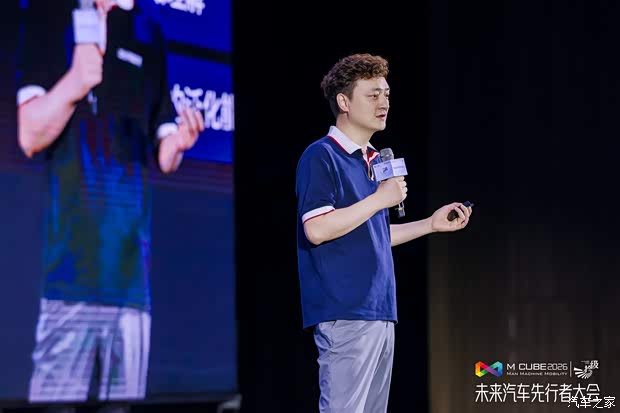
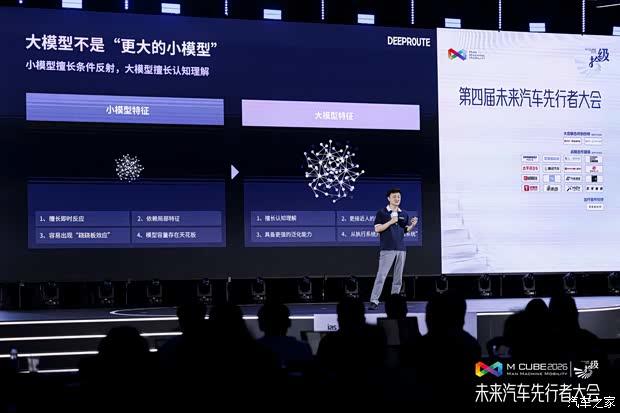
In his speech, Zhou Guang compared small models with large models. Using the example of "a dog painted with zebra stripes," he pointed out that a small model would identify it as a zebra due to local features, while a large model, based on global cognition, would still judge it as a dog. He believes that when assisted driving progresses from safe intervention over tens of kilometers on city roads to higher levels, it must rely on a cognitive system based on large models.
In terms of market data, Zhou Guang revealed that in 2025, DeepRoute.ai's market share grew 2.1 times year-on-year, reaching a 24% share in the third-party NOA market, ranking second in the industry. He stated that currently, for every three new vehicles equipped with urban NOA, one uses DeepRoute's solution.
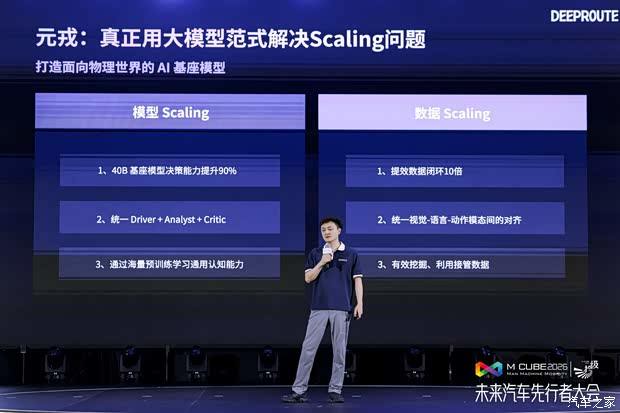
Zhou Guang also proposed development goals for 2026: achieving delivery of over 1 million vehicles; after introducing the base model, the MPCI (Miles Per Critical Intervention) is expected to exceed 1,000 kilometers, increasing the high-frequency usage rate in urban scenarios to over 50%. He believes that only when safety performance reaches the level of one thousand kilometers, reducing the average monthly safety interventions per user to less than once, can assisted driving transition from being usable to being good, common, and safe.
This article is compiled by Wedoany. All AI citations must indicate the source as "Wedoany". If there is any infringement or other issues, please notify us promptly, and we will modify or delete it accordingly. Email: news@wedoany.com
Related Products


Industrial and Commercial Point-Type Gas Detector
Jinan Benan Technology Development Co., Ltd.



Multi-function Marine Monitoring Low-altitude Detection Radar Sea-air Boundary Ocean Dynamic Environment Measurement
Chengdu Dixin Technology Co., Ltd.
20 Inch 1600*900 Full HD 60Hz TFT LED Monitor with VGA and DP Interfaces for Desktop Computers-Business Use
Guangzhou Zanying Optoelectronics Technology Co., Ltd.
Mine Explosion-proof and Intrinsically Safe Industrial Ethernet Ring Network (10 Gigabit/Gigabit)
Chongqing Mas Sci&Tech Co., Ltd.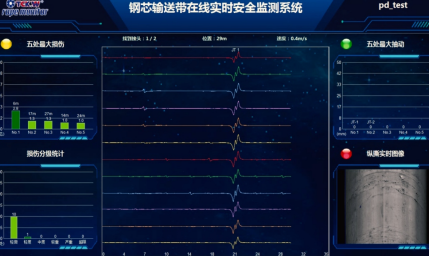
Conveyor Belt Intelligent Monitoring System
LUO YANG WIRE ROPE INSPECTION TECHNOLOGY CO., LTD.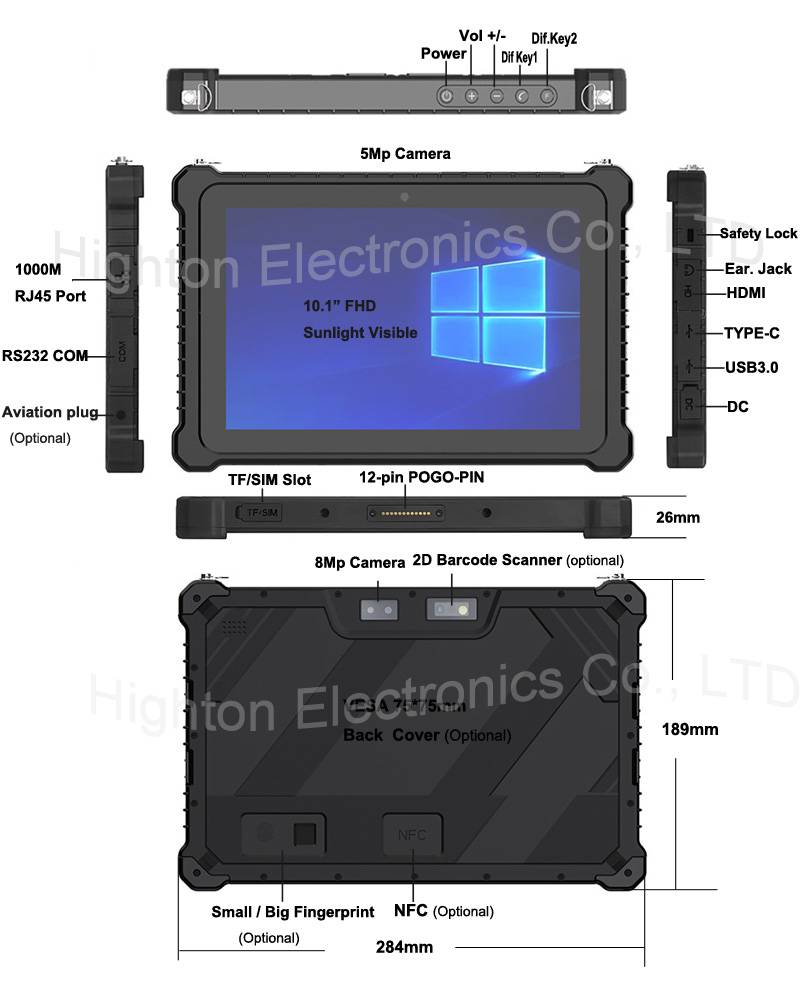
Hot Selling 10 Inch Intel N5100 I5 I7 FHD 8 +128GB 16+256GB Win10 Pro Win11 Pro 4G 5G Rugged Tablet PC Pad with NFC Barcode
Highton Electronics Co., Ltd.
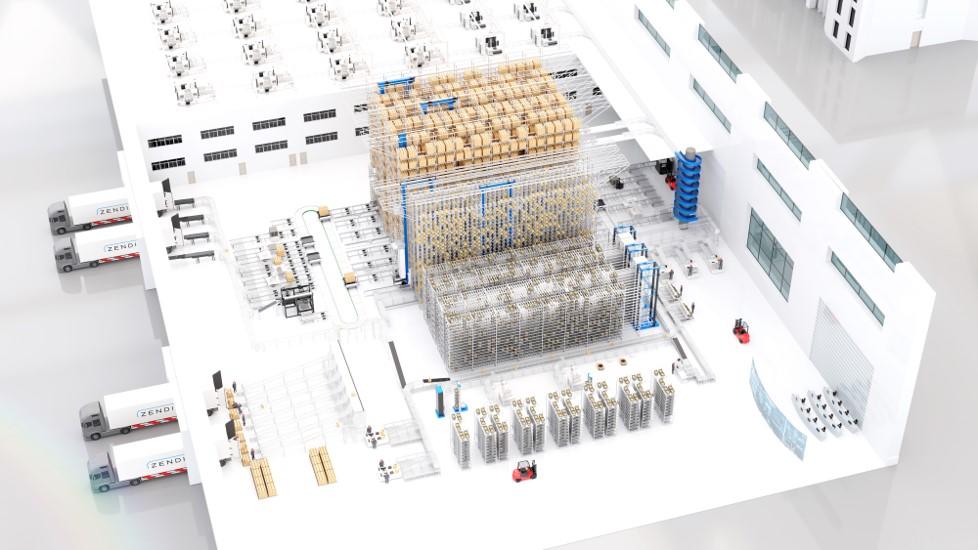
One-Stop Steward Service for the Entire Logistics System Integration Chain
Zhongding Intelligent (Wuxi) Technology Co., Ltd.