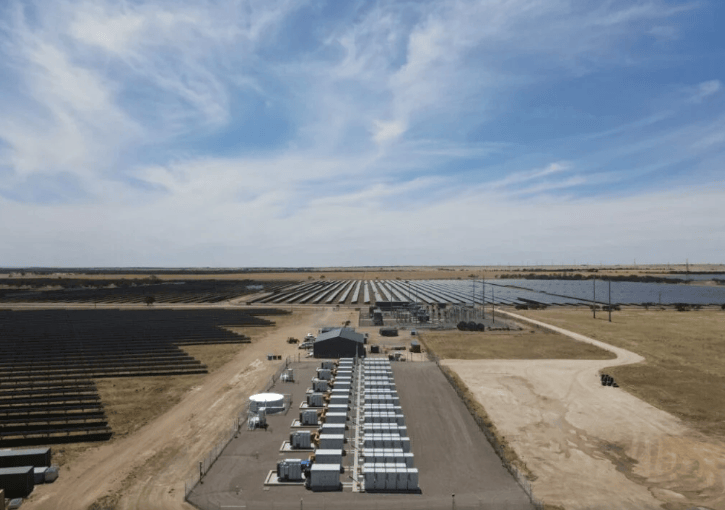
Full Capping Completed for Upper Reservoir Dam of Guangxi's First Pumped Storage Power Station
en.Wedoany.com Reported - On June 1, the Phase V filling of the upper reservoir dam for the Nanning Pumped Storage Power Station, Guangxi's first pumped storage power station constructed by the company, was completed, achieving full capping.
Pumped storage refers to using surplus electricity to pump water from the lower reservoir to the upper reservoir, converting electrical energy into potential energy of water for "storage"; during periods of high electricity demand, water is released to generate power, converting potential energy back into electrical energy to supplement the grid.
Located in Taiping Town, Wuming District, Nanning, Guangxi, the Nanning Pumped Storage Power Station ingeniously utilizes a natural drop of 400 meters between the mountains to construct a system including the upper and lower reservoirs and an underground powerhouse within the mountain. During low electricity demand, it absorbs surplus power from wind and solar sources, pumping water from the lower to the upper reservoir for storage; during peak demand, the upper reservoir releases water to generate power, producing 1.2 million kWh of clean electricity per hour, meeting the daily electricity needs of 200,000 households, earning it the nickname "super power bank" for the Guangxi power grid.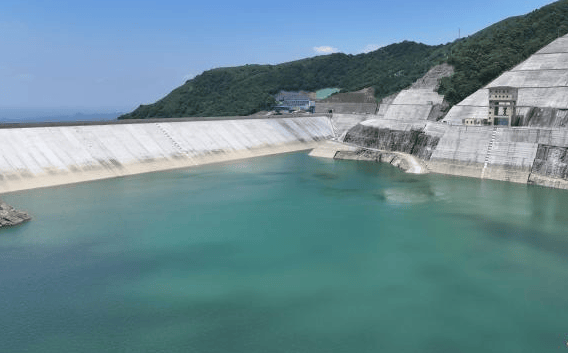
The Nanning Pumped Storage Power Station is also the first pumped storage project approved in South China during the "14th Five-Year Plan" period, with a total investment of approximately 8 billion RMB. It is equipped with four units, each with a capacity of 300,000 kW. The main dam of the upper reservoir is a concrete face rockfill dam, with a maximum height of 92.5 meters, a crest length of 499.5 meters, and a total filling volume of 5.8561 million cubic meters. According to reports, the project team conducted research on "Key Technologies for Optimized Earth-Rock Allocation and Rapid Dam Construction," proposing an overall plan of "zonal excavation and phased filling." By prioritizing external coordination and meticulous internal organization, they set a high-intensity record of 672,000 cubic meters of filling in a single month. Additionally, they innovatively adopted a water storage method combining "high-flow pumping with low-flow stabilization," significantly increasing the water storage rate while ensuring dam safety and stability. Ultimately, the power station was put into operation ahead of schedule in December 2025.
A representative from the Eighth Bureau of Hydropower Engineering stated that since the gate was lowered for water storage, the dam face has shown no leakage points, and both dam deformation monitoring and seepage volume meet design requirements. The dam's operational safety is excellent, with all monitoring data stable and controllable.
Notably, during construction, the project team built and put into operation a heavy-duty truck battery swap station for pumped storage, saving 680,000 liters of fuel annually, and applied new equipment such as cloud vehicle platforms, providing an innovative practice model for similar large-scale projects.
This article is compiled by Wedoany. All AI citations must indicate the source as "Wedoany". If there is any infringement or other issues, please notify us promptly, and we will modify or delete it accordingly. Email: news@wedoany.com
Related Products

Double-slide Triple-sealed Hot Air Isolation Door
Xi'an Yingchuan Electric Power Equipment Co., Ltd.
Inductive Power Harvesting Self-Powered Device - Safuneng
SELF ENERGY TECHNOLOGY (SHENZHEN) CO., LTD.
Industrial and Commercial Point-Type Gas Detector
Jinan Benan Technology Development Co., Ltd.

Prefabricated Houses and Electrical Energy Boxes
Chengdu Ruilong Machinery Manufacturing Co., Ltd.
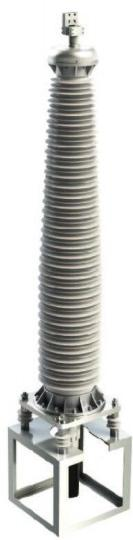
220kV Composite Outdoor Cable Terminal
Shenyang Guolian Cable Accessories Manufacture Co., Ltd.
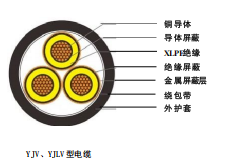
Rated Voltage 6-35kV Cross-linked Polyethylene Insulated Power Cable
TONGDING INTERCONNECTION INFORMATION CO., LTD.
Oil-immersed Amorphous Alloy Core Distribution Transformer
Pinggao Group Smart Electric Co., Ltd.